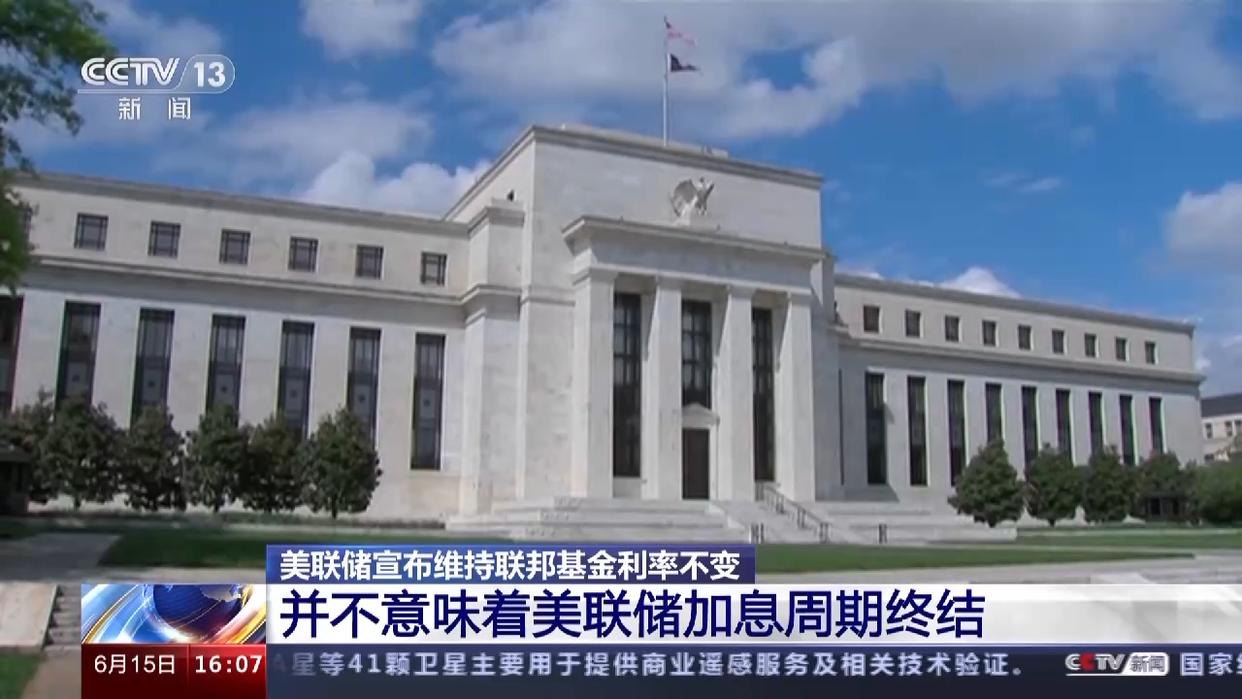
The Fed presses the "pause button" to raise interest rates. Expert: It does not mean the end of the interest rate hike cycle.
half past one
The Fed suspended interest rate hikes for the first time after ten consecutive interest rate hikes.
The latest interest rate decision decided by the Federal Reserve on the 14th is the first decision to suspend interest rate hikes after ten consecutive interest rate hikes. In this regard, experts said that the core concern of the Fed’s suspension of interest rate hikes this time is the balance between price stability, full employment and financial stability.
Sheng Songcheng, former director of the Survey and Statistics Department of the People’s Bank of China and a professor at China Europe International Business School: The Fed’s main concerns about prices include CPI, as well as the core CPI after excluding food and energy prices, so the economic data mainly focuses on the increase in non-agricultural employment, unemployment rate and labor participation rate in the labor market. These data show that the price pressure has eased, the job market has returned to a relatively normal level, and consumption has increased slightly, which has become the basis for the Fed to suspend interest rate hikes in June.
Wen Tianna, a professional member of the Hong Kong Securities Institute: In terms of the focus of monetary policy, it is still fighting inflation, but it is obvious that local monetary policy is gradually paying attention to a balance between economic growth, employment and inflation.

In addition, the US economic slowdown and banking risks are also one of the key concerns of the Fed’s suspension of interest rate hikes.
Wen Bin, chief economist of Minsheng Bank: Under the background of raising interest rates ten times in a row in the past, the US economy has shown a trend of slowing down, so suspending interest rate hikes will help reduce the impact on the market.
Sheng Songcheng, former director of the Survey and Statistics Department of the People’s Bank of China and professor of China Europe International Business School: The risks of American banks such as Silicon Valley Bank and First Total Bank are related to their own operations and the imbalance of their balance sheets, but they are also related to the aggressive interest rate hike by the Federal Reserve. By the end of April this year, the broad money supply M2 in the United States has been negative for five consecutive months, and the pressure of the banking crisis on financial stability cannot be ignored.
Does it mean the end of this interest rate hike cycle?
This time, the Fed chose to suspend interest rate hikes and keep interest rates unchanged. Experts said that this does not mean the end of the interest rate hike cycle.
The Fed’s new interest rate bitmap shows that the expected median interest rate at the end of 2023 is 5.6%, which is higher than the current interest rate level, which also implies that the Fed still has the possibility of raising interest rates during the year.
Guan Tao, global chief economist of Bank of China Securities: This may not be the end yet. Powell also said at the press conference that all members think that it is still appropriate to raise interest rates further this year. Whether to restart interest rate hikes in July depends on the data, and at the same time, no one expects to cut interest rates this year.
Experts said that this suspension of interest rate hikes should be understood as slowing down the pace of interest rate hikes, and this round of Fed interest rate hikes is coming to an end, but this is not the end of this round of interest rate hikes. On the whole, although the inflationary pressure in the United States has been greatly eased compared with last year, there are still many hidden concerns, and the downward trend of inflation in the future will be a slow process.
In addition, Federal Reserve Chairman Powell said that he is firmly committed to the inflation target of 2%, and suspending interest rate hikes does not mean "skipping interest rate hikes".
Wen Tianna, a professional member of the Hong Kong Securities Institute: Although that interest rate remains unchanged, the Federal Reserve is still worried that inflation will remain high, especially if the data is reversed, it is possible to issue some signals to raise interest rates again during the year.
Sheng Songcheng, former director of the Survey and Statistics Department of the People’s Bank of China and a professor at China Europe International Business School, said: If prices rebound slightly in the future, there is still a question about whether the risks of banks will continue to ease. It cannot be said that the suspension of interest rate hikes in June is the end of this round, but it depends on the balance between prices and economy and the relationship between financial stability.
Ten consecutive interest rate hikes have had a complex impact on the world.
Since the Federal Reserve started the current interest rate hike cycle in March 2022, it has raised interest rates 10 times, and the cumulative rate hike has reached 500 basis points. The speed and intensity of interest rate hikes are rare in the past. The aggressive interest rate hike process of the Federal Reserve and the resulting high interest rate environment have kept the inflation rate in the United States down, but it has also brought complex impacts on the real economy of the United States and the global financial market.
Judging from the pace of interest rate hike, since the Federal Reserve started the current interest rate hike cycle in March 2022, the single interest rate hike has gradually increased from 25 basis points to 75 basis points, and it has raised interest rates four times in a row at the level of 75 basis points, which is the fastest rate hike in the past 40 years.
The Fed’s aggressive interest rate hike process has also brought complex impacts on the real economy and financial markets in the United States: signs that the US economy is cooling down can be seen from manufacturing PMI, unemployment rate and retail sales data; The yield of long-term and short-term treasury bonds in the United States continues to be upside down, and the upside down range and upside down duration are at historical high levels, which is very obvious for the future economic recession.
Guan Tao, global chief economist of Bank of China Securities: The aggressive interest rate hike by the Federal Reserve triggered the turmoil in the US banking industry. There is still great uncertainty about the risk that the banking turmoil will turn into a credit crunch. At the same time, we can see that the PMI index of the manufacturing industry in the United States has been in a contraction range for several months, which also means that the economy is facing this downward risk.
From a global point of view, the phenomenon of differentiation of service industry and manufacturing industry in major economies has been widespread recently, and the manufacturing industry in most countries and regions is weak, which is not unrelated to the aggressive interest rate increase by central banks represented by the Federal Reserve in the early stage.
Wen Bin, chief economist of Minsheng Bank: In particular, some emerging market countries have borrowed a lot of US dollar liabilities before. With the increase of US dollar interest rate, the debt cost of these countries has increased, so there may be debt defaults, which will also have an impact and impact on the stability of the financial market and the development of the real economy in this country.
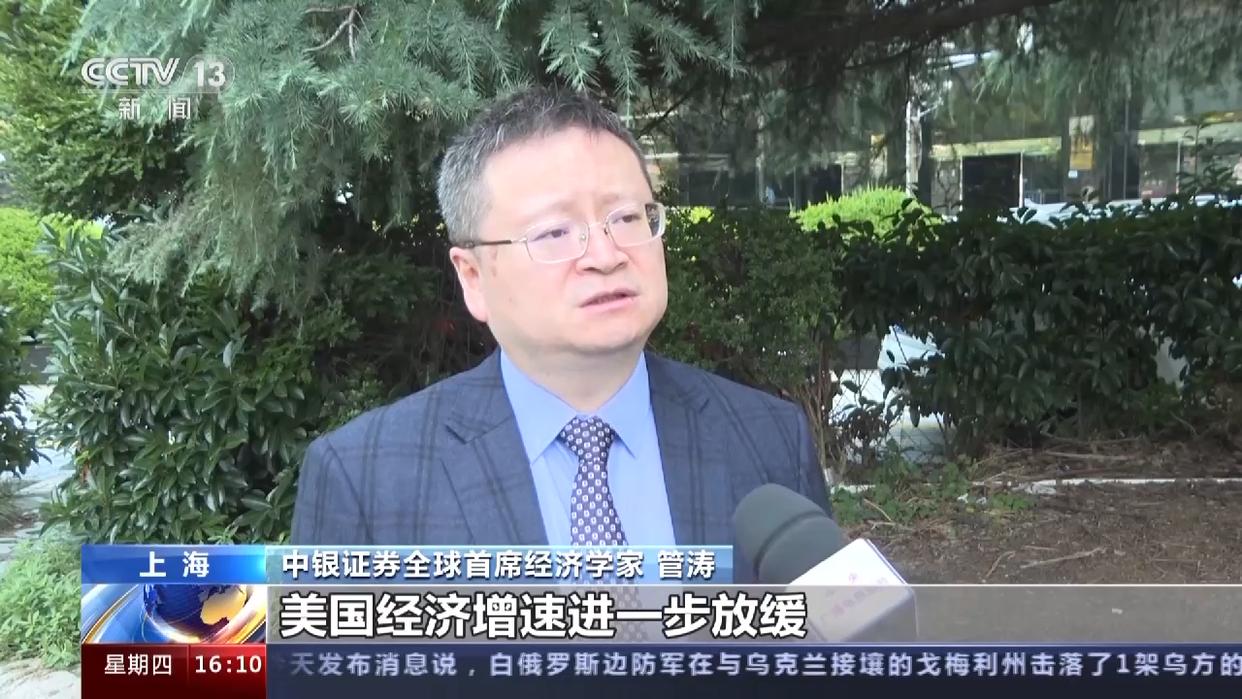
Guan Tao, global chief economist of Bank of China Securities: With the tightening of the Federal Reserve, the economic growth rate of the United States has further slowed down, which may affect the global import demand of the United States and bring new pressure to some economies that rely heavily on exports.
Experts said that with the end of the Fed’s interest rate hike, its policy spillover effect is expected to weaken, which is conducive to the stability of the global financial market. Even if the Fed continues to raise interest rates, the range and frequency will be more moderate, which will also create a more stable environment for the stability and recovery of the world economy.
China’s monetary policy will still adhere to the principle of "focusing on me"
Experts said that China’s monetary policy will still be "self-centered", adhere to "prudent monetary policy should be precise and powerful", maintain reasonable and sufficient liquidity, and provide strong support for key areas and weak links through structural monetary policy tools.
Experts believe that the divergence of monetary policies between China and the United States and the deficit between China and the United States are even upside down, which will bring some pressure on the RMB exchange rate in the short term. However, with the steady growth of China’s monetary policy, the stability of RMB exchange rate has a solid foundation.
Wen Bin, chief economist of Minsheng Bank: With the support of the coordination of macro policies, our economy continues to maintain a steady recovery trend, which also provides strong support for the stability of our RMB exchange rate, and the RMB exchange rate against the US dollar will continue to maintain a basic stability at a reasonable and balanced level.
At present, China’s interest rate is already at a low level. Experts believe that in the future, monetary policy should still pay close attention to the changing trend of prices, maintain reasonable and abundant liquidity, and provide strong support for key areas and weak links through structural monetary policy tools.
Wen Bin, chief economist of Minsheng Bank: We can further increase the use of our structural monetary policy tools, better support manufacturing, inclusive finance, green finance, technological innovation, and other key areas and weak links of the economy, and better support the development of our real economy.
Reporting/feedback