The ranking of the top ten risky positions in officialdom: the land director is the most dangerous, and the boss of state-owned enterprises is the second from the bottom.

[Editor’s note]

        At present, the society in China is undergoing a rapid transformation, and it has entered a period of "prominent contradictions" and "high risk". Risk is a prominent feature of this period, which has actually penetrated into all classes and people, including officials, especially those who are involved in land, houses, mines and local party and government leaders.

        Is it a false proposition that officials are at high risk? According to the survey results of People’s Forum magazine, 44% of the respondents agree that "being an official is a high-risk occupation" and think that the top ten high-risk positions in officialdom are land director, transportation director, county party secretary, public security director, organization minister, construction committee director, safety supervision director, municipal party committee secretary, state-owned enterprise boss and housing management director. The specific investigation contents are as follows:
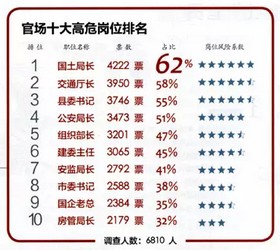
        These posts can be described as "high-ranking" and serve the people well. What kind of official and social ecology is reflected behind their becoming high-risk posts?

        What are the outstanding characteristics of the high risk of officials that are different from other groups? What is the deep reason behind it? How should we strengthen the relevant system construction, so that the key positions of government departments are no longer "high-risk"?

I. Director of Land and Resources

"Land-related" Officials under Hidden Rules

Post risk coefficient: six stars

        Risk point: From planning and pricing to approval and supervision, power and risk are closely linked.

        1. Hidden rules prevail, and it is difficult to be immune;

        2. Fierce competition and strong public relations force;

        3. The supervision system is not perfect.

        According to the survey results of People’s Forum magazine, 62% of the respondents believe that the "land director" has the highest risk and ranks first. (Note: The risk coefficient is based on the percentage of people selected for this position, and the percentage is rounded to the nearest single digit, which is expressed in the form of star rating. If 62% of the respondents choose the director of land and resources, the risk coefficient is 6 stars. )

Too much power! Before the unspoken rules, the land directors have fallen.

        "Why is everyone called’ land acquisition’ instead of’ land acquisition’? This shows that there are doorways. The conditions for’ land acquisition’ can be set by the government, and the planning government can change it. All competent departments have the final say." The chairman of a real estate company in Wenzhou said this when interviewed by the media. He even bluntly said that the operation of the land market basically goes ahead of the hidden rules.

        On July 4, 2014, Li Junfu, director of Guangzhou Municipal Bureau of Land Resources and Housing Management and secretary of the Party Committee, was suspected of serious violation of discipline and accepted an organization investigation. Li Junfu was investigated for violating discipline, which once again exposed the loopholes in the land transaction supervision system. Many political and business people in Guangdong said that they were not surprised by Li Junfu’s accident. A real estate developer bluntly said: "Li Junfu is the god of wealth in Guangzhou, and he is in charge of important positions such as land storage, allocation of affordable housing, land transfer and real estate regulation and control, and his power is too great."

        Power is great, supervision is not in place, hidden rules prevail, and bribery is rampant, making the land department the hardest hit area for corruption cases. Not only that, because the interests involved are complicated, there are many cases and cases in this field from time to time.

        In 2009, five people were sentenced in Haikou planning land system. Among them, the former deputy director of Haikou Planning Bureau took bribes of 1.3 million yuan and was sentenced to 11 years in prison. The other sentenced officials were the former chief planner of Haikou Planning Bureau, the former chief of the land use department of Haikou Land and Resources Bureau and the former deputy director of the Treasury Payment Bureau of Haikou Finance Bureau.

        In 2008, a case of land corruption was exposed in Zengcheng, Guangdong Province. The staff of the land department colluded with private entrepreneurs to defraud the state of idle land compensation funds as high as 145 million yuan, and nine officials fell in this corruption case.

        A little earlier, during 2007-2008, the case of land subsidence in Chongqing shocked the whole country, including Tang Wenfeng, former director of Chongqing Development Zone Management Committee, Liang Xiaoqi, former deputy director of Municipal Planning Bureau, Huang Yun, director of Jiulongpo District Planning Bureau, Jiang Yong, former deputy director of Chongqing Land and Real Estate Bureau, etc. Nearly 10 departmental cadres were dismissed for accepting bribes from developers.

Hidden Rules-Latency, Violation and Rule

        There are many "tricky things" in real estate from land transfer to planning adjustment, which is already a self-evident "secret" in this field. Land officials waved the power stick in their hands and acted as "hidden rules" under the cover of "explicit rules" in order to seek personal gain and corruption, which made the crimes in the land system appear to be latent, illegal and covered up by law.

        Take the "bidding, auction and hanging" of land transfer as an example. Under the unspoken rules, government officials can resell the land to the intended buyers in various illegal ways according to the procedures of bidding, auction and hanging. The specific methods are as follows:

        First, limit the qualifications of developers and shut out a large number of developers from the beginning;

        Second, when auctioning land, additional conditions are set, such as the requirement to reach an agreement with the demolished person within 5 days, but these conditions may have been notified to the intended buyers long ago, and they began to prepare early, while other bidders may have to retreat because they don’t know;

        Third, the time difference, such as the day before the holiday, requires bidders to pay the deposit within 3 days after listing, deliberately crowding out foreign competitors;

        Fourth, what’s more, the default developer won the land with unusually high funds when bidding, but in the actual transaction, the government returned the high funds to the developer through some policies, and the actual transaction price of the land was the price agreed by both parties in advance. Therefore, the program of "bidding, patting and hanging" seems to have gone, but it is actually the same as not going.

        It is easier to adjust the planning and floor area ratio, as long as the main leaders are fixed. Because the planning department has the final say in adjusting the planning, and the process of planning adjustment is closed, lacking publicity, hearing and other procedures. According to the public prosecution materials, in the case of land corruption in Chongqing, Liang Xiaoqi, former deputy director of chongqing urban planning bureau, committed illegal acts, including helping developers to adjust the plot ratio and adjust the nature and use of land.

        Liang Xiaoqi’s case fully revealed that China’s land management departments have great power, but there are many loopholes and weak links in power norms and supervision mechanisms, and the decision-making, trial and supervision of land are not transparent and open enough, which is also the reason for the prevalence of hidden rules.

Eradicate hidden rules and scientifically evaluate land benefits

        How to control land corruption? People naturally point the finger at power, and think that the key to control corruption is to improve the system and mechanism, strengthen the checks and balances of power and supervision, and increase the transparency of decision-making, examination and approval.

        However, the interests in the field of land are huge. If what really happens under the appearance of checks and balances is the alliance of power and money, that is, it seems that it is actually a "hidden rule" according to the "explicit rules", and the law will be a dead letter. Without a scientific land revenue evaluation system and empty talk about power supervision, it is a tree without roots. Unspoken rules remind us that we need to put more energy into the evaluation of land benefits, introduce scientific evaluation system, control flexible benefits and gray benefits, and narrow the space of power rent-seeking, so as to truly minimize post risks.

Official testimony

        "With the gradual increase in contact with developers, in the communication activities with some big money, my thoughts have changed color and I envy the lifestyle of being intoxicated. There is a serious misunderstanding of the purpose, meaning and realization of one’s own value in life. He thinks that the market economy is the capital economy, and only when you have money can you have everything, and you have the right not to expire. Deviations in ideological understanding have led to bigger mistakes. " -Du Jianping, former deputy director of Huai ‘an Land and Resources Bureau of Jiangsu Province

Second, the director of transportation

What is the crux of "high-speed" corruption

Post risk coefficient: five and a half stars

        Risk point: the degree of marketization of China’s highway construction system is far from enough.

        1. Being both the Chief Executive and the business leader;

        2. The project is profitable and rent-seeking is simple;

        3. monopoly of power and lack of supervision;

        4. lax management and imperfect mechanism.

        In recent years, the incident of the director of transportation falling off the horse is not uncommon, and the problem of "traffic corruption" is becoming more and more serious. According to incomplete statistics, in the past 20 years, there have been 16 officials who have served as local transportation directors (full-time), and if deputy directors are counted, this number exceeds 30. Among them, in Henan Province, Zeng Jincheng, Zhang Kuntong, Shi Faliang and Dong Yongan were successively dismissed, and in Shanxi Province, Wang Xiaolin and Duan Jianguo were successively dismissed. The corruption of officials of the Communications Department can be described as "wave upon wave".

        On December 28th, 2009, Lei Jianmin, the former director of Linwei District Transportation Bureau in Weinan City, Shaanxi Province, was sentenced to life imprisonment and deprived of political rights for life by the Weinan Intermediate People’s Court for committing the crimes of corruption, bribery and huge amount of unidentified property. In the trial court, Lei Jianmin regretted it. "I finally fell on the’ corruption road’ laid by myself!"

        The above cases are only part of the corrupt traffic director, which is why public opinion calls the traffic director a "high-risk group". According to the survey results of People’s Forum Magazine, 58% of the respondents agree that the post risk of traffic director is high, ranking second.

        In order to put an end to the black hole in the traffic system, the central and local governments have promulgated relevant laws, regulations, systems and measures, and strengthened the anti-corruption efforts. However, the problem is that while laws and policies are constantly being promulgated, corruption cases are instead "wildfire never quite consumes them, they are tall once more in the spring wind". The director of transportation has "rotted in the past" and the traffic cadres have "collapsed" in a large area, which reflects that there are indeed loopholes in the system behind traffic construction. The key point is that at present, China’s highway construction is in an absolute monopoly position, which is directly operated by government officials, making it possible for them to seek rent through monopoly. Specifically, its institutional defects mainly include the following three points:

        First, China’s current transportation investment system operates in a closed way within the transportation system. Almost all of a transportation construction project, from project demonstration, bidding design, construction supervision, budget allocation to completion acceptance, is exclusively responsible or led by the Communications Department. In this way, the disadvantages of investment, construction, management and use of the "four in one" and the separation of government and enterprise make the person in charge of the relevant department both the chief executive and the enterprise leader in the construction project; Being a builder and a manager, it is easy to make construction projects lack mutual restriction and supervision.

        Second, power is a double-edged sword, which can not only benefit the people, but also be inherently corrosive and expansive. In order to prevent the abuse of power, it is necessary to use power to restrict power and establish the necessary supervision and restriction mechanism. However, the management power of the traffic management department is too centralized, which can easily lead to the abuse of power by the director of the department (bureau) who monopolizes the power and seeks personal gain for himself.

        Third, the project investment system and the organizational form of traffic construction. The form of highway construction headquarters in China is the product of planned economy system, and its internal management is lax. In addition, the relationship between the traffic administrative department and the company responsible for highway construction is mostly mother-child, which leads to the departmentalization of government power, the individualization of departmental power and the absolutization of personal power, which is the source of corruption in the traffic system.

Third, the county party secretary

The Achilles heel of the county party secretary.

Post risk coefficient: five and a half stars

        As the "top leader" of the county, the county party secretary holds a large part of power.

        1. Different powers and responsibilities make it difficult to perform their duties;

        2. Maintaining stability and testing ability;

        3. The status is outstanding, and corruption is hard to prevent.

        County officials have been "people-friendly officials" since ancient times, and they are the bridge between the party, the government and the people. The county party secretary, as the "top leader" of the county, is an extremely important position. According to the survey results of People’s Forum Magazine, 55% of the respondents agree that the post risk of county party secretary is high, ranking fourth.

The supervision weakness of the "number one"

        How powerful is the county party secretary? In fact, the political, economic and social development of the county is relatively independent, and the county party secretary can have the final say on anything and anyone in the county; By the way, the county party secretary can stick his finger in the end, that is to say, he can catch big things and small things.

        The "interest temptation" faced by the county party secretary is also great. The "projects" such as urban demolition and restructuring of small and medium-sized state-owned enterprises at the county level are often "major projects" involving hundreds of thousands, millions, tens of millions or even hundreds of millions of yuan. These projects often require the "final decision" of those county party secretaries with real power, and the "interest temptation" is a test for ordinary leading cadres.

        The county party Committee is not the grassroots, but it is close to the grassroots; Not on the front line, but face the front line. The secretary of the county party Committee, the party in charge, is in danger of "one careless move will lose the game" However, at present, there is no set of effective methods for the selection, management and supervision of the county party secretary, which often leads to the fact that the county party secretary has too much power and lacks real supervision, and there are problems such as "the supervision at the higher level is too far, the supervision at the same level is too soft, and the supervision at the lower level is too difficult".

        Because no one can really supervise the county party secretary, this kind of power is most prone to corruption. Some of them are rich by selling officials and titles, some are corrupt and bribery, and some are bent on being big officials to do their own things without dereliction of duty, indifferent to the interests of the masses, or even insensitive.

        Looking at the whole country, news of corruption of county party Committee secretaries has occurred from time to time. In Anhui, in the northern Anhui area with Fuyang as the center, 18 county party secretaries have been investigated and punished for corruption. In the past four years, Henan has investigated and dealt with 22 county party Committee secretaries for corruption and bribery. The most typical case is Long Guohua, the former county party secretary of Zhuzhou. Less than ten days after CPC Central Commission for Discipline Inspection and the Central Organization Department jointly issued the Opinions on Further Improving the Credibility of Selecting and Employing People, Long Guohua unexpectedly made a case against the wind and suddenly promoted and adjusted more than 100 leading cadres, becoming the first "unlucky" county party secretary who fell before the central "killing order".

        With too much power and lack of supervision, it is not surprising that "county party secretary" has become one of the typical high-risk positions.

        The county party secretary has become the "local tyrant" in the county, and it is difficult to find the power to effectively restrict him within his jurisdiction. Under such a system, the degeneration of the "number one" will directly lead to the deterioration of the regional political ecosystem.

Is it really "the mountain is high and the emperor is far away"

        Generally speaking, the county level far away from the central city is often on the edge of political geography, which makes the asymmetry of power and responsibility and "a thousand lines above and a needle below" the biggest difficulty in the work of the county party secretary. Under the tax-sharing system, the unreasonable financial distribution and the lack of local financial resources also make these secretaries "a clever woman can’t cook without rice." County-level is a high-incidence area of sudden public events. How to ensure development and stability is a test for all county party secretaries. If it is not handled properly, the "Weng ‘an Incident" is a lesson from the past.

        On the one hand, this "political geography edge" makes it difficult for the county party secretary to carry out his work, on the other hand, it makes the hidden rules of officialdom more popular.

        The power of the county-level supervisor is too large, and cadres will regard this county as the personal world of the county party secretary. At best, they will hold an attitude of being irrelevant and hanging high; The bad ones take the initiative to participate in the hidden rules of buying and selling officials.

        This phenomenon is particularly obvious in some poor areas, such as Chen Zhaofeng, the former county party secretary of Dingyuan, Anhui Province, and Lin Longfei, the former county party secretary of Zhouning, Fujian Province, who are "ten million county decrees", all of which are typical of the county party secretaries of poor counties who sell their officials and titles to get rich. Because they are located in poverty-stricken counties, there is no other way to "get rich" except selling officials. As long as the appointment and removal rights of cadres above several hundred department levels in a county are tightly held in the hands of the county party secretary, it is an inexhaustible wealth.

        Du Zaixin, the former secretary of Jianli County Party Committee, mentioned in his repentance book that someone had reminded me that the former secretary of Jianli had "Eight donkey kong" magical powers and asked me to be careful not to repeat the same mistakes. And what about me? As soon as I arrived at Jianli, I was targeted by Dai, Hu, Su and others. The direction of the car was not where I wanted to go.

        Facts show that in addition to strengthening the training and education of county party secretaries, we must further improve the mechanism, reform the system and innovate the system, strengthen the supervision and restriction on the county party secretary’s exercise of power, let the power run in the sun, and let ordinary people truly become the main force and fresh force of supervision, which will greatly make up for the institutional defects and luck of "the mountain is high and the emperor is far away".

Confessions of a county party secretary

        Chen Zhaofeng, secretary of the former county party committee of Dingyuan, Anhui Province: I came to Dingyuan with a fiery heart and the idea of doing something. In 1990, I was elected as the deputy county magistrate. At that time, I was strict with myself, so I was indifferent to money. I often tell my family members what to do if some farmers, workers and needy households send some agricultural and sideline products and can’t refuse them? I will exchange alcohol and tobacco at home with him. I feel more balanced in this way.

        Now it is a market economy society, and people pay attention to exchange. The word exchange was originally used in commodity trading, but with the development of society to the stage of market economy, the word exchange has far broken through the field of commodity trading, entered the political field, personnel field and ideological field, and even become an integral part or a factor of people’s world outlook. Nowadays, people pay attention to material benefits. For example, when you go to someone’s house, you just say "Thank you, old leader" and so on. After you leave, the old leader may not say anything, but his family or others will say that you are all lip-service, all empty-play, so will people still talk to you if you have sex twice? Of course not!

        Therefore, one reason why I have come to this stage today is that the consciousness of value exchange has penetrated into my ideas. The second is to pay attention to benefits, and the word benefits has been more concrete by me. Chen Zhaofeng was hailed as the biggest greed in Anhui Province, with 110 official hats sold for 1.5 million yuan, and his horse fell in 2006. )

Fourth, the public security bureau chief

"White and Black" of Public Security Bureau Chief

Post risk coefficient: five stars

        Risk point: Compared with other departments, public security organs have extensive powers, and their management and responsibilities cover both administrative law enforcement and criminal justice.

        1. The social network is complex and full of temptations;

        2. bloodshed and sacrifice, life is a matter of life;

        3. Great pressure and danger;

        4. Keep one’s word, weak supervision.

        In recent years, the constant exposure of shady scenes has caused the image of some public security bureau chiefs to plummet in the hearts of the people.

        On July 20th last year, CPC Central Commission for Discipline Inspection official website announced that Wu Changshun, vice chairman of Tianjin CPPCC and director of the municipal public security bureau, was under investigation for serious violation of discipline and law. According to insiders, Wu may be suspected of using patents to gain illegitimate interests in Tianjin’s transportation field. It is reported that Wu Changshun has been the director of traffic management for 11 years and the director of Tianjin Public Security Bureau for 11 years. The 34 patents he invented are related to intelligent transportation and other fields, and most of the companies that hold the patents have public security backgrounds, and their business scope also overlaps with their management fields. According to experts’ analysis, this operation mode is easy to exchange interests in the procurement process and the reward link for the patentee.

        According to previous media reports, Wang Lijun, the former director of Chongqing Public Security Bureau, had invented as many as 150 patents.

        In addition, Xiao Qiang, former director of Leiyang Public Security Bureau in Hunan Province, Li Ping, former director of Nanzhao Public Security Bureau in Henan Province, and Guo Liang, former deputy director of Datong Public Security Bureau in Shanxi Province … were dismissed one after another. According to the survey results of People’s Forum Magazine, 51% of the respondents agree that the post risk of public security bureau chief is high, ranking third.

        If the resumes of these fallen police chiefs go back to ten years ago, many of them are "excellent policemen" and "star policemen", and some are even "star directors" and famous "directors who crack down on gangsters". Ironically, some public security bureau chiefs actually hit themselves when they fell. Seven years ago, Xiao Qiang, the star public security director of Leiyang, Hunan Province, was awarded the title of "Black Hero" and won numerous honors; Seven years later, he was swept by the black storm launched by himself and was jailed; On September 19th, 2000, Wen Qiang captured Zhang Jun, the number one gangster in China, and gained great fame. Ten years later, Wen Qiang put an end to his official career in the crackdown on gangsters in Chongqing.

        Some people say that the public security bureau chief is walking on the edge of the dye vat, dealing with all kinds of criminal crimes, illegal acts, hooligans and triads every day, and easily falling into the dye vat. Although the police chief is a "white man", he is in charge of the "underworld". In this society where everyone needs what he wants, if he ignores the party discipline and state law and deviates from the correct values, public rights will be combined with the underworld to form a close community of interests, with extremely bad consequences. "Black boss" or directly pay "protection fee"; Or let the "umbrella" share dividends in its long-term entrenched industries and enterprises, and even directly become the boss behind the scenes. In this way, all kinds of unjust enrichment are continuously transported to the hands of "protective umbrellas" through the extortion of "black bosses". At the same time, the "umbrella" keeps them at large. Money and interests are like a magnet with strong magnetism. The public security bureau chief should always try his best to prevent being attracted and struggle between "black" and "white".

        Why do these fallen police chiefs walk between "white and black"? Some people say that after becoming a director, the world is different, so simple living, who can’t bear the salary of civil servants, is out of balance in front of some "rich people".

        In the administrative system of politics and law in China, most public security directors hold important positions, either the Standing Committee of the Municipal Party Committee (county party committee), the secretary of the Political and Legal Committee, or the deputy mayor (deputy county magistrate). If the public security bureau chief works part-time as the secretary of the Political and Legal Committee, the tentacles of power can also reach into the courts and procuratorates. Once the public security bureau chief deviates from the proper ruling idea and abuses his power, the harm is much greater than that of ordinary cadres.

V. Minister of Organization

The Dilemma of "Official among Officials"

Post risk coefficient: four and a half stars

        Risk point: the minister of organization holds the most valued power in officialdom and is in the most sensitive position.

        1. Subtle status and high sensitivity;

        2. Inside and outside the officialdom, layers of pressure;

        3. System defects are the biggest test.

        In the eyes of many people, the organization minister is an "official in charge of officials" and an "official among officials". He can directly serve as the party secretary or administrative chief, and he can "order hundreds of officials, but dare not disobey them". The organization department holds the most important power to select and employ people, and it is in the position of "taking the lead and moving the whole body". According to the survey results of People’s Forum Magazine, 47% of the respondents agree that the post risk of organization minister is high, ranking fifth.

The strong attraction of organizational personnel rights

        The greater the power, the more people pay attention to it, the more complicated the relationship needs to be handled, the more difficult the work is, and the more temptations it faces. Be responsible to the Party Committee and assist the secretary in selecting talents. Next, we should coordinate with the leaders of various departments, understand and master the basic situation of officials at all levels and departments, and provide reference for employment decision-making. Externally, the organization department is the department that has suffered the most "sugar-coated cannonball" attacks. It must not only resist the test from outside the public power system, but more importantly, it must face the intrusion of "running officials and wanting officials, buying officials and selling officials" within the system.

        This kind of erosion is pervasive, and sometimes it is hard to resist. Under the attack of huge interests, sometimes even family ties, those who are not strong-willed will corrupt and corrupt, and those who are honest and clean will be disturbed. The former, like Han Guizhi, took advantage of his position to sell officials and titles. Since serving as the deputy director of the organization department, he has sought benefits for 63 people or their relatives in terms of job promotion and job adjustment in ten years, and exchanged power for money, and the amount of bribes reached more than 7 million yuan. The latter, like an "honest official" in the organization minister, has to be careful from time to time in his work and be wary of everything.

        Several organization ministers working at the grassroots level interviewed by the author lamented that "the organization work is difficult to do, and the organization minister is not good." An organization minister even told reporters that he was afraid to go home during the Chinese New Year and hid in the classroom of the county middle school. An old friend wanted to see him, and he met him in a simple school building after being informed by his family. He said, "There are too many gift givers to send cards. I can’t stand it." This shows that it is difficult to be a good organization minister.

        Choosing a poor cadre is dereliction of duty, and the bigger test is the invasion of corruption. A little carelessness may violate the national law. The public power system is a huge "magnetic field", and the right to organize personnel has the strongest attraction in this magnetic field. Those officials who have fallen into the whirlpool of this power are unable to extricate themselves and eventually lose their reputation. Han Guizhi, who served as member of the Standing Committee of Heilongjiang Provincial Committee of the Communist Party of China and Minister of Organization Department in 1996, was involved in the "biggest official selling case since New China" and was sentenced to death with a suspended sentence. Xu Guojian, who served as the organization minister of jiangsu provincial party committee and secretary of Yancheng Municipal Committee, accepted bribes of more than 6.4 million yuan, and his death was suspended. Duan Yihe, Director of Organization Department of Qihe County Committee in 1976, Director of Organization Department of Provincial Party Committee in 1990. In 1998, he was the organization minister of Jinan Municipal Committee. In July 2007, he made a shocking "Jinan car bombing" and killed his mistress. In September 2007, he was brought to justice. Once crowding round, once keeping one word, all became distant dreams at the moment of sentencing, and hot power turned into cold handcuffs at that moment. I’m afraid only the parties themselves know the taste.

An irresistible temptation

        There are still loopholes in our current system, and violations of laws and regulations are sometimes hidden and difficult to investigate. But this one or two hand-reaching, is likely to become the beginning of corruption. There are many people who fail to grasp themselves in the position of organization minister and slide into the abyss of crime. The request of family members, the introduction of friends, and even luck make them embark on the evil road of helping others get promoted and collecting money for themselves.

        A good system can bring up a group of good officials, and an imperfect system makes many good officials "exhausted" and many mediocre officials and corrupt officials "successful in official career". Sometimes our system regulations are good, but it is precisely the executors who "skew the classics" in the process of implementation that make the system idle. The appointment of a cadre generally goes through the following procedures: after a vacancy occurs in a certain position, it is nominated by "relevant parties" and then organized for assessment. However, in practice, these procedures are greatly simplified.

        The case of Zhou Guangquan in Anhui is a typical example. As the secretary of the municipal party committee, the above organizational procedures were simplified to "those who buy officials send money-Zhou Guangquan instructed-the organization department inspected-Zhou Guangquan was appointed at the Standing Committee of the municipal party committee". Here, the organization department became the organ instructed by the executive secretary, and all the inspection procedures became a formality. Of course, the organization minister is to blame.

VI. Director of the Construction Committee

Post risk coefficient: four and a half stars

        Risk point: The Project Construction Committee can manage all aspects of urban construction in every detail.

        1. Work is directly related to people’s livelihood and interests are intertwined;

        2. Professional standards are involved, and social supervision is weak;

        3. The project has huge funds and abundant oil and water.

        The work of the Construction Committee is related to people’s livelihood, and the interests of real estate development, demolition and resettlement, and bidding for infrastructure projects are complicated. A decision of the Construction Committee may lead to social stability problems. In order to escort the construction project, businessmen from all walks of life can use all kinds of sugar-coated shells on the officials of the Construction Committee. Whether they can resist the temptation is a big test for the director of the Construction Committee. Personal professional risk is directly proportional to power and temptation level.

        Bi Chuanpu, the former director of dadukou district Construction Committee, said, "Being an official": The first step is to collect the boss’s "benefits" for many times, and he is more and more courageous. The second step is to collect the benefits and then lend them to the bribing boss. During the renovation of city street lamps in Dadukou, Bichuan Waterfall was taken care of by a company in the project contract, and the boss of the company gave Bichuan Waterfall a benefit fee of 140,000 yuan in five times.

VII. Director of Safety Supervision

Post risk coefficient: four stars

        Risk point: It is no exaggeration to say that the director of safety supervision is "sitting on the crater all the time" and "there is no trivial matter in safety work".

        1. Decentralized power, powerless;

        2. Local protection, heavy pressure;

        3. Corrupt profiteers are pervasive;

        4. Safety accountability, sword hanging high.

        According to the data of public opinion monitoring Analysis Center of Xinhuanet, from June 2012 to January 2013, in just half a year, 11 directors of work safety bureaus at all levels in provinces and cities were transferred or prosecuted or suspended for corruption, bribery or dereliction of duty.

        Each level of safety supervision director bears more important responsibilities than other departments and affects more important interests than other departments. Safety production accidents have always been the focus of public opinion. "If there is a safety accident, the relevant officials must be held accountable, which is a respect for life and law."

        The safety supervision system must face the pressures and challenges from many aspects at the same time. Although manubrium has been realized at present, there are still institutional and institutional problems, and it has to face the pressure of local protectionism all the time. The concentrated outbreak of long-term accumulated unsafe factors makes the director have to be afraid from time to time and walk on thin ice.

"I don’t know" the embarrassment of the director of safety supervision

        On March 15th, 2010, a fire broke out in Dongxing Coal Industry Co., Ltd., xinmi city, Henan Province, killing 25 miners. The reporter found Wang Ruilin, then director of xinmi city Safety Supervision Bureau, at the scene of xinmi city mine disaster and asked him more than 10 questions about mine disaster. Most of them said "I don’t know".

VIII. Secretary of the Municipal Party Committee

Post risk coefficient: three and a half stars

        Risk point: the city level between provinces and counties is the key layer connecting the preceding with the following, and it also shoulders the heavy responsibility of urban development and rural construction.

        1. Connecting the preceding with the following, with dual responsibilities;

        2. It is difficult to supervise the power of one party;

        3. Career turning point, a critical period.

        The secretary of the municipal party committee, as the "number one" in several or even a dozen districts and counties, some of whom also serve as members of the Standing Committee of the provincial party committee, is a powerful person, and there are no shortage of sycophants and speculators around him. In addition, these people have high status and great influence, which makes it more difficult to supervise them. In addition, when the secretary of the municipal party Committee takes office, he is generally about 50 years old, facing the "turning point of career". He will enter the ranks of senior cadres one step further and face the "career ceiling" when he stands still.

 The fall of the "number one" brings an official "earthquake"

        The anti-corruption storm after the 18th National Congress of the Communist Party of China has knocked down six incumbent party secretaries of provincial capitals, namely Mao Xiaobing in Xining, Wan Qingliang in Guangzhou, Zhang Tianxin in Kunming, Chen Chuanping in Taiyuan, Wang Min in Jinan and Yang Weize in Nanjing.
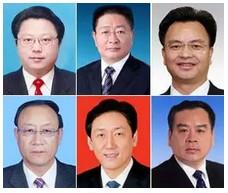
        The first row from left: Yang Weize, Mao Xiaobing and Wan Qingliang.

        The second row from left: Zhang Tianxin, Chen Chuanping and Wang Min.

        In 2006, a case of collective corruption in Chenzhou officialdom led by Li Dalun, secretary of Chenzhou Municipal Party Committee, involved 158 party and government officials and business people. "In Chenzhou, Li Dalun has the final say." The Standing Committee of the Municipal Party Committee became his "centralized". In the later period of Li Dalun’s power, the selection of cadres was directly related to money. "The position promotion depends on the thickness of tickets".

Nine, the state-owned enterprise boss

Post risk coefficient: three and a half stars

        Risk point: the unique position of being both an official and a businessman makes improper interests within reach.

        1. Monopoly position and difficult supervision;

        2. It is also official and business, close to the water tower;

        3. Huge benefits are within reach;

        4. Bribery traps are everywhere.

        Li Yongzhong, an anti-corruption expert, believes that in more than two years after the 18th National Congress of the Communist Party of China, the main battlefield of anti-corruption began to break the stalemate. Although the situation is still severe and complicated, the internal corruption has begun to loosen, and the comparative advantage has been achieved. "It is urgent to open up the second battlefield of anti-corruption, that is, the anti-corruption in the hardest hit areas of state-owned enterprises and central enterprises."

        According to statistics, after the 18th National Congress of the Communist Party of China, there were 74 senior executives of state-owned enterprises and state-owned companies. Except for 13 people whose level information was unknown, there were 60 senior executives at or above the departmental level. Among them, there are four vice-ministerial executives, namely Song Lin, former chairman and party secretary of China Resources Group, Wang Yongchun, former deputy general manager of China Petroleum Natural Gas Group, Li Hualin, former deputy general manager of China Petroleum Natural Gas Group and Sun Zhaoxue, former general manager of China Aluminum Company. Central enterprises based on special status and advantages have become the hardest hit areas of corruption in state-owned enterprises, with 36 people falling off the horse, accounting for almost half of the country.

        On the one hand, it is the title of "red-top businessman" and its market position, on the other hand, it is a huge amount of bribes and a very high "imprisonment rate", which makes the boss of state-owned enterprises an enviable job and a high-risk position. "How much did the boss of state-owned enterprises take? How much should I get? " This is a controversial issue. The trap of bribery exists everywhere all the time, which is hard to prevent and fight.

If you can’t get "power", you can get "money"

        Wang Shengjie, former chairman and general manager of the board of directors of Guangzhong Enterprise Group, said, "I always think it’s unfair. Those farmers’ contractors used to be illiterate, but later they all made a fortune doing this and that. We have worked in state-owned enterprises for a lifetime and worked hard for a long time. In the end, there is no more income. So I want to get some benefits by running a company and holding shares. "

X. Director of Housing Management

Post risk coefficient: Samsung

        Risk point: As the last important supervision barrier set by the government for real estate management, the real estate management bureau has a great responsibility.

        1. Due diligence will prevent real estate disputes, while dereliction of duty will indirectly create real estate disputes;

        2. Due diligence will improve housing security, while dereliction of duty will condone speculation.

        Choose the former or the latter in the face of responsibilities and interests? Before the interests of the people and businesses, forward or backward? These problems have become the vane of the professional risk of housing management director. He can choose to bring the "black-hearted" director to justice in the management of real estate surveying and mapping, or he can choose to collude with the director. Imperfect system, inadequate supervision, and lack of sense of responsibility and mission may lead them to the point of no return under the temptation of interests.

 Zhou Jiugeng, the director of "sky-high smoke", encountered "human flesh search"

        At the end of 2008, when house prices began to fall, Zhou Jiugeng, the director of the Housing Management Bureau of Jiangning District, Nanjing, made a statement to prevent developers from selling houses at low prices. As soon as this statement came out, Zhou Jiugeng became popular on the Internet. Some netizens pointed out through "human flesh search" that Zhou Jiugeng usually smokes 1,500 yuan a piece of "sky-high cigarettes" and wears more than 100,000 yuan a piece of famous watches … Under the overwhelming attack of online public opinion, the local Commission for Discipline Inspection launched an investigation into Zhou Jiugeng.

        Wu Guangchun, member of the Standing Committee of the former Municipal Party Committee of Tongling City, Anhui Province, said: "I not only failed to manage myself well, but also failed to manage my family well. 90% of the money I received was transferred by my relatives and friends on behalf of my lover. These closest people sent me to court step by step."

(Source: People’s Forum, People’s Network, Xinhuanet, Zhongqing Daily, China Business News, compiled by People’s Forum reporter Wang Yufeng, original title: "Officialdom Ecology, which post has the highest risk factor? 》)
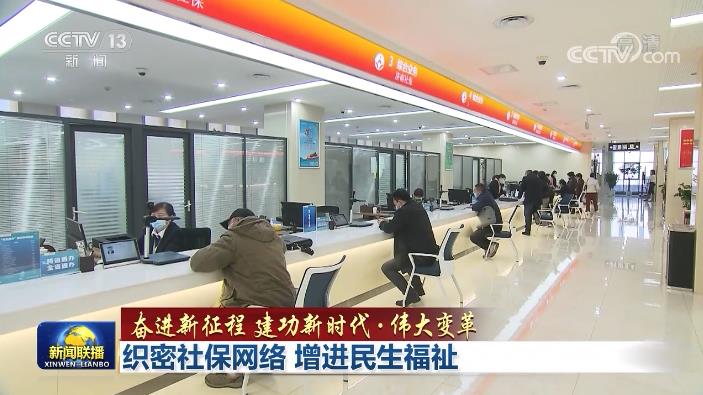
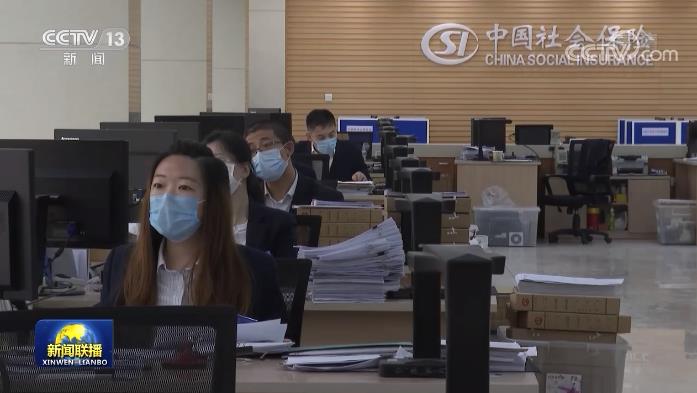
[Striving for a New Journey, Building a New Era and Great Change] Weaving a dense social security network to enhance people’s livelihood and well-being.

  Cctv news(News Network): Social security concerns people’s most concerned, direct and realistic interests. Since the 18th National Congress of the Communist Party of China, the CPC Central Committee with the Supreme Leader as the core has put the construction of social security system in a more prominent position, and pushed the construction of China’s social security system into the fast lane. At present, China takes social insurance as the main body, including social assistance, social welfare, social preferential treatment and other systems, and a fully functional social security system has basically been established.

  Since 2012, with the in-depth implementation of the universal enrollment plan, the number of people participating in basic old-age insurance in China has increased from 790 million ten years ago to 1.03 billion, and the number of people participating in basic medical insurance has exceeded 1.36 billion.

  From "wide coverage" to "full coverage", in order to make more insured and uninsured people have income, a sense of security, medical care and help … … Since the 18th National Congress of the Communist Party of China, the CPC Central Committee with the Supreme Leader as the core has insisted on universal coverage of social security as the goal of building a well-off society in an all-round way, and put forward the policy of full coverage, basic protection, multi-level and sustainable development. Following this new policy, a social security reform has begun: from unifying the basic old-age insurance system for urban and rural residents to integrating the basic medical insurance system for urban and rural residents; From promoting the universal enrollment plan, reducing the social insurance rate to starting the implementation of the national overall planning system of enterprise employee pension insurance … … In the land of China, people, regardless of urban and rural areas, regions, genders and occupations, have corresponding institutional guarantees in the face of risks such as old age, illness, unemployment, work injury, disability and poverty.

  Since the 18th National Congress of the Communist Party of China, China’s social security reform has witnessed the greatest strength, the fastest development speed and the widest coverage. It is also a period in which people are most concerned about the most direct and realistic interests and the most urgent problems are solved.

  Liu Lingzhi, a retiree who lives in Shijiazhuang, Hebei Province, just applied for an electronic social security card online, so that she can directly "scan the code to buy medicine" in some pharmacies. Not only that, but in the future, her medical insurance credit card records and monthly pension payment will be "available online". From cards to codes, from basic social security services to diversified convenience services, social security cards are becoming more and more powerful. In addition to receiving social security benefits and handling the transfer of social security relations, they can also serve as medical cards, bus cards, park cards and library cards in some provinces and cities … … Nowadays, the number of social security card holders in China has increased from 341 million at the end of 2012 to 1.355 billion, of which the total number of applications for electronic social security cards has exceeded 540 million.

The wind has changed. It is rare for China to launch sanctions. 29 countries have been warned that many countries have begun to cut the US-Europe alliance.

Recently, the tension of the US trade war with China has intensified. Following the imposition of tariffs on electric vehicles, its allies strengthened their control over China’s semiconductor exports, which triggered China to take rare sanctions and issued a strong warning to a wide range including 29 countries. In this context, some countries began to re-evaluate their relations with the United States and the European Union, seeking distance. With the approaching of the US election, Biden’s term of office has come to an end, but the US containment strategy towards China has become increasingly fierce. A series of tariff measures in the United States, the European Union and Canada, as well as the escalation of Dutch export restrictions on semiconductors to China, all show this trend. Faced with this pressure, China had frequent and in-depth communication with the EU since the initial investigation stage, but the other side insisted on its own opinion, forcing China to implement unprecedented countermeasures, including four major countermeasures against Canada, one of which initiated the world’s first "anti-discrimination investigation" in a pioneering way, which was not only aimed at Canada, but also intended to warn other 29 countries and countries potentially considering similar actions.

China’s tough response has caused subtle changes in the international situation, and Spain, Norway and other countries have begun to show differences from the positions of the United States and Europe. Spanish Prime Minister Sanchez and Norwegian Prime Minister Steller visited China one after another, expressing their desire to maintain dialogue and cooperation in their differences and showing their diplomatic posture of seeking win-win results for all parties. The leaders of both countries have emphasized the importance of maintaining cooperative relations with China and are unwilling to blindly follow the US policy toward China.

In addition, Turkey’s trend is particularly remarkable. Due to the stagnation of the process of joining the European Union, it actively seeks to join the BRICS framework, with a view to promoting economic ties with Russian, China and other countries, and positioning itself as a bridge connecting Europe and Asia. Behind this move, Turkey’s judgment on the changes in the global geopolitical pattern is intended to find a balance between the East and the West, and at the same time, it also reflects concerns about China’s possible counter-measures.

On the surface, this series of diplomatic interactions is an attempt by countries to avoid becoming the target of China’s counter-measures, which in essence reflects the profound changes in the global power balance. As a force that can compete with the United States, the effectiveness and determination of China’s counter-measures make the traditional alliance face a test, and the international community’s strategy towards China is divided. The current dynamic adjustment of international relations is more based on the cognition and adaptation to the new reality of strength comparison.

Zhang Jiahui returns to the screen with Hu Xinger and Zeng Shunxi: "The Blood of the Dog" ignites 20 years of TV drama feelings!

Introduction

Time flies, and 20 years have passed like a wonderful long-form drama. Now, Zhang Jiahui, a legendary superstar in the Chinese film and television industry, has decided to write a new chapter in this drama of his life. He joined hands with powerful actress Hu Xinger and the new generation of Xiaosheng Zeng Shunxi to participate in the filming of the Youku criminal investigation drama "Blood of the Humble Dog", bringing the audience an audio-visual feast that spans time and space. This news was like a stone thrown into a calm lake, causing countless ripples, triggering the public’s enthusiastic attention and expectation for this drama.

Main characters and background, Zhang Jiahui: The Best Actor’s Screen Return

Cheung Ka Fai, the best actor who conquered thousands of audiences with his superb acting skills and low-key and restrained temperament, has created many characters that have been deeply rooted in the film and television industry since he stepped into the film and television industry in 1989. Whether it is the cold killer in "Witness" or the down-and-out boxer in "Guild Wars", his performances always accurately capture the soul of the character and give it life. Despite his brilliant achievements in the field of film, Cheung Ka Fai’s love for TV dramas has never diminished. His last starring role in a TV series can be traced back to the 2004 TVB classic "Tianya Hero Doctor". This return after a lapse of two decades is not only an important turning point in his personal artistic career, but also an affectionate look back on the golden age of Hong Kong TV dramas.

Xinger Hu: The Muse of Power

Wu Xinger, a tenacious force in the Hong Kong film and television industry, is widely praised for her solid acting skills and diverse character-building abilities. After participating in the Miss Hong Kong election in 1999 and winning the third place, Wu Xinger quickly rose to the forefront of TVB, participating in many well-known works such as "Up to the Sky" and "My Savage Grandma", and won the crown of the TV series many times. She and Zhang Jiahui have worked together tacitly in works such as "Street of Rage", and this time they joined hands again, which undoubtedly injected a strong chemical reaction into "The Blood of the Dog".

Zeng Shunxi: The new generation of forces is ready to go

Zeng Shunxi, as a rising star in the mainland film and television industry in recent years, has won the love of young audiences with his sunny and handsome image and increasingly mature acting skills. From "The Best Time of Youth" to "Yitian Dragon Slayer" and other works, he has shown great performance potential and character control. Joining "Blood of the Dog" this time, with his predecessors Zhang Jiahui and Hu Xinger on the same stage, is undoubtedly an important experience in his acting career, and will also add a touch of youthful vitality to the series.

An Overview of the New Drama "Blood of the Dog"

The Blood of the Pigeon Dog is a masterpiece of criminal investigation directed by former TVB gold medal team Su Wancong and written by UEFA Champions League. The drama takes complex and tortuous cases as the main line, deeply analyzes the light and darkness of human nature, and shows the fierce collision of justice and evil. Su Wancong and UEFA Champions Ying, a golden partner, have worked together to create many well-known masterpieces, such as the "Apostle Walker" series. Their addition has undoubtedly provided a solid guarantee for the quality of "Blood of the Pigeon Dog".

Shooting plan and location

According to reports, "The Blood of the Pummy Dog" is scheduled to start shooting at the end of September this year, and the crew will shoot in Macau and Jiangmen. These two cities full of story history not only provide a rich and diverse visual background for the series, but also have a deep connection with the Hong Kong TV drama industry. Macau’s unique cultural blend of Chinese and Western cultures, as well as Jiangmen’s historical sedimentation as an important city in the Pearl River Delta, will add a strong regional color to the plot, making the audience feel as if they are in the story.

Zhang Jiahui’s return significance

Zhang Jiahui’s return is not only a continuation of his personal artistic pursuit, but also an affectionate tribute to the style of traditional TV dramas. He admits that TV dramas give actors more abundant performance space, allowing them to dig deeper into the connotation of characters, which is why he misses and longs to return. Facing the new script and character challenges, Zhang Jiahui expressed his expectation to surpass other versions and pass on the "performance torch" in his hand. At the same time, his working partnership with Hu Xinger foreshadows that there will be wonderful antagonists waiting for the audience in the play.

Audience expectations and market reaction

As soon as the news came out, the majority of fans and the media responded enthusiastically to Zhang Jiahui’s return, and expressed their eagerness for "Blood of the Dog". On social media, the relevant topic trendiness continued to soar, which was enough to foresee the market potential of the drama after it was broadcast. Zhang Jiahui’s appeal, Hu Xinger’s stable play, and Zeng Shunxi’s fresh blood are expected to trigger a new round of drama chasing craze, injecting a boost into the long-sluggish Hong Kong TV drama market.

conclusion

Overall, "The Blood of the Hump Dog" not only carries the ambition of Zhang Jiahui to fight for the screen in 20 years, but also inherits and carries forward the spirit of the golden age of Hong Kong TV dramas. This work, which brings together the best actor, the queen and the new generation of actors, is expected to become an annual hit series with its excellent production, gripping plot and profound character portrayal, which has far-reaching significance for Zhang Jiahui personally and the entire Hong Kong TV drama industry.

Let’s look forward to the brilliant bloom of "The Blood of the Dog", witnessing how Zhang Jiahui, Hu Xinger, and Zeng Shunxi interpreted a police and bandit situation intertwined with crime, redemption, and human nature in the play, presenting a visual and spiritual double feast for the audience.

Responsible editor:

[Report on the same topic] Wenzhou, Zhejiang: Digital empowerment supervision promotes social "intellectual governance"


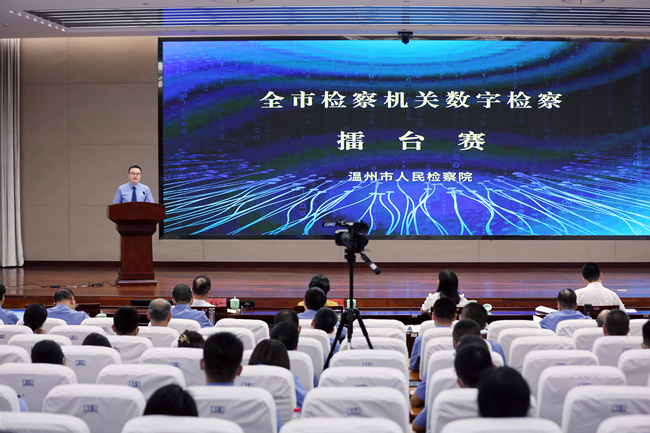
Chai Zhengtao, Party Secretary and Procurator-General of Wenzhou Procuratorate, made a speech at the Digital Prosecution Competition of the city’s procuratorial organs.


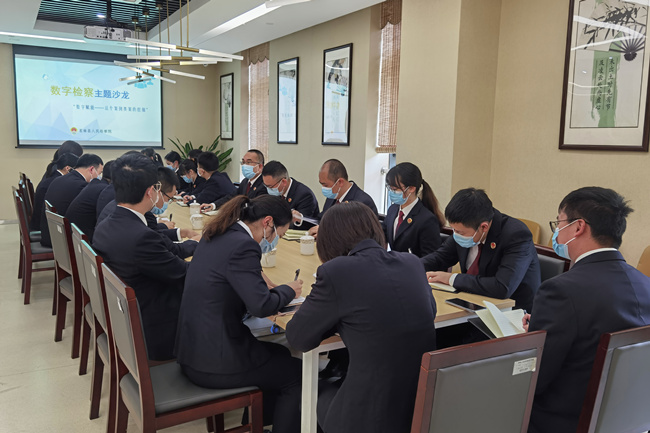
Cangnan County Procuratorate launched a digital procuratorial salon activity with the theme of "Digital Empowerment —— Mining from Case to Case".

Big data is the "technology wing" to improve the legal supervision ability. In 2022, the Supreme People’s Procuratorate made a top-level deployment of the "Procuratorial Big Data Strategy". This year is also the year when the Zhejiang Provincial Party Committee promoted the comprehensive integration, breakthrough in integration and centralized display of digital reform.

"Wenzhou procuratorial work should deepen the strategy of" procuratorial big data ",target the goal of" digital empowerment legal supervision takes the lead ",grasp the implementation, vigorously promote it, and achieve greater results with" digital empowerment supervision and supervision to promote governance "to realize the reshaping reform of Wenzhou procuratorial work." At the conference on procuratorial work in Wenzhou, Zhejiang Province in early 2022, Chai Zhengtao, Party Secretary and Procurator-General of Wenzhou Procuratorate, put forward a clear goal to the city’s prosecutors.

Over the past year, Wenzhou City Procuratorate has paid close attention to implementation, increased its efforts in the actual combat effectiveness of digital prosecution, fully exerted its leading, inciting and reshaping role, strengthened its actual combat orientation, filled in shortcomings and weaknesses, took the initiative and kept innovating, and made every effort to promote the reshaping reform of the legal supervision mode of "digital empowerment supervision and supervision promoting governance". The great kinetic energy of digital prosecution is being transformed into a powerful potential energy to promote the modernization of social governance in Wenzhou.

Strengthen overall planning  Stimulate vitality in all-round integration

"In response to the’ porcelain-touching’ auto insurance fraud, our hospital dug deep into case clues, found difficulties in industry supervision, accurately screened data, and locked in supervision targets." "Our hospital focuses on the supervision of illegal trading of precursor chemicals and dangerous chemicals, and weaves the source prevention network, process supervision network and risk prevention and control network." "Based on the clues found by using the legal supervision model, our hospital successfully handled two false arbitration cases."……

Back to the beginning of September, 2022, following the "Golden Idea" exchange exhibition of digital prosecution and the report exchange meeting of digital case handling, Wenzhou procuratorate held a digital prosecution competition, and the main leaders of grass-roots procuratorates took the stage to show the actual results of digital prosecution "hard core". This is a microcosm of the digital procuratorial work personally grasped by the chief procurators of Wenzhou city and county procuratorates.

"The digital reform of procuratorial organs mainly focuses on finding common problems and common loopholes in social governance, promoting the’ one thing’ multi-scene reform, helping to solve various social governance problems and preventing and resolving various potential risks." In the digital prosecution competition, Chai Zhengtao made an in-depth interpretation of the characteristics of digital prosecution, so that all police officers could have a deeper understanding of the big data legal supervision path of "case handling-case supervision-system governance".

On this basis, Wenzhou’s digital procuratorial work has strengthened overall planning, made great efforts to deepen the breakthrough in one domain and the breakthrough mechanism shared by the whole province, and stimulated everyone’s endogenous motivation to participate in digital procuratorial work through measures such as selection, award and pioneering certification by digital procuratorial demonstration institutes, creating a batch of "landmark achievements" in digital case handling.

According to reports, since 2022, Wenzhou procuratorial organs have maintained the popularity of digital procuratorial work and promoted "one piece" with "one point". A total of 8 cases have been selected into the guidelines for digital supervision and handling of cases by procuratorial organs in Zhejiang Province.

Integration breakthrough  Fight the "tough battle" of data sharing

Digital reform is not only a "blue ocean" with broad prospects, but also a "no man’s land" to overcome difficulties. Therefore, to deepen digital prosecution, we must adhere to targeted focus, precise efforts, focus on key tasks and promote integration breakthroughs.

"At present, the biggest problem that hinders the promotion of digital procuratorial work is the sharing of law enforcement judicial information. Deepening the sharing of law enforcement judicial information is a key link to break through the data barrier of law enforcement judicial information. " Chai Taotao said.

"Information sharing is the basis for realizing the supervision from case handling to case-like. However, at present, it is difficult to obtain full data, and it does not meet the requirements of actual combat. Therefore, we should strengthen the demand orientation of legal supervision, make full use of superior policy documents, take the initiative to connect with relevant data sources, and obtain judicial data information of law enforcement in the jurisdiction through multiple channels. In 2022, the total amount of data collected and shared by our hospital increased by dozens of times compared with 2021. " Li Jun, director of the case management office of Wenzhou Procuratorate, introduced.

It is understood that since 2022, Wenzhou procuratorial organs have collected more than 50 million pieces of law enforcement judicial data at the city level alone, of which more than 30 million pieces have been stored on the ground, more than 20 million pieces have been called in the form of interfaces, and more than 40 inquiry interfaces have been opened. The total amount of data collection ranks in the forefront of procuratorial organs in Zhejiang Province.

The promotion of law enforcement judicial data sharing has effectively met the demand of collision and comparison between procuratorial data and law enforcement judicial information data in the process of digital supervision, and solved the data bottleneck problem to some extent. "In the case of dealing with Zhang and others buying and selling certificates of state organs, we found that illegal buying and selling had a high incidence of criminal activities on public accounts. By collecting basic data from the district big data management bureau, market supervision bureau, public security bureau and other units, and then through data modeling and data collision, we successfully compared 278 suspects. At the same time, we issued procuratorial suggestions to the administrative departments, urging them to cancel or cancel 44 companies that violated the law and 374 companies that were abnormally registered, and achieved the supervisory effect of inciting’ big governance’ with’ small cases’. " The procurator of the Longwan District Procuratorate in Wenzhou said.

There are tens of millions of data, and safety compliance is the first. While actively obtaining data, Wenzhou procuratorial organs pay attention to data security management, improve the data use approval process and data security management responsibility, establish a trinity data security management mechanism of authorization, authentication and audit, and at the same time promote the construction of data center, realize the low-code operation of prosecutors using data interface to query, and ensure the safety of data use.

Remodeling mode  Achieve a significant leap in the quality and effectiveness of legal supervision.

"The ultimate goal of digital prosecution is to improve the quality and effectiveness of legal supervision, and the direct result is to run more legal supervision cases with good quality and effectiveness." Chai Taotao said.

It is understood that since 2022, Wenzhou digital case supervision innovation case model has exploded, and the basic scale has been relatively large. However, how to strengthen the centralized management and key promotion of a large number of innovative case models of digital case supervision, and do a good job in the progress planning of digital supervision projects in Zhejiang Province and Wenzhou City has become an urgent problem to be solved.

"In this regard, we took the lead in developing the application of special supervision management command scene in the procuratorial organs of Zhejiang Province, thus realizing the visualization of digital procuratorial effectiveness display and overall management’ a game of chess’ in the city and county procuratorates, and at the same time connecting with the data application platform of Zhejiang Procuratorate, realizing the interconnection of supervision models, strengthening the whole process management of digital case-handling projects from’ project initiation’ to’ project closure’, and avoiding the waste of clues and the’ unfinished supervision’." Jin Zhiguo, the developer of this application and deputy director of the case management office of Wenzhou Procuratorate, said that the hospital has been identified as the only scene construction task undertaking hospital of digital procuratorial command center in Zhejiang Province.

Under the guidance of Wenzhou City Procuratorate, the digital procuratorial work of grass-roots procuratorates in this city is blooming and fruitful. The ouhai district Procuratorate created its own digital supervision model, and intelligently obtained 15 cases with 17 people who were not standardized in legal aid, so as to realize the accurate supervision of legal aid work in the whole process of criminal proceedings; Yueqing City Procuratorate carried out case supervision on the protection of green tax-related state-owned property, issued procuratorial suggestions to the tax authorities, urged them to recover taxes and late fees of 13.58 million yuan, and promoted Wenzhou City Procuratorate to formulate guidelines for digital supervision and handling cases in related fields; Rui’ an City Procuratorate has set up an intelligent auxiliary system for intellectual property case supervision, accurately screening clues that violate the prohibition of employment, promoting information sharing between market supervision and management departments and courts, and allowing market supervision and management departments to obtain criminal judgments and judgment execution data at the first time.……

"The hospitals have formed a trend of chasing after each other in handling digital cases, and the endogenous motivation of’ everyone is a digital case handler’ has been constantly stimulated." Chai Taotao introduced that by the end of December 2022, 17 digital supervision projects deployed by Zhejiang Provincial Procuratorate had all been completed in Wenzhou, and nearly 800 cases had been supervised.

"Wenzhou Procuratorate is doing its best to do the second half of the article" Supervision for Governance ",based on the special action of digital supervision, in accordance with the path of big data legal supervision of" case handling-case supervision-system governance ",aiming at the difficult point of social governance, strengthening communication and cooperation with relevant departments, promoting industry governance, mechanism construction and normalization special rectification, giving full play to the integrated effect of" one drop at a time and full revitalization ",and further realizing the quality and effectiveness of legal supervision of procuratorial organs. Chai Taotao said.

(Reporter Fan Yuehong   Correspondent Wang Lun   Dai Yichen)

Wencheng: digital delivery eliminates the pain of the parties.


The application of digital delivery has been piloted in many procuratorates in Zhejiang.

"Now legal documents can be delivered online, saving a lot of trouble! It takes less than a minute to sign the document! " Recently, Zhou, a criminal suspect in Jiangxi, signed the letter of attorney, confession and leniency system and other documents sent by wencheng county Procuratorate with one click. At this time, he is working in a local restaurant, ready to save money to pay the victim Huang.

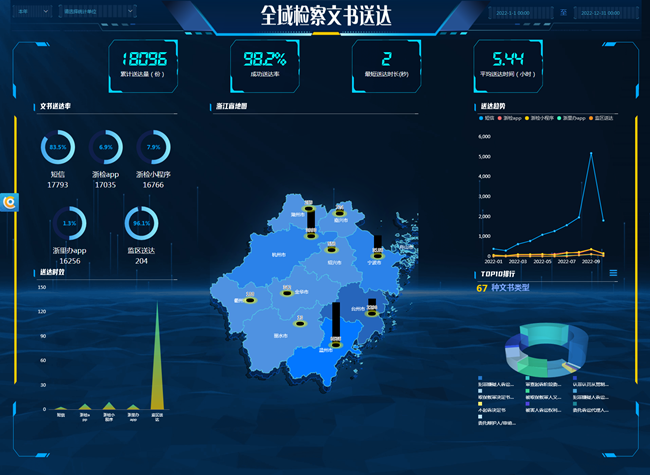
From the original 1-3 days to the shortest 46 seconds now, documents reach the parties faster. Behind this change is the digital delivery application jointly developed by several procuratorates in Wenzhou. It is understood that there are hundreds of types of procuratorial documents and delivery targets, and the traditional delivery methods have problems such as long time, no trace, and the parties need to run many times. After the digital delivery application is launched, the addressee can "sign for" legal documents with one click through SMS, "Zhejiang Procuratorate" App, WeChat applet and "Zhejiang Office" App.

Chen Feng, Party Secretary and Procurator-General of wencheng county Procuratorate, said that the identity information used in the application of digital delivery comes from public security household registration information, integration of politics and law and other platforms, and real-name authentication is carried out by using technologies such as face recognition to ensure the security of delivery. In addition, opening up the "Zhejiang Procuratorate" App and the "Zhejiang Office" government platform will make the operation more convenient and time-saving. At the same time, the digital delivery application is embedded in the procuratorial business application system, which realizes the data interaction between the internal and external networks and ensures the accuracy of document data.

Since the digital delivery application was launched at the end of September, 2021, more than 27,000 documents have been delivered, and the average delivery time has been reduced by more than 50% compared with the traditional delivery method. Most of the recipients have completed the document signing within half an hour.

(Xia Lingxi)

Yueqing: The problem that the seized vehicles are difficult to track and detain has been solved.

"I will cooperate and drive the other two cars to the court this afternoon." A few days ago, in the underground garage, the executor Lu handed over the key of the seized car while promising to the prosecutor of Yueqing City Procuratorate and the executive judge of the city court who came to detain the vehicle. Since April, 2022, Yueqing City Procuratorate has carried out special supervision activities of digital prosecution for civil enforcement of vehicle seizure with digital empowerment, and supervised the successful implementation of 27 cases of vehicle seizure.

Lu and her husband Zhao are defendants in a private lending dispute. At the beginning of 2021, Lu and his wife were sentenced by the court to return more than 6 million yuan in arrears. Because they have not been fulfilled, they were enforced by the court in September of the same year. During the execution, the court seized three cars under their names, but the seizure was not actually completed because no vehicles were found. At the same time, because there is no other property available for execution, the court took measures such as restricting high consumption for Lu and his wife, and included them in the list of untrustworthy executors.

After a long time, Lu and his wife relaxed their vigilance, drove on the road again, and parked their cars in the garage of a nearby community in order to avoid investigation. However, their illegal behavior was exposed.

In February 2022, when examining the implementation of a private lending dispute case, Yueqing City Procuratorate found that although the vehicles under the name of Lu and his wife were seized by the court, they were still in normal use.

"There are very few people who have been executed to take the initiative to deliver the seized vehicles. In addition, there are many people who have executed the judges. How to find the seized vehicles and how to actually seize them are all practical problems." After understanding the relevant situation, the hospital found that this kind of situation has certain universality and modular characteristics of case-like supervision, so it launched a special supervision activity of digital prosecution for civil enforcement of vehicle seizure.

Yueqing City Procuratorate established a database on the basis of collecting the list of enforcement cases, the data of seized vehicles and the data of vehicle and vessel tax payment. By querying the vehicle and vessel tax payment records, annual review and vehicle activity tracks, it determined the usage and general activity scope of vehicles, and found a number of vehicles that were seized but still driving normally. In response to the verified vehicle clues involved, the court issued procuratorial suggestions to the court according to law, suggesting that it resume execution of this execution case with property available for execution.

At the same time, after in-depth analysis, the prosecutor found that some vehicles of the executed persons were difficult to be seized because the enforcement judge could not know the specific location of the relevant vehicles. In this regard, Yueqing City Procuratorate, together with the municipal court, the Public Security Bureau and the traffic management department, jointly issued the "Implementation Opinions on Establishing a Cooperation Mechanism for Seizure of Motor Vehicles (Trial)", clarifying that the seizure information of civil enforcement vehicles should be shared and shared, and a joint working mechanism should be established to jointly promote the handling of civil enforcement cases involving vehicle seizure and seizure.

(Zheng Peina)

Ryan: screening clues about the eligibility of litigants in massive data


Prosecutors of Ruian City Procuratorate use the information database of parties in civil litigation cases to screen clues for handling cases.

Recently, the Wenzhou Procuratorate promoted the experience of special procuratorial supervision of litigation subjects in Ruian Procuratorate relying on big data in the whole city, unified and compared the data of relevant cases in Wenzhou, transferred nearly 2,000 clues, issued 38 effective referee supervision and procuratorial proposals, and issued 16 civil execution supervision and procuratorial proposals, which achieved good results.

In June 2021, the civil prosecution department of Ruian City Procuratorate received a complaint. The complainant, Ms. Zhuang, claimed that the court enforced her husband’s estate and the joint property of husband and wife, and rejected some of her claims for inheritance disputes.

After investigation, the prosecutor learned that Ms. Zhuang’s husband, Chen Mou, was the executor of another financial lending dispute and died of illness on November 7, 2018. On January 18, 2019, the Ruian City Court filed a case to accept Ms. Zhuang’s inheritance dispute. However, during the trial of the case, some of the litigation objects, which are the common property of husband and wife, were enforced by the court in the financial lending execution case, and Chen Mou was also included in the list of people who were executed for breach of trust.

In view of the mistakes of the subject in the execution of the case and the problem of executing property beyond the scope of the estate, the Ruian Procuratorate actively communicated with the court. In April, 2022, the Ruian City Court replied that it had returned the wrongly executed case money to Ms. Zhuang, an outsider, by starting the execution revolving procedure, cancelled the wrong measures of identifying dishonesty and restricting high consumption, and corrected the wrong judgment documents.

Taking this case as an opportunity, Rui ‘an City Procuratorate established the information database of parties in civil litigation cases, screened the data of more than 200,000 parties in court trials and enforcement cases over the years, and screened out a series of case clues about the eligibility of parties in civil trials and enforcement cases. By the end of November, 2022, Rui ‘an City Procuratorate had issued 4 proposals for civil execution supervision and procuratorial work, 11 proposals for retrial procuratorial work, transferred 1 case clue to the administrative procuratorial department and 1 case clue to the duty crime investigation department, and all relevant procuratorial suggestions were adopted.

(Lin Feifan)

Lucheng: Building a Digital Supervision Model of "Margin to Fine"

Recently, the Procuratorate of Lucheng District of Wenzhou City has built a digital supervision model to supervise the cases where the bail pending trial is linked with the execution of property penalty, helping the court to execute the deposit for 121 people, involving an execution amount of more than 1.04 million yuan.

In March 2022, the prosecutor of Lucheng District Procuratorate found that some cases were terminated by the court because the executed person had no property available for execution, but there were still relevant personnel’s bail pending trial in the security deposit account of the public security organ.

In this regard, prosecutors take the "deposit-to-fine" as the breakthrough point of supervision, build a case-like supervision model, actively coordinate the public security organs and the courts, collect the data of deposit payment and court fine payment of public security organs since 2019, promote the implementation of the deposit paid by criminals sentenced to property crimes in the investigation stage of public security organs, and effectively safeguard judicial authority.

At the same time, the Lucheng District Procuratorate further extended its supervision tentacles, closely followed the whole process of the deposit transfer of the people involved, cooperated with the public security organs to carry out the deposit clearance, and returned the deposit of 2.54 million yuan to 584 people who met the refund conditions, fully protecting the property rights and interests of the people involved.

In addition, the Lucheng District Procuratorate has strengthened communication and cooperation with the courts, public security, judicial administration and other departments, and jointly issued the Implementation Measures on Establishing the Linkage Mechanism between Bail Pending Trial and Property Penalty Execution (Trial), which takes fine penalty as the entry point of property judgment, brings the deposit into the scope of court execution as criminal property, promotes the normalization and institutionalization of the linkage between Bail Pending Trial and property penalty execution, and effectively plugs the loopholes in the management of deposit circulation.

(Wang Fenghong)

Yongjia: Tapping the Potential of Data and Accurately Locking the Supervision Clues of Non-litigation Execution

"Nowadays, court enforcement activities are becoming more and more standardized, which is inseparable from the digital supervision work carried out by procuratorial organs." Recently, a representative of Zhejiang Provincial People’s Congress said when evaluating the effectiveness of administrative non-litigation case execution activities carried out by the court system.

At the beginning of 2022, when Yongjia County Procuratorate handled an execution supervision case, it found that there was still a large amount of water in the bank account of the executed company, and in the case of normal tax payment and operation of the company, the court ruled to terminate the execution procedure on the grounds that the executed company did not find any property actually available for execution. Later, when the executed company was well funded, the court did not resume execution in time, which caused the administrative fine to be delayed.

In this regard, Yongjia County Procuratorate fully tapped the potential of big data, especially in view of the actual property status and administrative law enforcement procedures of the executed person, opened up data acquisition channels, built a legal supervision model, and obtained effective supervision clues through massive data collision. In addition, the hospital also collected information from provincial and municipal data platforms, collided with the data of court enforcement cases, accurately excavated a number of supervision clues, and promoted the resumption of administrative fines of more than 1.36 million yuan.

According to reports, Yongjia County Procuratorate’s practice of digitally supervising the termination of this execution procedure has been affirmed by Zhejiang Provincial Procuratorate, promoted in the procuratorial organs of this province, and promoted the court system of Zhejiang Province to carry out governance on related execution issues. By the end of December, 2022, the procuratorial organs of Zhejiang Province issued procuratorial suggestions on cases that were not resumed in time after the execution of administrative non-litigation execution ended, and urged the court to add more than 200 people to be executed, and urged the execution to reach the designated position of more than 15 million yuan.

(Hu Jing)

Russian Security Service: A railway track in Voronezh was damaged by an explosive device.

    Xinhua News Agency, Moscow, June 5 (Reporter Zhao Bing) On the 5th, the Russian Federal Security Service announced that a railway track in Voronezh, Russia was damaged by an explosive device.

    According to the report, when a train passed through Voronezh, an explosive device exploded, causing damage to the tracks. Due to the emergency braking measures taken by the train crew, the tragedy was avoided.

    The circular also said that all the circumstances of the incident have been investigated. The investigation department has good reason to file a criminal case on suspicion of "terrorism"

Reference news published foreign reports: Spring Festival Evening tribute to the anti-epidemic fighters is moving.

  CCTV News:On the 26th, Reference News published the attention of foreign media in the headline column of "The Land of China" on the participation of the program "Love is a Bridge" in the 2020 Spring Festival Gala of China Central Radio and Television General Station.The full text is as follows:

  The Reference News was published on January 26th.

  BEIJING, Jan. 25 (DPA)-Against the background of travel restrictions to prevent a new type of pneumonia from spreading outside Wuhan, a city in central China, China ushered in the Year of the Rat, the first of the 12 zodiac animals.

  At midnight, the Year of the Rat and the upcoming Year of the Pig completed the handover. For safety reasons, fireworks and firecrackers are not set off in big cities such as Beijing, but they are still set off in rural areas.

  The traditional Spring Festival Gala, which lasted for several hours on TV, joined the passionate appeal to fight the novel coronavirus epidemic this year.

  [Russia’s "Neva Today" website reported on January 25] Title: It is moving to pay tribute to the frontline staff of the anti-epidemic in the Spring Festival Evening.

  China Central Radio and Television General Station supplemented the contents of the 2020 Spring Festival Gala and decided to add a program to fight against new viruses.

  In order to ensure the health of actors and spectators, the main station has taken strict measures. It cooperated with the health and epidemic prevention departments to set up a medical support team for the Spring Festival Evening, to prepare for public health emergencies, and at the same time to do a good job in disinfection and sterilization of the Spring Festival Evening work area.

  As the only program without formal rehearsal, Bai Yansong, Kang Hui, Shui Junyi, He Hongmei, Hai Xia and Ouyang Xiadan, the six hosts of the main station, jointly recited the sitcom Love is a Bridge, telling the touching scene of preventing and controlling the pneumonia epidemic infected by novel coronavirus, and calling on people to work together to fight the disease.

  The scenario report drama said: "Thank you to everyone who is working hard to make this year a good one! Come on, Wuhan! "

  This program was added at the last minute before the Spring Festival Evening broadcast. Almost all Chinese will watch this Spring Festival Gala. As the most watched TV program, the Spring Festival Evening was even recorded in the Guinness Book of Records. For more than 30 years, it has been deeply loved by the people and has a long history.

  Photos released by central hospital of wuhan Weibo account on 24th show that medical staff in the front line of fighting against new pneumonia are celebrating the Lunar New Year in China. (Reuters)

  [Reuters, Beijing, January 24] The Spring Festival Gala broadcast by China National Television today paid tribute to the people of Wuhan and the medical staff fighting against the coronavirus crisis and encouraged them to win in the fight against the epidemic.

  According to tradition, hundreds of millions of people will sit around the TV to watch the Spring Festival Gala. Since the first Spring Festival Evening was broadcast in 1983, this four-hour party, which included sketches, music and dance, has been a must-see TV program.

  This year, a special program was added to this well-planned party at the last minute, and the time was arranged at the front of the whole party.

  The host of the program extended his best wishes to the front-line medical staff and Wuhan citizens. The hosts shouted, "We will win!"

  In a montage video, doctors and nurses wear protective clothing and work hard to take care of patients. Later, the hosts read more words of encouragement.

  Bai Yansong, one of the most famous hosts of CCTV, said at the party that the program about the virus epidemic was prepared temporarily shortly before the official launch of the Spring Festival Evening.

  Bai Yansong said, "Remember, we love you! Not only today, but also every day in the future. " At the same time, the camera lens switched to an audience at the scene, and tears rolled over her face.

  Bai Yansong’s colleague Kang Hui, who often hosts the evening news program, said that all Chinese are involved in the fight against the epidemic. Accompanied by passionate music and more pictures of medical staff wearing protective clothing on the big screen behind them, Kang Hui said: "There is no hurdle that we can’t get through!"

  For many people in Chinese, the Lunar New Year, which officially started this Saturday, is the most important festival of the year. However, this year’s celebration of the Year of the Rat was overshadowed by the virus epidemic.

People’s Republic of China (PRC) assembly, procession and demonstration law

(Promulgated by Decree No.20 of the President of the People’s Republic of China on October 31, 1989 at the Tenth Session of the Seventh the NPC Standing Committee on October 31, 1989, and amended according to the Decision on Amending Some Laws of the Tenth Session of the Eleventh the NPC Standing Committee on August 27, 2009)

  catalogue

  Chapter I General Provisions

  Chapter II Applications and Permits for Assemblies, Processions and Demonstrations

  Chapter III Holding of Assemblies, Parades and Demonstrations

  Chapter IV Legal Liability

  Chapter V Supplementary Provisions

  Chapter I General Provisions

  Article 1 This Law is formulated in accordance with the Constitution for the purpose of guaranteeing citizens’ exercise of the rights of assembly, procession and demonstration according to law and maintaining social stability and public order.

  Article 2 This Law shall apply to the holding of assemblies, processions and demonstrations in People’s Republic of China (PRC).

  The term "assembly" as mentioned in this Law refers to the activities of gathering in open public places to express opinions and wishes.

  The term "procession" as mentioned in this Law refers to the activities of marching in procession and expressing common wishes in public roads and open-air public places.

  Demonstrations mentioned in this Law refer to activities that express common wishes such as demands, protests, support and solidarity in open-air public places or public roads by means of assembly, procession and sit-in.

  This Law is not applicable to recreational and sports activities, normal religious activities and traditional folk custom activities.

  Article 3 People’s governments at all levels shall, in accordance with the provisions of this Law, guarantee citizens’ exercise of their rights of assembly, procession and demonstration.

  Article 4 When exercising the rights of assembly, procession and demonstration, citizens must abide by the Constitution and laws, and must not oppose the basic principles defined in the Constitution, nor harm the interests of the state, society and the collective or the legitimate freedoms and rights of other citizens.

  Article 5 Assemblies, processions and demonstrations shall be conducted peacefully, and weapons, controlled knives and explosives shall not be carried, and violence or incitement to violence shall not be used.

  Article 6 The competent authorities of an assembly, a procession and a demonstration are the municipal and county public security bureaus and city public security sub-bureaus where the assembly, the procession and the demonstration are held; Where a procession or demonstration route passes through more than two districts or counties, the competent authority shall be the public security organ at the next higher level than the public security organ of the district or county that passes through.

  Chapter II Applications and Permits for Assemblies, Processions and Demonstrations

  Article 7 To hold an assembly, a procession or a demonstration, an application must be made to the competent authority and permission must be obtained in accordance with this law.

  No application is required for the following activities:

  (1) Celebrations, commemorations and other activities held by the state or according to state decisions;

  (2) Assemblies held by state organs, political parties, social organizations, enterprises and institutions in accordance with laws and articles of association.

  Article 8 An assembly, a procession or a demonstration must be held with a responsible person.

  The person in charge of an assembly, a procession or a demonstration that needs to be applied for in accordance with the provisions of this Law must submit a written application to the competent authority five days before the date of holding. The application shall specify the purpose, mode, slogan, slogan, number of people, number of vehicles, type and quantity of audio equipment used, starting and ending time, place (including assembly place and dissolution place), route and name, occupation and address of the person in charge.

  Article 9 After receiving an application for an assembly, a procession or a demonstration, the competent authority shall notify its responsible person in writing of the decision of approval or disapproval two days before the date of application. If it is not permitted, the reasons shall be explained. Failure to notify within the time limit shall be deemed as permission.

  If it is really necessary to hold an assembly, a procession or a demonstration temporarily because of sudden events, it must be reported to the competent authority immediately; After receiving the report, the competent authority shall immediately examine and decide whether to grant or not.

  Article 10 Where an application for holding an assembly, a procession or a demonstration requires solving specific problems, the competent authority may, after receiving the application, notify the relevant authorities or units to negotiate with the person in charge of the assembly, procession or demonstration to solve the problems, and may postpone the application for holding for five days.

  Article 11 If the competent authority considers that holding an assembly, a procession or a demonstration according to the time, place and route applied for will seriously affect the traffic order and social order, it may change the time, place and route of holding the assembly, a procession or a demonstration when or after deciding to permit it, and notify its responsible person in time.

  Article 12 An application for holding an assembly, a procession or a demonstration shall not be permitted under any of the following circumstances:

  (a) against the basic principles set by the Constitution;

  (2) endangering national unity, sovereignty and territorial integrity;

  (3) Inciting ethnic division;

  (four) there is sufficient basis to determine that the application for an assembly, a procession or a demonstration will directly endanger public security or seriously undermine social order.

  Article 13 If the person in charge of an assembly, a procession or a demonstration refuses to accept the decision of the competent authority not to permit it, he may apply to the people’s government at the same level for reconsideration within three days from the date of receiving the notice of decision, and the people’s government shall make a decision within three days from the date of receiving the application for reconsideration.

  Article 14 The person in charge of an assembly, a procession or a demonstration may withdraw the application after submitting the application and before receiving the notice from the competent authority; After receiving the notice of permission from the competent authority, if it decides not to hold an assembly, a procession or a demonstration, it shall promptly inform the competent authority. If the participants have assembled, they shall be responsible for dissolution.

  Article 15 Citizens shall not launch, organize or participate in assemblies, processions and demonstrations of local citizens in cities other than their places of residence.

  Article 16 State functionaries shall not organize or participate in an assembly, a procession or a demonstration that violates the duties and obligations of State functionaries as stipulated in relevant laws and regulations.

  Seventeenth in the name of state organs, social organizations, enterprises and institutions to organize or participate in the assembly, procession and demonstration, must be approved by the person in charge of the unit.

  Chapter III Holding of Assemblies, Parades and Demonstrations

  Article 18 For assemblies, processions and demonstrations held according to law, the competent authorities shall send people’s police to maintain traffic and social order and ensure the smooth progress of assemblies, processions and demonstrations.

  Article 19 An assembly, a procession or a demonstration held according to law shall not be disturbed, impacted or destroyed by violence, coercion or other illegal means.

  Article 20 In order to ensure the procession held according to law, the people’s police responsible for maintaining traffic order may temporarily implement the relevant provisions of traffic rules flexibly.

  Article 21 In case of unforeseen circumstances during the procession, the person in charge of the people’s police at the scene has the right to change the procession’s route.

  Article 22 Where an assembly, a procession or a demonstration is held in or passes by the location of a state organ, a military organ, a radio station, a television station, a foreign embassy or consulate in China, the competent authority may set up a temporary cordon nearby in order to maintain order, and shall not cross it without the permission of the people’s police.

  Article 23 No assembly, procession or demonstration shall be held within a distance of 10 meters to 300 meters around the following places, except with the approval of the State Council or the people’s governments of provinces, autonomous regions and municipalities directly under the Central Government:

  (a) the location of the NPC Standing Committee, the State Council, the Central Military Commission (CMC), the Supreme People’s Court and the Supreme People’s Procuratorate;

  (2) the residence of the ambassador;

  (3) Important military facilities;

  (4) Airports, railway stations and ports.

  The specific peripheral distance of the places listed in the preceding paragraph shall be stipulated by the people’s governments of provinces, autonomous regions and municipalities directly under the Central Government.

  Article 24 The time for holding an assembly, a procession or a demonstration is limited to 6 am to 10 pm, unless it is decided or approved by the local people’s government.

  Article 25 Assemblies, processions and demonstrations shall be conducted in accordance with the permitted purposes, methods, slogans, starting and ending times, places, routes and other matters.

  The person in charge of the assembly, procession and demonstration must be responsible for maintaining the order of the assembly, procession and demonstration, and strictly prevent others from joining.

  When necessary, the person in charge of an assembly, a procession or a demonstration shall designate a special person to assist the people’s police in maintaining order. Personnel responsible for maintaining order should wear signs.

  Article 26 An assembly, a procession or a demonstration shall not be held in violation of laws and regulations on public security administration, nor shall criminal activities or incitement to crime be carried out.

  Article 27 The people’s police shall stop an assembly, a procession or a demonstration in any of the following circumstances:

  (1) Failing to apply in accordance with the provisions of this Law or failing to obtain permission for the application;

  (two) not in accordance with the purpose, manner, slogan, slogan, starting and ending time, place and route permitted by the competent authority;

  (three) in the process of endangering public security or seriously undermining social order.

  Under any of the circumstances listed in the preceding paragraph, the person in charge of the people’s police at the scene has the right to order dissolution; If a person refuses to dissolve, the person in charge of the people’s police at the scene has the right to decide to take necessary measures to forcibly disperse it in accordance with the relevant provisions of the state, and forcibly take the person who refuses to obey away from the scene or immediately detain him.

  If a participant in an assembly, a procession or a demonstration crosses the temporary cordon set up in accordance with the provisions of Article 22 of this Law, enters a certain range around a specific place listed in Article 23 of this Law where an assembly, a procession or a demonstration is prohibited, or commits other illegal and criminal acts, the people’s police may forcibly take him away from the scene or immediately detain him.

  Chapter IV Legal Liability

  Article 28 Whoever holds an assembly, a procession or a demonstration and violates the administration of public security shall be punished in accordance with the relevant provisions of the Law on Punishment of Public Security Administration.

  If an assembly, a procession or a demonstration is held in any of the following circumstances, the public security organ may give a warning or detain the person in charge and the person directly responsible for it for less than fifteen days:

  (1) Failing to apply in accordance with the provisions of this Law or failing to obtain permission for the application;

  (2) Failing to comply with the purpose, mode, slogan, starting and ending time, place and route permitted by the competent authority, and refusing to stop it.

  Article 29 Whoever holds an assembly, a procession or a demonstration and commits a criminal act shall be investigated for criminal responsibility in accordance with the relevant provisions of the Criminal Law.

  Those who carry weapons, controlled knives or explosives shall be investigated for criminal responsibility in accordance with the relevant provisions of the Criminal Law.

  If an application is not made in accordance with the provisions of this Law or the application is not approved, or the starting and ending time, place and route approved by the competent authority are not followed, and the dissolution order is refused, thus seriously undermining social order, the person in charge of the assembly, procession and demonstration and the person directly responsible shall be investigated for criminal responsibility in accordance with the relevant provisions of the Criminal Law.

  If a state organ is besieged or attacked, so that the official activities or state activities of the state organ cannot be carried out normally, the person in charge of the assembly, procession and demonstration and the person directly responsible shall be investigated for criminal responsibility in accordance with the relevant provisions of the Criminal Law.

  Those who occupy public places, intercept vehicles and pedestrians, or gather people to block traffic, thus seriously disrupting the order of public places and traffic, shall be investigated for criminal responsibility in accordance with the relevant provisions of the Criminal Law.

  Article 30 If an assembly, procession or demonstration held in accordance with the law is disturbed, attacked or otherwise destroyed, the public security organ may impose a warning or detain it for not more than 15 days; If the circumstances are serious enough to constitute a crime, criminal responsibility shall be investigated in accordance with the relevant provisions of the Criminal Law.

  Article 31 If a party refuses to accept the decision of detention punishment given by the public security organ in accordance with the second paragraph of Article 28 or the provisions of Article 30 of this Law, he may lodge a complaint with the public security organ at the next higher level within five days from the date of receiving the notification of the punishment decision, and the public security organ at the next higher level shall make a ruling within five days from the date of receiving the complaint; Anyone who refuses to accept the ruling of the public security organ at the next higher level may bring a lawsuit to the people’s court within five days from the date of receiving the notice of the ruling.

  Article 32 In the process of holding an assembly, a procession or a demonstration, anyone who destroys public or private property or infringes on others’ bodies and causes casualties shall be punished in accordance with the relevant provisions of the Criminal Law or the Law on Public Security Administration Punishment, and shall also be liable for compensation according to law.

  Article 33 If a citizen initiates or organizes an assembly, a procession or a demonstration of local citizens in a city other than his place of residence, the public security organ has the right to detain him or forcibly send him back to his original place.

  Chapter V Supplementary Provisions

  Article 34 The provisions of this Law shall apply to assemblies, processions and demonstrations held by foreigners in China.

  Foreigners in China are not allowed to participate in assemblies, processions and demonstrations held by citizens of China without the approval of the competent authorities.

  Article 35 The public security department of the State Council may formulate implementing regulations according to this Law and submit them to the State Council for approval and implementation.

  The standing committees of the people’s congresses of provinces, autonomous regions and municipalities directly under the Central Government may formulate measures for implementation in accordance with this Law.

  Article 36 This Law shall come into force as of the date of promulgation.

National candidates say that Beijing candidates in the college entrance examination also have all kinds of unhappiness and grievances.

  Text | Economic Net Xiaoxi

  Let’s start with a joke to help everyone get into the play — —

  What are you going to do if you have eight years left in your life?

  We do "5-year college entrance examination 3-year simulation".

p84-1

  The 2016 college entrance examination is coming soon. These days, candidates and parents in some southern and central provinces seem to be a little upset. In fact, students all over the country love and hate the college entrance examination, including Beijing students who are envied and hated by "local classmates".

  Who says Beijing’s admission score is low? It’s just that Tsinghua and Peking University have higher admission rates for Beijing students. But which place is not like this? Isn’t Fudan University recruiting many candidates from Shanghai? Aren’t there many candidates from Zhejiang University? Individual provinces in the western region have been taken care of in colleges and universities across the country!

  Moreover, many schools in Beijing attach more importance to quality education and all-round development. We not only have to study and take exams, but also cultivate all kinds of abilities. We are also under great pressure to attend all kinds of classes. It is also difficult for Beijing children to go to Tsinghua and Peking University. In order to send their children to a better school, many parents send their children to other provinces to study, and then come back to take the college entrance examination. The competition is also fierce.

  As a liberal arts student, I think there are few good liberal arts colleges in Beijing, only a few such as Peking University, National People’s Congress and Beijing Normal University, not as many as universities of science and engineering. Compared with science students, our liberal arts students have a narrow choice. Will people scold me if I say so? I’m just saying my feelings from a personal point of view. Moreover, language schools in Beijing are seriously unfair to male and female candidates. For example, in North Language and Foreign Languages, girls have to score much higher than boys to get into the exam.

p84-1

  In the history of Jiangsu college entrance examination, there was once the only "3+ comprehensive" with a record degree of devil, that is, three examination papers in addition to the number of languages and one large examination paper in physics, chemistry, history, politics, geography and biology. It sounds like it’s a breakdown. You can’t neglect any of the nine courses. Unfortunately, I caught up with this session.

  My sister’s high school is a national key high school in Jiangsu Province. By the time we graduated from Grade Two, we had finished the course of Grade Three. So we are reviewing and improving the whole senior three; Make papers, correct papers, and comment on papers … … After finishing all kinds of official simulation papers, the teacher will set up the papers by himself, which is called "darkness".

  No comparison, no harm. Two foreign students from Beijing came to my freshman class, and asked their relatives to come to my school in Jiangsu to receive "devil training". Their grades are far from the bottom of our class! In the end, after they returned to Beijing to take the college entrance examination, they were admitted to two good books in Beijing.

  Sister didn’t suffer for nothing, and was admitted to a local 211 school in Jiangsu. There is a classmate from Beijing in the class. When asked about the score of the college entrance examination, he is more than 100 points worse than me (at that time, Beijing adopted "3+ small synthesis", and the total score was 750 points like Jiangsu paper). However, people are quite calm: if it weren’t for poor grades, who would go to college in other places?

p84-1

  I have two biggest frustrations about the college entrance examination: first, the relevant policies have not taken care of populous provinces, and second, there are no particularly good universities in Henan.

  There are many people in Henan, and the competition for the college entrance examination is too fierce. When we fill in the volunteers, the school requires that every key university enrolled in Henan must be registered, but not two people at the same time. One is to avoid competition among students, the other is to ensure that every student with good grades can attend the key points, and the third is to ensure the enrollment rate of the school. I wanted to apply for Sichuan University, but one of my classmates also applied, so the head teacher did my ideological work and wanted me to apply for a key university in the west. I didn’t want to, so the class teacher joined my parents to do my work. They said: I am a fresh graduate, and my grades fluctuate greatly. That classmate’s grades are more stable than mine, so I guess I can’t pass the exam, and so on. I agreed. As a result, the results of the college entrance examination came out, and I scored higher than that classmate. I ignored my parents and class teacher for more than a month. The second unhappiness is that there are no particularly good universities in Henan. If there were, I wouldn’t have to travel all the way to the west to study, and the competition among Henan candidates would not be so fierce.

p84-1

  I have two biggest frustrations about the college entrance examination: first, the competition in the province is fierce; Second, there are not many good universities in Fujian, and there are few choices.

  Because children in Fujian don’t like going out of the province for the college entrance examination, almost all the top students will rush to Xiamen University, so Xiamen University may not have such a high admission score, but it was squeezed by students in the province, which made it difficult for us to enter Xiamen University.

  There are too few good schools in Fujian. Generally, the best students who don’t like going out of the province go to Xiamen University, followed by Fuzhou University, and then the ordinary schools in the province. The choice is too small. Moreover, the famous schools in the north recruit very limited people here.

p84-1

  Xiao Wu, an Anhui native, took the college entrance examination in 2007.

  My biggest dissatisfaction with the college entrance examination is that the essay topic "I don’t know what to say", and cheat people is not shallow.

  For many years in a row, the Chinese composition questions of the college entrance examination in Anhui Province have been "spit out" and have become popular on the Internet because they are "unintelligible" and "obscure". One year’s topic is "Looking at Mom in Spring", another year’s conception angle is "Beyond the Bend", another year’s material is "Planting lotus flowers neither deep nor shallow", and even more outrageous, one year’s proposition is "Please put the ladder sideways without using it" … … Although the angles are all optional, the materials and topics are uncommon! These essay topics, which are far away from students’ lives, lead to students’ inability to write and poor writing. It is really cheat people.

p84-1

  Xiao Zhou, a native of Shandong, took the college entrance examination in 2004.

  I have two biggest frustrations about the college entrance examination: one is the high score, and the other is the invasion of privacy.

  The score line in Shandong Province is particularly high. In that year, we scored more than 600 points in liberal arts and science. If a science student wants to take the Tsinghua exam, he will score more than 700 points! Moreover, in order to catch cheating, every examination room is equipped with a high-definition camera, which has no dead angle in 360 degrees. I think it is a violation of privacy.

Make-up exam fraud! Academic misconduct! Receive a gift! Paid remedial classes! 29 teachers in Heilongjiang were dealt with.

Bulletin of Heilongjiang Provincial Department of Education on 29 Typical Cases of Teachers Violating Teachers' Morality and Morality

Bulletin of Heilongjiang Provincial Department of Education on 29 Typical Cases of Teachers Violating Teachers’ Morality and Morality

  Cctv news(Reporter Li Wenxue) On July 9, following the Harbin Municipal Education Bureau’s notification of handling 28 typical cases of teachers’ moral anomie a week ago, the Education Department of Heilongjiang Province reported the handling of 29 typical cases of teachers’ violation of teachers’ morality and style.

  The teachers who were notified this time involved universities, middle schools, primary schools, and even kindergartens. The main problems are cheating in make-up exams, academic misconduct, accepting gifts, and making up classes with compensation.

  Among the college teachers who were notified, Li Yanchao, a teacher of Heilongjiang University, collected 25,000 yuan from 25 students during the make-up exam marking period, provided them with make-up exam papers and standard answers, and was expelled from the Party.

  Hu Xueli, a teacher of Heilongjiang University, as a teacher of self-propositional subjects of art major in Heilongjiang University in 2019, gave centralized counseling to 10 candidates, with a total fee of 30,000 yuan. She was given a warning and returned her disciplinary income.

  Duan Lihua, a teacher of Harbin Normal University, made up lessons for some students one week before the final exam of the second semester of the 2016-2017 academic year, and collected a total of 8,800 yuan for making up lessons. She was severely warned by the party, recorded a demerit and returned her disciplinary income.

  He Changbo, a teacher of Harbin Normal University, accepted 8,000 yuan from students. In the process of reviewing the make-up examination paper of Sports Statistics course, he was found to have committed fraud and dereliction of duty. He was punished by staying in the party for one year, lowering his post level, transferring from his teaching post and returning his disciplinary income.

  Shi Xiuchuan, a teacher at Harbin University of Commerce, has been warned that the copy ratio of 39 papers published since 2017 is seriously exceeding the standard, and there are problems such as "plagiarizing the written expression", "not indicating the citation of other people’s research results and sources" and "multiple contributions for one manuscript".

  Yang Junjie, a teacher of Harbin Huade College, illegally collected 9560 yuan from 965 students in three grades of the college during his tenure as the vice president of the College of Art and Media, kept it privately and reported it illegally. After verifying that 2601.2 yuan was not handed in, he was given a demerit, kept on duty for inspection and deducted a scholarship for semester performance.

  Wang Haibin, a teacher of Heilongjiang Biotechnology Vocational College, sends shopping links to students through WeChat and asks for items from students; Receiving gifts from students; Accepted student banquets, with a total amount of more than 4,000 yuan, was punished by the party, removed from the post of deputy director of the department, revoked the honorary title of the most popular teacher in the college, and transferred from the post of teacher.

  In this notification list, middle school teachers account for a huge proportion.

  BOB, a teacher of the Second Middle School in Jidong County, Jixi City, rented a kindergarten during the winter vacation from January to February, 2019, and made up lessons in violation of regulations on the grounds that students attended self-study, for a total of 29 days, with a fee of 67,892 yuan, which was severely warned by the party and reduced in post level.

  Zhang Jinbing, a teacher of Mudanjiang No.11 Middle School, paid 40,000 yuan for remedial classes. He was punished by lowering his post level, made a profound written review, returned his disciplinary income, and cancelled the award evaluation within two years.

  Sha Weiwei, a teacher of Mudanjiang No.14 Middle School, organized 18 students to make up lessons at the New Dream Education School with a total fee of 7,200 yuan. He was punished by lowering his post level, making a profound written review, returning his disciplinary income, and canceling the evaluation within two years.

  Yu Tianming, a teacher of qitaihe city No.10 Middle School, paid extra lessons to 12 students in violation of regulations during the holidays, and charged each student a 600 yuan tuition fee. He was punished by lowering his professional skills by one grade and was disqualified from applying for professional and technical post evaluation and employment within three years.

  Wang Fusheng, a teacher of wudalianchi city No.2 Middle School in Heihe City, illegally recruited boarding students at home, and made up lessons for some junior high school boarding students and 11 students who didn’t stay at his home, with a total charge of 6,920 yuan. He was punished by demerit, returned his disciplinary income and transferred from the No.2 Middle School.

  Zhang Jing, a teacher of hegang No.21 Middle School, paid extra lessons for 27 students. Each student charged 200 yuan extra lessons every month, with a total fee of 5,400 yuan. She was punished by demerit, returned her disciplinary income, made a written examination, and was disqualified from evaluation and promotion within three years.

  Yang Panshu, a teacher of No.51 Middle School in Daoli District, Harbin, was invited by the parents Liu to make up lessons for 8 students in this class and 4 students outside the school. By the end of November 2018, Liu had collected a total of 5,100 yuan from six students and paid 4,500 yuan to Yang Panshu. Yang Panshu was given a demerit and returned the disciplinary income.

  Zhang Zhenqiang, a teacher of No.34 Middle School in Longsha District, Qiqihar City, gave one-on-one tutoring to five students in his own home. When checking, he charged a total of 4,400 yuan. He was punished by demerit and returned his disciplinary income.

  Jianshe Wang, a teacher of No.5 Middle School in nehe city, Qiqihar City, organized 11 students to make up lessons outside the school, and each student received a monthly tuition fee of 300 yuan. When checking, the total fee was 2,400 yuan, which was punished by demerit.

  Wo Shuying, a teacher of No.4 Middle School in Jiagedaqi District of Daxing ‘anling, charged 2000 yuan for organizing 13 junior high school students to make up English in her own home, and also ordered tutoring materials for 13 students, with a total charge of 426.4 yuan. She was punished by lowering her post level and returned her disciplinary income.

  Yu Jingxi, a teacher of Hongqiao Middle School in nangang district, Harbin, paid extra lessons for 19 students, with a total fee of 1,710 yuan, and was punished by the party.

  Lin Dongbo, a teacher of No.6 Middle School in Yichun District, Yichun City, charged four students a tuition fee of 1,200 yuan, and was severely warned and punished by the party, and the post of director of the Political and Educational Affairs Office was revoked.

  Hou Xiaolei, a teacher of Shuangyashan No.1 Middle School, made up lessons for 11 students, each of whom charged 100 yuan every time, and was severely warned by the Party and demoted.

  Feng Xigang, a teacher of Xiaohong Middle School in nangang district, Harbin, made up lessons at the Beijing Youcai Cultural School in Xidazhi Street rented by his classmate Li, and the expenses were charged by Li to the students, and Li gave Feng Xigang a tuition fee for 1000 yuan. Feng Xigang was severely punished by the party.

  Zhang Xingwang, a teacher of Fuyuan No.3 Middle School in Jiamusi City, used the weekend to make up lessons for 13 students, and each student paid 200 yuan a month for making up lessons. On that day, five students paid 1000 yuan for making up lessons. Zhang Xingwang was warned by the party.

  In addition to the above 15 middle school teachers being notified and dealt with for paid classes, three middle school teachers were also notified and dealt with for accepting parents’ gifts, engaging in business activities in violation of regulations, and illegally designating students to purchase supplementary teaching materials.

  Li Xueping, a teacher of No.3 Middle School in Tongjiang City, Jiamusi City, received a WeChat red envelope of 588 yuan from the parents of two students through WeChat during the "March 8" Women’s Day, and was given a warning.

  Shao Zhenbo, a teacher of Daqing No.23 Middle School, was twice registered as a cultural goods store and musical instrument store in partnership with others, and served as a legal person, engaged in business activities, and was punished by a demerit.

  Zheng Lei, a teacher of No.2 Middle School in Anda City, Suihua City, asked the students in her class to specify the purchase of geography exercise books. At the time of verification, she had purchased 99 copies, each 25 yuan, involving a total amount of 2,475 yuan, and was given a warning.

  In addition, there are three primary school teachers on the list who have been notified and dealt with, mainly involving the issue of receiving parents’ gifts and making up lessons in violation of regulations.

  Ren Shihong, a teacher of tieli city No.2 Primary School in Yichun City, received a total of 1,900 yuan from parents’ WeChat red envelopes during Teacher’s Day in 2018, and made paid remedial classes outside the school for three times, with a total charge of 5,200 yuan. He was punished by lowering his post level, revoking his post as head teacher and returning his disciplinary income.

  Tong Dongmei, a teacher of Majiagou Primary School in nangang district, Harbin, has received gifts worth 3,076 yuan from the family Committee three times. The acquiescence of the family Committee to organize parents to charge for the class to buy printers (worth 7900 yuan). During the investigation, Tong Dongmei returned the expenses for personal gifts and class purchase of printers to the parents of the students, and was punished by the party.

  Li Xiaomei, a teacher of Xincheng Primary School in Longsha District, Qiqihar City, received a total tuition fee of 1,400 yuan for holding a cram school, and was punished by the party’s warning. He was disqualified from three honors, namely, 2017 district-level teacher, 2018 city-level excellent teacher and 2018 district-level excellent teacher, and was disqualified from evaluation within three years.

  The kindergarten teacher notified in the list is Wang Hongxu, a kindergarten teacher in Kangrong Center, Lanxi County, Suihua City.

  From March to April, 2019, Wang Hongxu co-founded an unlicensed paid nursing class with others (non-teachers), and received a total nursing fee of 3,400 yuan in two months. He was given a demerit and was not allowed to evaluate the priority model, promote the professional title and transfer from the post of class teacher within two years.

  The Education Department of Heilongjiang Province requires all localities to continue to strengthen discipline, resolutely investigate and deal with teachers who go their own way and violate discipline, and disqualify all teachers who do not converge and stop, and if the circumstances are serious, strive to create a good ecology in the field of education and run a satisfactory education for the people.