People’s Republic of China (PRC) assembly, procession and demonstration law

(Promulgated by Decree No.20 of the President of the People’s Republic of China on October 31, 1989 at the Tenth Session of the Seventh the NPC Standing Committee on October 31, 1989, and amended according to the Decision on Amending Some Laws of the Tenth Session of the Eleventh the NPC Standing Committee on August 27, 2009)

  catalogue

  Chapter I General Provisions

  Chapter II Applications and Permits for Assemblies, Processions and Demonstrations

  Chapter III Holding of Assemblies, Parades and Demonstrations

  Chapter IV Legal Liability

  Chapter V Supplementary Provisions

  Chapter I General Provisions

  Article 1 This Law is formulated in accordance with the Constitution for the purpose of guaranteeing citizens’ exercise of the rights of assembly, procession and demonstration according to law and maintaining social stability and public order.

  Article 2 This Law shall apply to the holding of assemblies, processions and demonstrations in People’s Republic of China (PRC).

  The term "assembly" as mentioned in this Law refers to the activities of gathering in open public places to express opinions and wishes.

  The term "procession" as mentioned in this Law refers to the activities of marching in procession and expressing common wishes in public roads and open-air public places.

  Demonstrations mentioned in this Law refer to activities that express common wishes such as demands, protests, support and solidarity in open-air public places or public roads by means of assembly, procession and sit-in.

  This Law is not applicable to recreational and sports activities, normal religious activities and traditional folk custom activities.

  Article 3 People’s governments at all levels shall, in accordance with the provisions of this Law, guarantee citizens’ exercise of their rights of assembly, procession and demonstration.

  Article 4 When exercising the rights of assembly, procession and demonstration, citizens must abide by the Constitution and laws, and must not oppose the basic principles defined in the Constitution, nor harm the interests of the state, society and the collective or the legitimate freedoms and rights of other citizens.

  Article 5 Assemblies, processions and demonstrations shall be conducted peacefully, and weapons, controlled knives and explosives shall not be carried, and violence or incitement to violence shall not be used.

  Article 6 The competent authorities of an assembly, a procession and a demonstration are the municipal and county public security bureaus and city public security sub-bureaus where the assembly, the procession and the demonstration are held; Where a procession or demonstration route passes through more than two districts or counties, the competent authority shall be the public security organ at the next higher level than the public security organ of the district or county that passes through.

  Chapter II Applications and Permits for Assemblies, Processions and Demonstrations

  Article 7 To hold an assembly, a procession or a demonstration, an application must be made to the competent authority and permission must be obtained in accordance with this law.

  No application is required for the following activities:

  (1) Celebrations, commemorations and other activities held by the state or according to state decisions;

  (2) Assemblies held by state organs, political parties, social organizations, enterprises and institutions in accordance with laws and articles of association.

  Article 8 An assembly, a procession or a demonstration must be held with a responsible person.

  The person in charge of an assembly, a procession or a demonstration that needs to be applied for in accordance with the provisions of this Law must submit a written application to the competent authority five days before the date of holding. The application shall specify the purpose, mode, slogan, slogan, number of people, number of vehicles, type and quantity of audio equipment used, starting and ending time, place (including assembly place and dissolution place), route and name, occupation and address of the person in charge.

  Article 9 After receiving an application for an assembly, a procession or a demonstration, the competent authority shall notify its responsible person in writing of the decision of approval or disapproval two days before the date of application. If it is not permitted, the reasons shall be explained. Failure to notify within the time limit shall be deemed as permission.

  If it is really necessary to hold an assembly, a procession or a demonstration temporarily because of sudden events, it must be reported to the competent authority immediately; After receiving the report, the competent authority shall immediately examine and decide whether to grant or not.

  Article 10 Where an application for holding an assembly, a procession or a demonstration requires solving specific problems, the competent authority may, after receiving the application, notify the relevant authorities or units to negotiate with the person in charge of the assembly, procession or demonstration to solve the problems, and may postpone the application for holding for five days.

  Article 11 If the competent authority considers that holding an assembly, a procession or a demonstration according to the time, place and route applied for will seriously affect the traffic order and social order, it may change the time, place and route of holding the assembly, a procession or a demonstration when or after deciding to permit it, and notify its responsible person in time.

  Article 12 An application for holding an assembly, a procession or a demonstration shall not be permitted under any of the following circumstances:

  (a) against the basic principles set by the Constitution;

  (2) endangering national unity, sovereignty and territorial integrity;

  (3) Inciting ethnic division;

  (four) there is sufficient basis to determine that the application for an assembly, a procession or a demonstration will directly endanger public security or seriously undermine social order.

  Article 13 If the person in charge of an assembly, a procession or a demonstration refuses to accept the decision of the competent authority not to permit it, he may apply to the people’s government at the same level for reconsideration within three days from the date of receiving the notice of decision, and the people’s government shall make a decision within three days from the date of receiving the application for reconsideration.

  Article 14 The person in charge of an assembly, a procession or a demonstration may withdraw the application after submitting the application and before receiving the notice from the competent authority; After receiving the notice of permission from the competent authority, if it decides not to hold an assembly, a procession or a demonstration, it shall promptly inform the competent authority. If the participants have assembled, they shall be responsible for dissolution.

  Article 15 Citizens shall not launch, organize or participate in assemblies, processions and demonstrations of local citizens in cities other than their places of residence.

  Article 16 State functionaries shall not organize or participate in an assembly, a procession or a demonstration that violates the duties and obligations of State functionaries as stipulated in relevant laws and regulations.

  Seventeenth in the name of state organs, social organizations, enterprises and institutions to organize or participate in the assembly, procession and demonstration, must be approved by the person in charge of the unit.

  Chapter III Holding of Assemblies, Parades and Demonstrations

  Article 18 For assemblies, processions and demonstrations held according to law, the competent authorities shall send people’s police to maintain traffic and social order and ensure the smooth progress of assemblies, processions and demonstrations.

  Article 19 An assembly, a procession or a demonstration held according to law shall not be disturbed, impacted or destroyed by violence, coercion or other illegal means.

  Article 20 In order to ensure the procession held according to law, the people’s police responsible for maintaining traffic order may temporarily implement the relevant provisions of traffic rules flexibly.

  Article 21 In case of unforeseen circumstances during the procession, the person in charge of the people’s police at the scene has the right to change the procession’s route.

  Article 22 Where an assembly, a procession or a demonstration is held in or passes by the location of a state organ, a military organ, a radio station, a television station, a foreign embassy or consulate in China, the competent authority may set up a temporary cordon nearby in order to maintain order, and shall not cross it without the permission of the people’s police.

  Article 23 No assembly, procession or demonstration shall be held within a distance of 10 meters to 300 meters around the following places, except with the approval of the State Council or the people’s governments of provinces, autonomous regions and municipalities directly under the Central Government:

  (a) the location of the NPC Standing Committee, the State Council, the Central Military Commission (CMC), the Supreme People’s Court and the Supreme People’s Procuratorate;

  (2) the residence of the ambassador;

  (3) Important military facilities;

  (4) Airports, railway stations and ports.

  The specific peripheral distance of the places listed in the preceding paragraph shall be stipulated by the people’s governments of provinces, autonomous regions and municipalities directly under the Central Government.

  Article 24 The time for holding an assembly, a procession or a demonstration is limited to 6 am to 10 pm, unless it is decided or approved by the local people’s government.

  Article 25 Assemblies, processions and demonstrations shall be conducted in accordance with the permitted purposes, methods, slogans, starting and ending times, places, routes and other matters.

  The person in charge of the assembly, procession and demonstration must be responsible for maintaining the order of the assembly, procession and demonstration, and strictly prevent others from joining.

  When necessary, the person in charge of an assembly, a procession or a demonstration shall designate a special person to assist the people’s police in maintaining order. Personnel responsible for maintaining order should wear signs.

  Article 26 An assembly, a procession or a demonstration shall not be held in violation of laws and regulations on public security administration, nor shall criminal activities or incitement to crime be carried out.

  Article 27 The people’s police shall stop an assembly, a procession or a demonstration in any of the following circumstances:

  (1) Failing to apply in accordance with the provisions of this Law or failing to obtain permission for the application;

  (two) not in accordance with the purpose, manner, slogan, slogan, starting and ending time, place and route permitted by the competent authority;

  (three) in the process of endangering public security or seriously undermining social order.

  Under any of the circumstances listed in the preceding paragraph, the person in charge of the people’s police at the scene has the right to order dissolution; If a person refuses to dissolve, the person in charge of the people’s police at the scene has the right to decide to take necessary measures to forcibly disperse it in accordance with the relevant provisions of the state, and forcibly take the person who refuses to obey away from the scene or immediately detain him.

  If a participant in an assembly, a procession or a demonstration crosses the temporary cordon set up in accordance with the provisions of Article 22 of this Law, enters a certain range around a specific place listed in Article 23 of this Law where an assembly, a procession or a demonstration is prohibited, or commits other illegal and criminal acts, the people’s police may forcibly take him away from the scene or immediately detain him.

  Chapter IV Legal Liability

  Article 28 Whoever holds an assembly, a procession or a demonstration and violates the administration of public security shall be punished in accordance with the relevant provisions of the Law on Punishment of Public Security Administration.

  If an assembly, a procession or a demonstration is held in any of the following circumstances, the public security organ may give a warning or detain the person in charge and the person directly responsible for it for less than fifteen days:

  (1) Failing to apply in accordance with the provisions of this Law or failing to obtain permission for the application;

  (2) Failing to comply with the purpose, mode, slogan, starting and ending time, place and route permitted by the competent authority, and refusing to stop it.

  Article 29 Whoever holds an assembly, a procession or a demonstration and commits a criminal act shall be investigated for criminal responsibility in accordance with the relevant provisions of the Criminal Law.

  Those who carry weapons, controlled knives or explosives shall be investigated for criminal responsibility in accordance with the relevant provisions of the Criminal Law.

  If an application is not made in accordance with the provisions of this Law or the application is not approved, or the starting and ending time, place and route approved by the competent authority are not followed, and the dissolution order is refused, thus seriously undermining social order, the person in charge of the assembly, procession and demonstration and the person directly responsible shall be investigated for criminal responsibility in accordance with the relevant provisions of the Criminal Law.

  If a state organ is besieged or attacked, so that the official activities or state activities of the state organ cannot be carried out normally, the person in charge of the assembly, procession and demonstration and the person directly responsible shall be investigated for criminal responsibility in accordance with the relevant provisions of the Criminal Law.

  Those who occupy public places, intercept vehicles and pedestrians, or gather people to block traffic, thus seriously disrupting the order of public places and traffic, shall be investigated for criminal responsibility in accordance with the relevant provisions of the Criminal Law.

  Article 30 If an assembly, procession or demonstration held in accordance with the law is disturbed, attacked or otherwise destroyed, the public security organ may impose a warning or detain it for not more than 15 days; If the circumstances are serious enough to constitute a crime, criminal responsibility shall be investigated in accordance with the relevant provisions of the Criminal Law.

  Article 31 If a party refuses to accept the decision of detention punishment given by the public security organ in accordance with the second paragraph of Article 28 or the provisions of Article 30 of this Law, he may lodge a complaint with the public security organ at the next higher level within five days from the date of receiving the notification of the punishment decision, and the public security organ at the next higher level shall make a ruling within five days from the date of receiving the complaint; Anyone who refuses to accept the ruling of the public security organ at the next higher level may bring a lawsuit to the people’s court within five days from the date of receiving the notice of the ruling.

  Article 32 In the process of holding an assembly, a procession or a demonstration, anyone who destroys public or private property or infringes on others’ bodies and causes casualties shall be punished in accordance with the relevant provisions of the Criminal Law or the Law on Public Security Administration Punishment, and shall also be liable for compensation according to law.

  Article 33 If a citizen initiates or organizes an assembly, a procession or a demonstration of local citizens in a city other than his place of residence, the public security organ has the right to detain him or forcibly send him back to his original place.

  Chapter V Supplementary Provisions

  Article 34 The provisions of this Law shall apply to assemblies, processions and demonstrations held by foreigners in China.

  Foreigners in China are not allowed to participate in assemblies, processions and demonstrations held by citizens of China without the approval of the competent authorities.

  Article 35 The public security department of the State Council may formulate implementing regulations according to this Law and submit them to the State Council for approval and implementation.

  The standing committees of the people’s congresses of provinces, autonomous regions and municipalities directly under the Central Government may formulate measures for implementation in accordance with this Law.

  Article 36 This Law shall come into force as of the date of promulgation.

North America Watch Why can the government only sigh when gun violence is rampant in the United States?

  The proliferation of gun violence has become a cliche in the United States. According to the data of the US Centers for Disease Control and Prevention, there were nearly 40,000 people who died at gunpoint in the United States in 2019, of which one-third died of murder and nearly two-thirds died of suicide. In addition, the proliferation of firearms will cause about 115,000 people to be disabled in the United States every year. In contrast, since the US military entered Afghanistan in 2001, the death toll of the US military there is 2,312.

  According to the report of American Broadcasting Corporation (ABC), the annual economic loss caused by gun injuries in the United States is about $300 billion, and the GDP of the United States is nearly $21 trillion in 2020. That is to say, the annual economic loss caused by guns is equivalent to 1.3% to 1.5% of the GDP of the United States. Putting this proportion into the huge economic aggregate of the United States, the absolute value is still very amazing: it is equivalent to Americans destroying a Finnish economy every year because of shooting (Finland’s GDP will be 300 billion US dollars in 2020).

  It can be said that the severity of gun violence in the United States is unique among developed countries. Therefore, the issue of gun control has become a jargon in the debate of the American Congress. However, despite the fierce quarrels among lawmakers, they often start this endless debate whenever there is a large-scale shooting incident. However, in the past 50 years, there has been no real substantive decision on gun control and solving the problem of gun proliferation.

  So, what makes it so difficult for the United States to control guns?

  The reason why Americans have the right to hold guns is a bit roundabout.

  First of all, we must clarify a concept, that is, the argument that people are free to hold guns in the Second Amendment of the US Constitution, which is emphasized by many gun-holding organizations, looks more like an absurd historical "myth" today.

  In 1791, the US Congress passed the Second Amendment, saying that "a well-disciplined militia is necessary for the security of a free country; The people’s right to hold and carry weapons shall not be violated. " The reason for enacting this amendment is that holding guns by citizens will help prevent the expansion of the power of the federal government and prevent the government from imposing tyranny on the people.

  It is true that many armed militiamen joined the struggle against British "tyranny" when the North American colonies became independent, but these militiamen with no military organization and no logistical support could not resist the attack of the British regular army for a long time. Even many militiamen joined the war of independence with the mentality of firing a few shots and sneaking home to continue farming if they failed.

  The American War of Independence can be won, thanks to the French navy’s unprecedented defeat of the British Royal Navy, which has always been invincible in the 18th century. As a result, the British main force entrenched in Yorktown was cut off, and the commander-in-chief cornwallis was forced to surrender to the French army and the Continental Army led by Washington. The powerful "armed militia" is the "founding myth" of the United States, and it is the regular navy and army that really overturns the British.

  △ In the Chesapeake Bay naval battle, the French fleet successfully prevented the Royal Navy from rushing to help the British main force stationed in Yorktown, thus controlling the sea power in the theater, causing the British army to declare its surrender after running out of ammunition, thus ending the American War of Independence. (Source: US Navy)

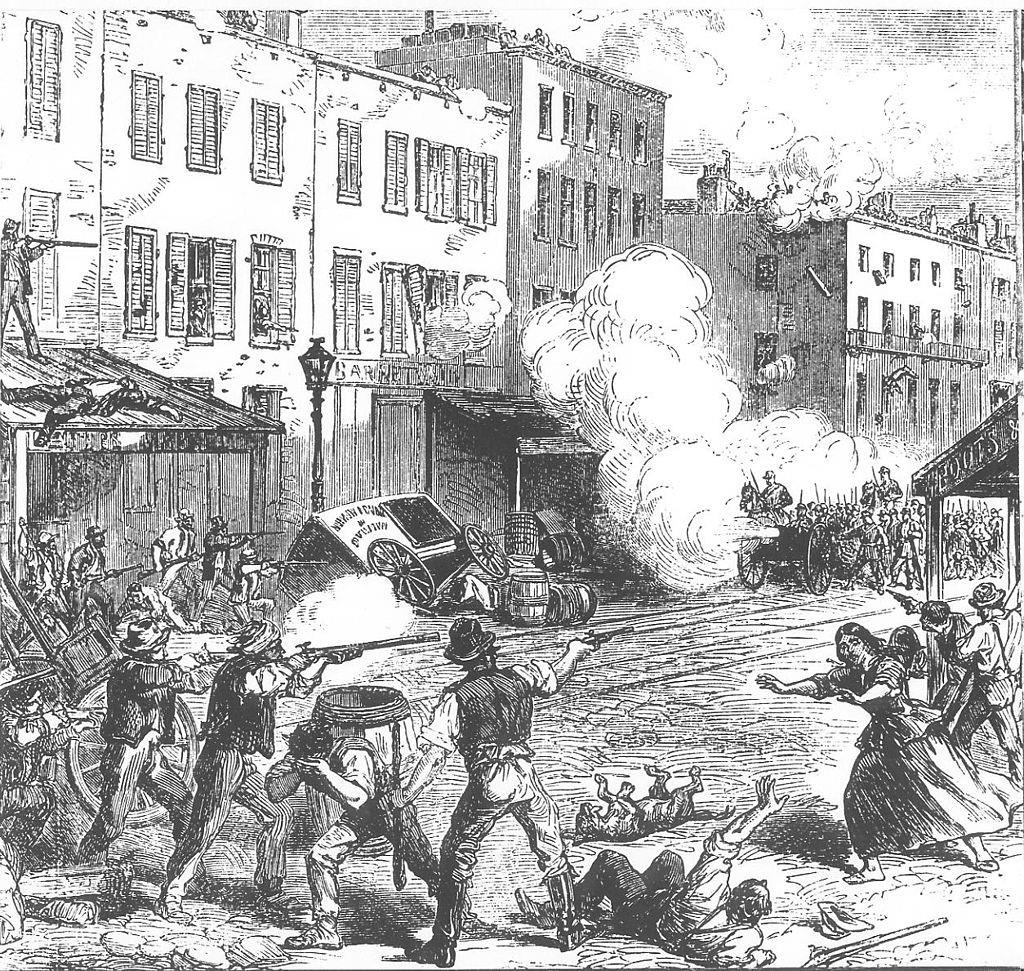
  Moreover, individuals with guns can never compete with the state machine, and the US federal government does not hesitate to use military power far beyond the firepower of the people’s guns to carry out armed repression. During the American Civil War, a large-scale anti-conscription riot broke out in new york, and the American government responded with artillery. Some even said that warships moored in new york also participated in the suppression of the rioters. Unlike the revolvers commonly used by rioters at that time, the heavy weapons of the army were not available to the people at all, and even if they were held, they could not afford to maintain them.

△ In 1863, there was a conscription riot in New York, and the army used artillery to suppress the participants in the riot. (Source: new york Times)

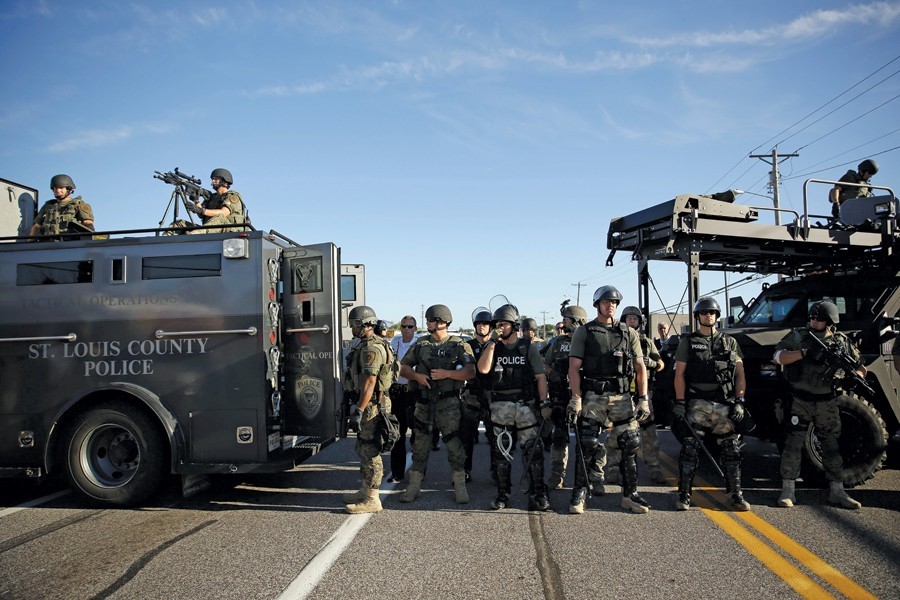
  In the 21st century, with the rapid progress of military science and technology, the firepower gap between the army and the people holding guns is even greater. Not only that, since the Bush era, the US military has also transferred surplus military equipment to local police through the so-called "Project 1033", and the US special forces have trained police officers, which has made the American police a veritable paramilitary organization. Under such circumstances, the American people also know that there is no good end to engaging in large-scale armed riots. Therefore, when the new york police made a move, the crowd dispersed.

  After this year’s farce of "Occupy Capitol Hill", no one has stood up with guns and opposed the US government’s nationwide night fall.

△ The equipment and training of American local police have been militarized, and ordinary gunmen are far from their opponents. (Source: Johns Hopkins University)

  The biggest beneficiary of people holding guns is the southern slave owners.

  In fact, I’m afraid that the reason why the Second Amendment to the US Constitution was passed that year was not that members of Congress really believed that people holding guns was conducive to resisting the government’s "tyranny".

  At that time, it was not long after the Shays Uprising (1786-1787) against the Massachusetts authorities, and the argument that people could not be trusted was still popular among the political elites in the United States at that time. In fact, the biggest beneficiary of allowing people to hold guns is the slave owners in the south.

  When the United States was founded, slave farming was the most obvious private industry that relied on guns. In order to prevent slaves from rioting and fleeing, unofficial "slave patrol" system appeared in southern States, which is also one of the origins of American police system. According to the logic of slave owners, these slave patrols are also "well-disciplined militia" mentioned in the Second Amendment to the Constitution. The existence of slavery also explains why the amendment emphasizes that "well-disciplined militia" is crucial to national security, because only whites could join the militia at that time. Emphasizing that "militia" owns guns, not individuals, can exclude blacks from the ranks of gun owners and realize the absolute superiority of whites over blacks in force. At that time, the slave uprising in the French colony of Haiti was in full swing, and black slaves slaughtered a large number of white slave owners, which seriously stimulated American slave owners.

  It can be said that it is an inevitable interest proposition of these people to emphasize the gun support right of white militia.

  The Paradox between Gun Control and Law

  At this point, we can see that the Second Amendment to the American Constitution is out of touch with the development of the times, and the basis of legislation at that time seems to be contrary to the basic moral standards of mankind today. This amendment is also the most fundamental legal reason for the inability to control guns in the United States today.

  However, as a basic law, the American Constitution can hardly be amended again. According to the current law, amending the Constitution requires at least two-thirds of the members of the Senate and the House of Representatives, respectively. However, in the Congress where politics and lobbying prevailed in Jin and Yuan Dynasties, lobbying organizations, represented by the National Rifle Association of the United States and reflecting the interests of various arms dealers, have long held key members firmly in their own hands. Not to mention amending the constitution, any attempt to tighten gun control at the state and federal levels will be strongly and effectively stopped by the Rifle Association.

△ The National Rifle Association (NRA) is one of the most important political lobbying groups in the United States. (Source: NRA official website)

  Not only Congress, but also the judiciary has played a very disgraceful role in the problem of gun proliferation in the United States.

  Compared with long-barreled firearms, pistols are more secretive, which is beneficial for gunmen to engage in large-scale shooting by surprise, and is also very suitable for suicide. Therefore, the city government of Washington, the capital of the United States, once attempted to completely ban the possession of pistols. However, in 2008, the United States Supreme Court ruled that the actions of the Washington municipal government were unconstitutional, and at the same time reinterpreted the Second Amendment, confirming that the right to own guns was not limited to militia, but included all individuals. Since the ruling of the Federal Supreme Court is final, it means that gun control efforts in many states have been wasted.

  The game of gun control and gun prohibition

  Of course, the justices of the Federal Supreme Court did not forget to show their "neutrality" in their judgments, claiming that guns and gun rights still need to be managed by someone. Nice words, but how to "manage" guns is a mess that puzzles American politicians.

  Due to the federal nature of the United States, the responsibility for formulating specific gun management policies is shared by the federal government and local governments. The federal government is responsible for issuing gun sales licenses and conducting background checks on gun buyers to confirm that they have no criminal record before they can legally hold guns. Local governments are responsible for formulating specific provisions for carrying guns in public places. It seems that governments at all levels have a clear division of labor, but there are many loopholes in actual operation.

  First of all, not everyone needs a federal license to sell guns. If they are selling guns in their own homes, online or at gun exhibitions, they do not need a federal license to sell guns for long-term profit. Because enterprises and individuals with sales licenses have the responsibility to inform the federal government of the identity of gun buyers so that they can conduct background checks, this means that when sellers without licenses sell guns, the federal government cannot investigate the identity of buyers. According to a study conducted by Harvard University in 2017, one-fifth of the gun transactions in the United States have not undergone background checks.

  Second, since gun ownership has become a "natural human right", only a few states require residents to apply for a gun license. Therefore, most of the time, the government passively screens the legitimate owners when the gun trade takes place. Except for those States that need to have a license to buy guns, local governments can’t actively screen gun owners or train gun owners in the code of conduct.

  Third, even if a comprehensive background check system is implemented nationwide, as many gun control groups now support, to plug the loopholes that guns can’t be investigated during gun exhibitions or online purchases, or to implement a nationwide gun purchase license system, it can’t solve a core problem, that is, because guns in the United States have been flooding for a long time, a large number of criminals illegally buy guns through the black market instead of through formal channels. This means that no matter how many gun control policies are formulated by the government, as long as the United States can’t implement a strict national ban on guns, people who want to own guns always have ways to deal with it. All gun control policies instead of banning guns are aimed at preventing gentlemen and not villains.

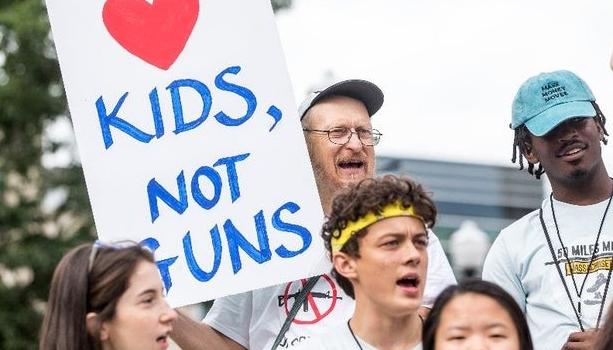
△ American people who participated in the national demonstration on gun violence day. (Source: Capitol Hill)

  Why is there no solution to the rampant gun violence?

  The problem of gun proliferation in the United States is a typical institutional case. The revision of the Constitution, the legislation of Congress, the interpretation of the law by the courts, the separation of powers between the central and local governments, lobbying and the intervention of interest organizations, almost all kinds of gloomy aspects in American politics are reflected in the gun issue. To solve the problem of gun violence in the United States, I’m afraid what we need is not to tinker with a certain law, but to thoroughly reform the system of representative federalism with three powers, which is full of ills. But this is completely impossible to achieve in the United States today, so we can only let it go.

  Now, Americans are completely numb to large-scale gun incidents. Since the beginning of this year, there have been nearly 250 large-scale shooting incidents that have caused more than three casualties. Gun control, like other stubborn diseases that cannot be solved because of the American system, has become a tool used by politicians to attack each other. The more quarrelling, the less means to solve it properly, and the gun violence will continue. After all, members of parliament live in wealthy areas with good public security, and the shooting of people is still far away from them. (Contributed by Jing Zhao)

Make-up exam fraud! Academic misconduct! Receive a gift! Paid remedial classes! 29 teachers in Heilongjiang were dealt with.

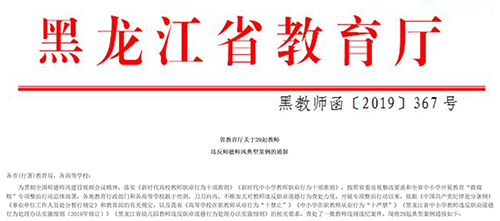
Bulletin of Heilongjiang Provincial Department of Education on 29 Typical Cases of Teachers Violating Teachers' Morality and Morality

Bulletin of Heilongjiang Provincial Department of Education on 29 Typical Cases of Teachers Violating Teachers’ Morality and Morality

  Cctv news(Reporter Li Wenxue) On July 9, following the Harbin Municipal Education Bureau’s notification of handling 28 typical cases of teachers’ moral anomie a week ago, the Education Department of Heilongjiang Province reported the handling of 29 typical cases of teachers’ violation of teachers’ morality and style.

  The teachers who were notified this time involved universities, middle schools, primary schools, and even kindergartens. The main problems are cheating in make-up exams, academic misconduct, accepting gifts, and making up classes with compensation.

  Among the college teachers who were notified, Li Yanchao, a teacher of Heilongjiang University, collected 25,000 yuan from 25 students during the make-up exam marking period, provided them with make-up exam papers and standard answers, and was expelled from the Party.

  Hu Xueli, a teacher of Heilongjiang University, as a teacher of self-propositional subjects of art major in Heilongjiang University in 2019, gave centralized counseling to 10 candidates, with a total fee of 30,000 yuan. She was given a warning and returned her disciplinary income.

  Duan Lihua, a teacher of Harbin Normal University, made up lessons for some students one week before the final exam of the second semester of the 2016-2017 academic year, and collected a total of 8,800 yuan for making up lessons. She was severely warned by the party, recorded a demerit and returned her disciplinary income.

  He Changbo, a teacher of Harbin Normal University, accepted 8,000 yuan from students. In the process of reviewing the make-up examination paper of Sports Statistics course, he was found to have committed fraud and dereliction of duty. He was punished by staying in the party for one year, lowering his post level, transferring from his teaching post and returning his disciplinary income.

  Shi Xiuchuan, a teacher at Harbin University of Commerce, has been warned that the copy ratio of 39 papers published since 2017 is seriously exceeding the standard, and there are problems such as "plagiarizing the written expression", "not indicating the citation of other people’s research results and sources" and "multiple contributions for one manuscript".

  Yang Junjie, a teacher of Harbin Huade College, illegally collected 9560 yuan from 965 students in three grades of the college during his tenure as the vice president of the College of Art and Media, kept it privately and reported it illegally. After verifying that 2601.2 yuan was not handed in, he was given a demerit, kept on duty for inspection and deducted a scholarship for semester performance.

  Wang Haibin, a teacher of Heilongjiang Biotechnology Vocational College, sends shopping links to students through WeChat and asks for items from students; Receiving gifts from students; Accepted student banquets, with a total amount of more than 4,000 yuan, was punished by the party, removed from the post of deputy director of the department, revoked the honorary title of the most popular teacher in the college, and transferred from the post of teacher.

  In this notification list, middle school teachers account for a huge proportion.

  BOB, a teacher of the Second Middle School in Jidong County, Jixi City, rented a kindergarten during the winter vacation from January to February, 2019, and made up lessons in violation of regulations on the grounds that students attended self-study, for a total of 29 days, with a fee of 67,892 yuan, which was severely warned by the party and reduced in post level.

  Zhang Jinbing, a teacher of Mudanjiang No.11 Middle School, paid 40,000 yuan for remedial classes. He was punished by lowering his post level, made a profound written review, returned his disciplinary income, and cancelled the award evaluation within two years.

  Sha Weiwei, a teacher of Mudanjiang No.14 Middle School, organized 18 students to make up lessons at the New Dream Education School with a total fee of 7,200 yuan. He was punished by lowering his post level, making a profound written review, returning his disciplinary income, and canceling the evaluation within two years.

  Yu Tianming, a teacher of qitaihe city No.10 Middle School, paid extra lessons to 12 students in violation of regulations during the holidays, and charged each student a 600 yuan tuition fee. He was punished by lowering his professional skills by one grade and was disqualified from applying for professional and technical post evaluation and employment within three years.

  Wang Fusheng, a teacher of wudalianchi city No.2 Middle School in Heihe City, illegally recruited boarding students at home, and made up lessons for some junior high school boarding students and 11 students who didn’t stay at his home, with a total charge of 6,920 yuan. He was punished by demerit, returned his disciplinary income and transferred from the No.2 Middle School.

  Zhang Jing, a teacher of hegang No.21 Middle School, paid extra lessons for 27 students. Each student charged 200 yuan extra lessons every month, with a total fee of 5,400 yuan. She was punished by demerit, returned her disciplinary income, made a written examination, and was disqualified from evaluation and promotion within three years.

  Yang Panshu, a teacher of No.51 Middle School in Daoli District, Harbin, was invited by the parents Liu to make up lessons for 8 students in this class and 4 students outside the school. By the end of November 2018, Liu had collected a total of 5,100 yuan from six students and paid 4,500 yuan to Yang Panshu. Yang Panshu was given a demerit and returned the disciplinary income.

  Zhang Zhenqiang, a teacher of No.34 Middle School in Longsha District, Qiqihar City, gave one-on-one tutoring to five students in his own home. When checking, he charged a total of 4,400 yuan. He was punished by demerit and returned his disciplinary income.

  Jianshe Wang, a teacher of No.5 Middle School in nehe city, Qiqihar City, organized 11 students to make up lessons outside the school, and each student received a monthly tuition fee of 300 yuan. When checking, the total fee was 2,400 yuan, which was punished by demerit.

  Wo Shuying, a teacher of No.4 Middle School in Jiagedaqi District of Daxing ‘anling, charged 2000 yuan for organizing 13 junior high school students to make up English in her own home, and also ordered tutoring materials for 13 students, with a total charge of 426.4 yuan. She was punished by lowering her post level and returned her disciplinary income.

  Yu Jingxi, a teacher of Hongqiao Middle School in nangang district, Harbin, paid extra lessons for 19 students, with a total fee of 1,710 yuan, and was punished by the party.

  Lin Dongbo, a teacher of No.6 Middle School in Yichun District, Yichun City, charged four students a tuition fee of 1,200 yuan, and was severely warned and punished by the party, and the post of director of the Political and Educational Affairs Office was revoked.

  Hou Xiaolei, a teacher of Shuangyashan No.1 Middle School, made up lessons for 11 students, each of whom charged 100 yuan every time, and was severely warned by the Party and demoted.

  Feng Xigang, a teacher of Xiaohong Middle School in nangang district, Harbin, made up lessons at the Beijing Youcai Cultural School in Xidazhi Street rented by his classmate Li, and the expenses were charged by Li to the students, and Li gave Feng Xigang a tuition fee for 1000 yuan. Feng Xigang was severely punished by the party.

  Zhang Xingwang, a teacher of Fuyuan No.3 Middle School in Jiamusi City, used the weekend to make up lessons for 13 students, and each student paid 200 yuan a month for making up lessons. On that day, five students paid 1000 yuan for making up lessons. Zhang Xingwang was warned by the party.

  In addition to the above 15 middle school teachers being notified and dealt with for paid classes, three middle school teachers were also notified and dealt with for accepting parents’ gifts, engaging in business activities in violation of regulations, and illegally designating students to purchase supplementary teaching materials.

  Li Xueping, a teacher of No.3 Middle School in Tongjiang City, Jiamusi City, received a WeChat red envelope of 588 yuan from the parents of two students through WeChat during the "March 8" Women’s Day, and was given a warning.

  Shao Zhenbo, a teacher of Daqing No.23 Middle School, was twice registered as a cultural goods store and musical instrument store in partnership with others, and served as a legal person, engaged in business activities, and was punished by a demerit.

  Zheng Lei, a teacher of No.2 Middle School in Anda City, Suihua City, asked the students in her class to specify the purchase of geography exercise books. At the time of verification, she had purchased 99 copies, each 25 yuan, involving a total amount of 2,475 yuan, and was given a warning.

  In addition, there are three primary school teachers on the list who have been notified and dealt with, mainly involving the issue of receiving parents’ gifts and making up lessons in violation of regulations.

  Ren Shihong, a teacher of tieli city No.2 Primary School in Yichun City, received a total of 1,900 yuan from parents’ WeChat red envelopes during Teacher’s Day in 2018, and made paid remedial classes outside the school for three times, with a total charge of 5,200 yuan. He was punished by lowering his post level, revoking his post as head teacher and returning his disciplinary income.

  Tong Dongmei, a teacher of Majiagou Primary School in nangang district, Harbin, has received gifts worth 3,076 yuan from the family Committee three times. The acquiescence of the family Committee to organize parents to charge for the class to buy printers (worth 7900 yuan). During the investigation, Tong Dongmei returned the expenses for personal gifts and class purchase of printers to the parents of the students, and was punished by the party.

  Li Xiaomei, a teacher of Xincheng Primary School in Longsha District, Qiqihar City, received a total tuition fee of 1,400 yuan for holding a cram school, and was punished by the party’s warning. He was disqualified from three honors, namely, 2017 district-level teacher, 2018 city-level excellent teacher and 2018 district-level excellent teacher, and was disqualified from evaluation within three years.

  The kindergarten teacher notified in the list is Wang Hongxu, a kindergarten teacher in Kangrong Center, Lanxi County, Suihua City.

  From March to April, 2019, Wang Hongxu co-founded an unlicensed paid nursing class with others (non-teachers), and received a total nursing fee of 3,400 yuan in two months. He was given a demerit and was not allowed to evaluate the priority model, promote the professional title and transfer from the post of class teacher within two years.

  The Education Department of Heilongjiang Province requires all localities to continue to strengthen discipline, resolutely investigate and deal with teachers who go their own way and violate discipline, and disqualify all teachers who do not converge and stop, and if the circumstances are serious, strive to create a good ecology in the field of education and run a satisfactory education for the people.

Great spirit of earthquake relief: an extremely valuable spiritual wealth of the Party and the people.

  To celebrate the 100th anniversary of the founding of the Communist Party of China (CPC), Yangguang. com launched the Sound Calendar of Party History, which takes you through a hundred years with sound.

  "Today in Party History"

  On October 8, 2008, the National Earthquake Relief Summary and Commendation Conference comprehensively summarized the earthquake relief work and further expounded the great spirit of earthquake relief: unity of mind, perseverance, people-oriented and respect for science.

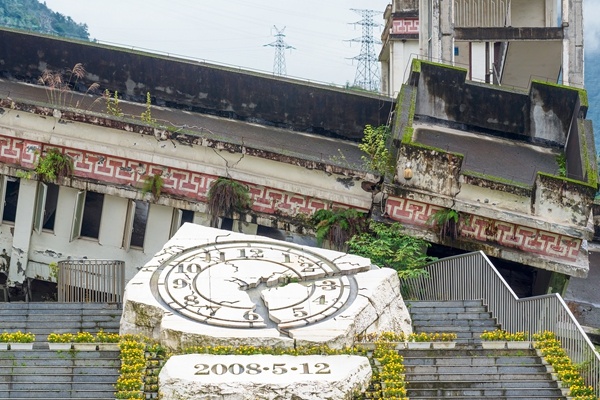
  On May 12, 2008, the Wenchuan earthquake of magnitude 8.0 suddenly occurred, causing nearly 100,000 compatriots to die or disappear … … This earthquake is the most destructive, widespread and difficult to rescue since the founding of New China.

  In the face of the sudden catastrophic earthquake disaster, the whole party, the whole army and the people of all ethnic groups throughout the country are United, facing difficulties and fighting tenaciously.

  At 14: 28 on May 12, 2008, an earthquake of magnitude 8.0 occurred in Wenchuan, Sichuan (photo source: vision china).

  On the morning of October 8, 2008, the Central Committee of the Communist Party of China, the State Council and the Central Military Commission held a national summary and commendation meeting on earthquake relief in the Great Hall of the People.

  In the magnificent earthquake relief struggle, we used ideals to unite strength, faith to build strength, and true feelings to condense care, and vigorously cultivated and carried forward the great spirit of earthquake relief, which is United as one, fearless, indomitable, people-oriented and respectful of science.

  The great spirit of earthquake relief embodies and further develops the spirit of patriotism, collectivism and socialism, the glorious tradition and fine style of our party and army, the great national spirit of the Chinese nation and the spirit of the times of contemporary China people, which is extremely valuable spiritual wealth of the party and people.

  United in earthquake relief and indomitable victory. The more difficult it is, the more forward it is — — From Wenchuan and Yushu to Lushan and Ludian, in successive earthquake disasters, the great spirit of earthquake relief has been continuously sublimated, and the Chinese nation has shown strong cohesion and centripetal force. This spiritual strength is not only a valuable asset for the reconstruction of the disaster area, but also a guarantee for us to cope with the risk challenges and face the future.

  How difficult it is to prosper the country and make it strong. Looking back, we experienced many natural disasters, but the people of China never flinched. The powerful spiritual power of the great earthquake relief spirit will inspire us to win new victories in various tests and challenges!

  (Source: Communist party member Network, People’s Network)

  Chief producer: Levin, Feng Yu

  Editor: Yu Jingjin

  Producer: Wang Wei, Zhao Jing and Ma Yuan

  Planning: Liu Yidi

  Audio production: Qin Yue

  Anchor: Liu Jiaming

  Design: Chen Ying

Floods and geological disasters in British Columbia, Canada have caused four deaths, and the province has imposed an oil restriction order.

  China News Service, Toronto, November 21st (Reporter Yu Ruidong) According to the data updated on November 20th in British Columbia, Canada, severe floods and geological disasters in the province have caused four deaths, and one missing person has not been found yet.

  The disappearance and death occurred in Lillooet in the Fraser Valley and near Duffy Lake in the inland area of the province. The deceased was a woman and three men.

  The province’s autopsy service said that law enforcement and search and rescue personnel have been trying to search for people reported missing in extreme rainfall and mudslides in the past five days. Relevant departments will do their best to determine the unfortunate situation, record it, and make suggestions if possible to prevent similar deaths from happening again in the future.

  Extreme weather, such as continuous heavy rainfall since the 14th of this month, has caused rare severe floods, landslides, mudslides and other disasters in British Columbia, located at the western end of Canada and along the Pacific coast. About 18,000 people were forced to evacuate due to the flood, nearly 10,000 houses were under evacuation orders or evacuation warnings, and a large number of farm animals died in the flood. British Columbia declared a two-week state of emergency on the 17th.

  In order to ensure disaster relief, British Columbia announced the implementation of temporary fuel restrictions on the 19th. Ordinary people’s vehicles are only allowed to buy 30 liters of fuel at each gas station. This measure is planned to be implemented for about 10 days. This has led to long queues at oil stations in the Greater Vancouver area, and some oil stations have sold out of fuel.

  At the same time, although some of the affected highway sections have gradually resumed traffic, British Columbia still prohibits vehicles that make "non-essential" trips from entering specific sections. The province also reminded people that drinking wells in flood-affected areas may have been polluted.

  The meteorological department has issued an alarm, and it is expected that heavy rain, strong winds and low temperature will sweep across the northern coast of British Columbia and move south in recent days.

  The Canadian federal government has deployed troops to assist British Columbia in flood fighting and disaster relief. The federal government and the province also set up a joint working group on supply chain to promote the full recovery of logistics as soon as possible. (End)

Credit card customers are misled by insurance sales and want to cancel their cards.

  Now when receiving a call from the insurance company, Mr. Zhu has a firm attitude: No consideration! He no longer trusts the bank as before, and even considers canceling the bank’s credit card.

  Recalling that he bought an insurance five years ago, Mr. Zhu still regrets it very much, and this regret will accompany him for five years until the payment expires in 10 years. Since he bought insurance, the insurance company has called him every now and then to promote other insurance products, and he feels overwhelmed.

  He said: "This insurance is in the name of the bank credit card center. I bought it out of trust in the bank, but after carefully studying the contract, I think this insurance is not suitable for me. I want to surrender, but I can only negotiate with the insurance company!"

  Should I add insurance if my credit record is good?

  "When they called me, they first exchanged pleasantries with you and told you that from your credit card consumption record, your credit is very good. Soon, they will tell you that your current insurance coverage is low, and there are more suitable ones for you, so let me continue to add insurance. The 10-year payment period should be recalculated from the date of adding insurance. In this case, I can only resolutely refuse. " Mr. Zhu told reporters.

  "This doesn’t mean that if I accept their advice again, the payment for the first five years will not count, so it won’t be a bottomless pit?" Mr. Zhu was very excited when he talked about it.

  After the mood calmed down a little, Mr. Zhu recalled to the reporter the situation when he bought this insurance.

  At that time, during the Beijing Olympic Games, Mr. Zhu just got off the bus when he returned to Beijing on vacation from other places, and he received a phone call from his credit card issuer recommending him to buy an insurance from a foreign insurance company. "Buying an insurance policy means an extra guarantee, which is a good thing. At the same time, I trust this bank, so I readily accept the products they recommend." Mr. Zhu said.

  However, in fact, Mr. Zhu, then 25, knew so little about insurance that he had never even heard of the name of the company that recommended buying insurance.

  "At that time, people who claimed to be the bank credit card center only briefly introduced the function of this insurance on the phone and told me that if they suffered from serious diseases during the 20-year insurance period, they could get compensation from the insurance company, but they didn’t even tell me how much they could pay at that time." Mr. Zhu told reporters.

  Because Mr. Zhu was outdoors when he received the phone call, he didn’t calm down and think carefully about what major diseases were included. If he felt that it was inappropriate to surrender, he would have any losses, and he agreed to buy insurance.

  Credit card transfer is silent.

  According to Mr. Zhu’s insurance contract, the main insurance he purchased is the endowment assurance of Happy Life (2008 edition), and the monthly insurance premium is 442.80 yuan, and the long-term critical illness insurance (2008 edition) is paid in advance with Happy Life, and the monthly insurance premium is 44.30 yuan. The payment period is 10 years and the insurance period is 20 years.

  "I remember calling me on Friday afternoon, and they sent the insurance policy on Monday morning, only one weekend apart." Mr. Zhu said. At that time, the insurance policy was sent to the unit by express delivery. "When I arrived, the courier asked me to sign it. Without telling me any information, I didn’t think much, so I signed it." Mr. Zhu said.

  These seemingly ordinary things have quietly buried hidden dangers for Mr. Zhu. Because the monthly payment of this insurance product is 487.10 yuan, the amount is not large, and this fee is directly transferred from the credit card, and Mr. Zhu does not have to go to the bank to pay in person. In addition, he has just come back from vacation and is busy with work, so at first, buying insurance did not attract his high attention.

  When he was free, Mr. Zhu began to carefully consider whether it was appropriate to buy this insurance, and at this time it was three months since the policy came into effect.

  Looking at this contract, Mr. Zhu felt more and more wrong, so he searched online. This search doesn’t matter. Some comments on the Internet made Mr. Zhu gasp.

  "I found that this insurance is very poor in the evaluation of netizens, and I think it is not suitable. I want to surrender." Mr. Zhu told reporters, however, after communication, Mr. Zhu learned that if he surrendered, his losses would be great. "If the payment is less than one year, I will not get any premium when I surrender, which is equivalent to three months of premium payment. My monthly salary was not high at that time, and the three-month premium was definitely not a small amount for myself. " Mr. Zhu said.

  Faced with such an outcome, Mr. Zhu felt very helpless and could only continue to pay the premium. The reporter saw in the insurance contract that his main insurance period was less than one year without cash value, and the cash value at the end of the first year was 8.82 (calculated by the amount of insurance in 1000 yuan). Then, even if he surrendered his insurance at the end of the first year, he could only get 1,764 yuan, while the premium paid in one year was 5,845.2 yuan.

  In an interview with reporters, Mr. Zhu admitted that he was ill-considered in purchasing this insurance at that time and made a hasty decision.

  Are deep cooperation advantages and disadvantages?

  In the cooperation between insurance companies and banks, in addition to borrowing bank outlets for sales, more cooperation has gone deep into credit card centers. Because credit card customers generally have good credibility, strong economic strength and high insurance awareness, insurance companies attach great importance to it.

  At the same time, because of the natural trust in banks, it is easier for insurance companies to sell insurance in the name of bank credit card centers. However, insiders pointed out that it is understandable for insurance companies and banks to carry out in-depth cooperation. If the sales behavior norms will make customers more convenient, it will be good for everyone. However, if the sales behavior of bancassurance is not more standardized, there will be misleading sales or telephone nuisance, and even insurance disputes, which will make consumers feel rebellious towards insurance companies and banks, and banks may lose some of their customers.

  "No matter when the bank credit card center sold it to me on the phone or when the insurance policy was sent to me by courier and asked me to sign it, they didn’t emphasize the risk of surrender, nor did they prompt what should be determined before signing. I think they avoided the weight and misled me. I made a decision too quickly." Mr. Zhu said.

  After this incident, Mr. Zhu’s attitude towards insurance changed from accepting to refusing. He said: "If insurance companies are dishonest when selling insurance, even if they have insurance, they may not be guaranteed."

  Five years later, Mr. Zhu still pays the premium every month, but he has long ignored the significance of this policy. He said: "It’s time to deposit a current deposit and take it out when the insurance expires. But who knows what will happen in 20 years? Maybe insurance still has some effect. " In his speech, Mr. Zhu has both helplessness to insurance and a little affirmation of the significance of insurance. (Securities Daily Leng Cuihua)

Adhering to the concept of the community of human destiny, we will unite a strong synergy to overcome the epidemic.

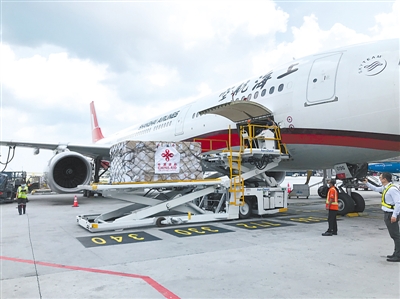
China government assists Malaysian anti-epidemic materials to arrive at Kuala Lumpur International Airport. Xinhua news agency

  General Secretary of the Supreme Leader pointed out at the G-20 leaders’ special summit on COVID-19 that major infectious diseases are the enemies of all mankind. The COVID-19 epidemic is spreading all over the world, which poses a great threat to people’s life safety and health, and poses a great challenge to global public health safety. The situation is worrying. At present, what the international community needs most is firm confidence, Qi Xin’s concerted efforts, United response, all-round strengthening of international cooperation, cohesion of a strong joint force to overcome the epidemic, and joint efforts to win this human struggle against major infectious diseases. In the face of the epidemic, as a community of destiny in which you have me and I have you, all countries in the world should act quickly, unite the strong synergy of unity, cooperation and common response, and protect the health and peace of the common home of mankind.

  1, gather together to fight the epidemic.

  At the critical moment when the global situation of COVID-19 epidemic prevention and control is becoming more and more severe, the G20 leaders’ first special summit meeting in response to COVID-19 by video released a positive signal of joint prevention and control by the international community, and opened the world agenda of building a prevention and control cooperation mechanism, which indicates that the global joint efforts to fight the epidemic will move from value consensus to pragmatic operation.

  Global joint efforts to fight the epidemic is an inevitable choice to effectively curb the spread of the epidemic. At present, the COVID-19 epidemic is spreading rapidly around the world. According to the World Health Organization, the COVID-19 pandemic has not been effectively contained, and it is growing at an exponential rate. If the international community fails to take joint measures, millions of people may be killed. At the same time, affected by the COVID-19 pandemic, the risk of world economic recession is increasing, the international financial market is in turmoil, the unemployment rate in some countries is rising rapidly, social panic is spreading, and populism and trade protectionism are on the rise. A series of secondary disasters caused by the epidemic are causing more and more concern and anxiety. No country can stay out of it and be immune to it.

  Global efforts to fight the epidemic urgently need the concerted efforts of the international community. The outbreak and spread of COVID-19 epidemic in the global scope are different in time, region and degree. This determines that countries must strengthen policy coordination, joint prevention and control, and strengthen communication and sharing of relevant information. On the one hand, the international community should strengthen information sharing, carry out cooperation in drug and vaccine research and development and epidemic prevention, effectively prevent the cross-border spread of the epidemic, and especially work together to help developing countries with weak public health systems improve their coping capacity. On the other hand, with the rapid spread of the epidemic, the demand of countries for medical and health protection and other related materials has surged sharply, which requires the global industrial chain, especially the hub countries, to deepen capacity cooperation, dig deep into capacity potential and achieve the most efficient supply. At the same time, in view of the serious impact of the epidemic on the world economy, countries should also strengthen the adjustment and docking of macroeconomic policies to ensure the openness and stability of the global market and boost the confidence of the world economy.

  2, joint efforts to fight the epidemic need to build consensus.

  The outbreak of the COVID-19 epidemic shows once again that human beings are a community of shared destiny. How to effectively curb the spread of the epidemic and prevent and resolve the secondary disasters of the epidemic is a major issue related to the interests of all countries and the future and destiny of mankind. At a critical juncture, is Qi Xin working together to protect the homeland, or is it selfish, narrow-minded and malicious? Is it to join hands to fight the epidemic and overcome the difficulties together, or to create rumors and stigma? It not only tests the governance ability and responsibility of all countries, but also tests the collective rationality and moral spirit of mankind.

  Common challenges need to be met together. Epidemic diseases, regardless of national boundaries and races, are the common enemies of mankind. With the rapid flow of people, goods and information, epidemic diseases can easily break through the time and space boundaries and national boundaries, quickly spread from one country to many countries, and detonate the global public health crisis. What’s more, compared with many diseases, COVID-19 virus has stronger infectivity and higher pathogenicity, which can spread to all parts of the world through individual personnel flow, resulting in a huge global and random risk, and the prevention and control is more difficult than ever. Only by working together can we win the battle. All countries in the world should actively carry out international joint prevention and control from the height of building a community of human destiny to jointly safeguard global public health security and human health and well-being.

  Common goals require unity and cooperation. Building a world of lasting peace, universal security, common prosperity, openness, tolerance, beauty and cleanliness is the common goal and beautiful pursuit of people of all countries, and it is also the rich connotation inherent in building a community of human destiny. The sudden epidemic not only directly threatens the global public health security, but also profoundly affects the economic and social development and prosperity of all countries. As a result, the fight against the COVID-19 epidemic has gone beyond the field of public health and evolved into an overall war and a blocking war to safeguard the prosperity and development of the world and protect human civilization. The international community must establish an effective cooperation mechanism and strengthen communication and coordination in personnel management, scientific research, experience sharing and material production, so as to cope with the crisis and win victory through cooperation.

  The common destiny needs to be in the same boat. There is only one earth for mankind, and all countries coexist in one world. The earth is the common home of mankind and the only home of mankind so far. The objective living conditions and the era environment of "you have me and I have you" make the future and destiny of every nation and country closely linked, with one glory and one loss. As General Secretary of the Supreme Leader emphasized, the occurrence of the COVID-19 epidemic once again shows that mankind is a community of shared destiny. In the era of economic globalization, such a major emergency may not be the last time, and various traditional and non-traditional security issues will continue to bring new challenges. The international community must establish a sense of community of human destiny, help each other, work together to meet the risk challenges and build a better home on earth.

  3. Make China contribution to joint efforts to fight the epidemic.

  China is an advocate of the concept of community of human destiny, and also the most powerful promoter and practitioner of this concept. General Secretary of the Supreme Leader stressed, "I advocate co-construction ‘ Belt and Road ’ And building a community of human destiny is to promote exchanges and mutual learning among different civilizations and mutually beneficial cooperation among countries, and to build a world of lasting peace, universal security, common prosperity, openness, tolerance, cleanliness and beauty. " In this war without smoke, China has been actively supporting the international community’s anti-epidemic efforts with practical actions, and has provided assistance to international organizations including the World Health Organization and more than 80 countries. This is a vivid practice of the concept of a community of human destiny. The speed of China has won precious time for world epidemic prevention, China has built the first line of defense to control the spread of global epidemic, and the practice of China has set a benchmark for human beings to deal with major public health emergencies. The strategic deployment and policy measures adopted by China in the process of epidemic prevention and control, as well as the universally recognized achievements, have greatly demonstrated the urgency and necessity of building a community of human destiny and contributed valuable spiritual wealth to the global joint efforts to fight the epidemic.

  Maintain the heroic spirit of facing difficulties. Difficulties inspire fighting spirit and challenge the spirit. The Chinese nation has experienced many hardships in its history, and has never been crushed. Instead, it has become more frustrated and brave. It is because we always have the belief of winning in the face of any difficulties and obstacles, and dare to struggle and win. The more difficult and dangerous, the more forward we are. After the outbreak of the epidemic, the CPC Central Committee with the Supreme Leader as the core United and led the people, braved difficulties and faced difficulties, put forward the general requirements of firm confidence, helping each other in the same boat, scientific prevention and control, and precise policy in time, made clear the overall goal of resolutely curbing the spread of the epidemic and resolutely winning the prevention and control of the epidemic, and quickly launched the people’s war, the overall war and the prevention and control of the epidemic. In the face of the complicated and severe global anti-epidemic situation, all countries in the world should launch a "life-and-death struggle" with the new crown pneumonia virus with heroic spirit to fight hard and fight to the end.

  Adhere to the concept of win-win cooperation. Peace, development, cooperation and win-win are the trend of the times, and they are also the basic principles that must be observed in the fight against the COVID-19 epidemic. During the epidemic period, China, in an open and transparent manner, informed the World Health Organization at the first time, shared information with other relevant countries at the first time, and shared the whole gene sequence of the virus to the whole world at the first time, and actively carried out all-round cooperation with the international community. At present, China has shared many technical documents on epidemic prevention and control with more than 100 countries and more than 10 international organizations and regions around the world, and translated the 7th edition of COVID-19’s diagnosis and treatment plan and the 6th edition of prevention and control plan into many languages for the reference of relevant countries and international organizations, which has effectively enhanced the global anti-epidemic ability and won wide acclaim from the international community. The epidemic is our common enemy. In the face of this struggle, which concerns the common interests of all mankind, all countries in the world should uphold the concept of win-win cooperation, strengthen policy communication and coordination, and work together to set up the strictest joint prevention and control network to fully curb the spread of the epidemic. It is necessary to gather the strength of all countries, work together to speed up scientific research on drugs, vaccines and testing, and strive to achieve breakthrough results that benefit all mankind at an early date. It is necessary to explore the establishment of a regional public health emergency liaison mechanism to improve the emergency response speed of public health emergencies.

  Demonstrate the mission responsibility of a big country. It is the common responsibility of all countries in the world to build a community of human destiny and meet global risk challenges. Among them, big countries play a pivotal role and should take the lead in taking on greater responsibilities and play a mainstay role. In this anti-epidemic process, China took the lead in donating US$ 20 million to WHO, sending medical expert groups to some countries and regions with severe epidemic situation and weak health systems to provide anti-epidemic experience support and medical material assistance, and establishing an online knowledge center for epidemic prevention and control in COVID-19, which is open to all countries, making great contributions to the global anti-epidemic and showing the world feelings of upholding justice and helping each other in the same boat. Fighting the COVID-19 epidemic is a struggle, which requires the firm confidence, unity and cooperation of all mankind. As long as we help each other in the same boat, we will be able to completely overcome the epidemic and write a magnificent chapter in the community of human destiny.

   (Author: Socialism with Chinese characteristics Thought Research Center, the supreme leader of the Ministry of Education, written by Ren Zhifeng)

The more grounded red flag SUV, the flag can be lit, and the red flag HS3 can be interpreted.

When it comes to domestic car companies, brands such as BYD, Geely and Great Wall will come to mind, but if we say that domestic car companies can compete with traditional luxury brands such as Mercedes-Benz and Audi in image, the red flag should be the only answer. Since the implementation of the new Hongqi brand strategy, Hongqi has been getting closer and closer to our ordinary consumers, and its models have attracted more young people with its luxurious and fashionable design style and low price. Not long ago, Hongqi HS3 officially debuted. What surprises will this luxury A-class SUV with both internal and external repairs bring? Let’s take a look.

At present, Hongqi HS3 offers four models with a guide price of 14.58-19.58 million yuan, with 1.5T and 2.0T power, and a 1.5T hybrid system will be provided in the future. Although the new car is positioned as an A-class SUV, the design standards of space, quality and power will be higher than those of ordinary cars of the same class. After all, it is a luxury A-class SUV for the public. Today, we will take the 2023 2.0T four-wheel drive as an example to interpret it.

(Red Flag HS5)

Look at the design part first. Some people say that the red flag HS3 is a small red flag HS5, because both of them adopt the latest family design language. From the front face, the two cars are indeed somewhat similar. For example, the classic flying wing design theme of Hongqi, with exaggerated size and square shape of the front air intake grille, supplemented by straight waterfall chrome trim, gives people the first impression that it is more solid and stable, which is what Hongqi models should look like. The headlights on both sides are not sloppy, and the flying wing decorative strips are cleverly inserted into the C-shaped daytime running lights. The turn signal is also a popular mobile design, which is quite eye-catching after lighting. In addition, it can also choose a flag lamp that can be lit to further increase the recognition of the vehicle.

From the perspective of length, width and height, Hongqi HS3 is only a standard A-class SUV, with the specific data of 4655*1900*1668mm, but the wheelbase has reached 2770mm, which is slightly outstanding, which determines that it has the potential to create more space. If we look at the standard of BBA at the same level, such as comparing Q3 and GLA, it is obvious that all dimensions of Hongqi HS3 will be dominant, and Hongqi HS3 also continues the performance that domestic cars are more kind than joint venture cars. The 1.5T model is equipped with 18-inch wheels, while the 2.0T model is equipped with 19-inch wheels, and the latter can also choose 20-inch blackened wheels.

(Red Flag H6)

The shape of the rear of the car is more similar to that of the red flag H6. For example, the same taillight group can be called the focus of the rear. Under the application of LED light source, it has a high recognition and design sense. However, the wide blackened lower surround also helps to improve the overall sports atmosphere, but it is not intuitive to create a sense of sports without adopting the central double exhaust like Hongqi H6.

Then we got into the car, and Hongqi HS3 continued to adopt the family classic design concept of embracing cockpit in the interior, with the central control screen as the central symmetry axis, and the two sides were sequentially unfolded to the side door panels, with a 12.3-inch full LCD instrument and a 12.6-inch central control large screen, showing a good scientific and technological atmosphere in a simple layout. Moreover, the surface of the center console is covered with soft materials, and the details are decorated with decorative strips and 253-color ambient lights. The fine workmanship is also worthy of the status of a luxury A-class SUV, and the four-wheel drive version will provide unique blue and black color matching, making it more fashionable.

In terms of configuration, although the top version price of Hongqi HS3 does not exceed 200,000, it is much richer than that of BBA cars of the same class. For example, L2 intelligent driving system, adaptive far and near light, openable panoramic sunroof, wireless charging of mobile phone, front seat heating and other configurations are applied to all models except the lowest one. The four-wheel drive version also has more induction tailgates, automatic parking, front seat ventilation, main driving memory, transparent chassis, 10-speaker Tanner audio and car fragrance system, and the AR-HUD augmented reality head-up display function is optional, so the overall configuration is at a good level among luxury brands of the same class.

Power is a highlight of Hongqi HS3. This model provides a 2.0T engine with a maximum power of 185kW(252Ps) and a maximum torque of 380N·m, and it is equipped with a four-wheel drive system. It only takes 6.9 seconds to accelerate 100 kilometers, which is excellent, but it also needs to pay the highest comprehensive fuel consumption of WLTC in the whole system of 7.5L/100km, while its low-equipped 1.5T model is slightly inferior in power.

Summary: Obviously, as the most representative of the independent luxury brand, everyone hopes that it will get better and better. The appearance of Hongqi HS3 really makes consumers see the progress of Hongqi brand again. If the design and configuration have sufficient advantages, the power and driving quality have also been improved. Facing Q3 and GLA, we still maintain strong competitiveness, and the key is a reasonable price, and the cost performance is worthy of applause.

The medical insurance negotiation will start soon, and the domestic innovative drugs will compete with each other.

  Comparison of Medical Insurance Negotiations from 2017 to 2020

  Source: National Medical Insurance Bureau and Essence Securities Research Center.

  After enterprise declaration, formal review and expert review, the national medical insurance drug list adjustment entered the negotiation stage in 2021. The reporter learned that the on-site negotiation of the medical insurance catalogue is about to begin.

  Under the background of the rapid development of biotechnology and the accelerated rise of innovative drug industry in China, more domestic innovative drugs are accelerating to the medical insurance catalogue. According to institutional data, about 20 domestic innovative drugs will be negotiated for the first time, and the new indications that have been included in the varieties will be superimposed. In this round of medical insurance negotiations, investors have paid a lot of attention.

  About 20 domestic innovative drugs were negotiated for the first time.

  According to the previously published Work Plan for National Medical Insurance Drug List Adjustment in 2021 (referred to as the "Plan") and the medical insurance negotiation process in previous years, it is widely expected in the industry that this year’s medical insurance catalogue negotiation will start soon. The National Medical Insurance Bureau has previously made it clear that if the progress is smooth, this catalogue adjustment work will be completed before the end of this year, and efforts will be made to start implementation in January next year.

  According to many brokerage research institutions, it is estimated that about 20 domestic innovative drugs will be negotiated for the first time this year, including PARP inhibitors, BTK inhibitors, ALK inhibitors, ADC drugs (antibody conjugated drugs), CAR-T therapy (chimeric antigen receptor T cell immunotherapy), etc., involving many listed pharmaceutical companies such as Beida Pharmaceutical, Baekje Shenzhou, Hengrui Pharma and Zejing Pharmaceutical. Among them, the CAR-T therapy, which is priced at 1.2 million yuan by Fosun Kate, has attracted much attention from the market. Some institutions pointed out that as a representative of expensive new technology, the negotiation result of this variety will closely affect the pricing of new technology products.

  In addition, the anti-tumor drug PD-1 monoclonal antibody is still the focus. In the medical insurance negotiations in 2019 and 2020, the price reduction of PD-1 monoclonal antibody was remarkable. At present, the competition in the domestic PD-1 market is fierce. Ten PD-1/L1 have been approved for marketing, and new indications have been continuously approved, and the listing of new drugs has continued to accelerate. Ma Shuai, an analyst at Essence Securities, said that among the domestic varieties, the enterprises and varieties that are eligible to participate in the medical insurance negotiation in 2021 are still the four varieties that participated in the medical insurance negotiation last year, and the competition pattern of domestic varieties is relatively relaxed. It is expected that the PD-1/L1 monoclonal antibody will face fierce competition in the medical insurance negotiation in 2022.

  Regarding the issue of price cuts that the public and investors are concerned about, Industrial Securities said that the current negotiation system for innovative medicine and medical insurance has gradually matured and improved, and it is expected that the future negotiation results will probably continue the overall price cuts in the past few rounds. Although the price reduction is not small, innovative drugs are successfully included in the negotiation list after the game of quantity and price, which will still bring incremental contributions to the corresponding varieties. Rapidly promoting R&D, seizing the first-Mover advantage and reasonable pricing strategy will become important factors in the market competition of innovative drugs.

  Listed pharmaceutical companies are actively preparing for the war in order to increase the volume.

  At present, many pharmaceutical companies are actively preparing for medical insurance negotiations. The third quarterly report disclosed by Baekje Shenzhou on November 5 shows that the company is preparing for the upcoming national medical insurance drug list negotiation for qualified products, including adding first-line treatment for non-squamous non-small cell lung cancer, first-line treatment for squamous non-small cell lung cancer and second-line or third-line treatment for hepatocellular carcinoma indications. On the 4th, Rongchang Bio disclosed the prospectus, saying that the company’s core products, Taitacip for the treatment of systemic lupus erythematosus and Videcituzumab for the treatment of gastric cancer, were approved for listing in China with conditions in March 2021 and June 2021 respectively, and the company is actively preparing relevant materials for participating in medical insurance negotiations, with a view to rapidly expanding the sales channels of products in a short time and effectively and rapidly promoting product sales. In the record of investor relations activities disclosed on the 2nd, Beida Pharmaceutical said that at the moment of a new round of medical insurance negotiations, the company is also actively docking the access of Kemena and Bemena.

  Inclusion in the medical insurance catalogue has undoubtedly become an important catalyst for innovative drug volume. In July this year, the National Medical Insurance Bureau said in its reply to Recommendation No.9562 of the Fourth Session of the 13th National People’s Congress that after three years of continuous adjustment, a total of 233 drugs were successfully included in the medical insurance catalogue through negotiation, and the accessibility of patients to drugs was greatly improved, and the enterprise also reached the market sales expectation. Finally, the goal of "market for price" was realized. According to the data of Medicine Rubik’s Cube, a drug data platform, in 2017, 2018 and 2019, the sales of drugs that were included in the medical insurance catalogue through medical insurance negotiation increased by 128%, 337% and 39% respectively in 2020.

  The Blue Book on the Progress and Effectiveness of Medical Insurance Drug Management Reform published by China Pharmaceutical Association and China Medical Insurance Research Association shows that among the 34 innovative drugs listed from 2016 to 2020, 26 drugs have entered the medical insurance catalogue, accounting for 76.5%. The time from listing to medical insurance for innovative drugs has also been greatly shortened. In 2017, it will take 4 to 9 years for new drugs to enter medical insurance, shortened to 1 to 8 years in 2019, and further compressed to 0.5 to 5 years in 2020.

  Huachuang Securities believes that from the perspective of sales amount, except for some products with expired patents, most innovative drugs have achieved price-for-quantity exchange, and the amount has rapidly increased after entering medical insurance.

  "Innovative drugs are expected to improve the difficulty of access after entering medical insurance, and achieve rapid penetration of hospitals and pharmacies." Ma Shuai analyzed that, on the one hand, after the drug enters medical insurance, it will be less difficult to obtain the recommendation application from clinicians, pass the preliminary selection of departments and finally pass the drug selection meeting in the hospital, which greatly reduces the difficulty of drug entering the hospital and lays a good foundation for the future drug in the hospital; On the other hand, in May this year, the National Medical Insurance Bureau and National Health Commission issued the Guiding Opinions on Establishing and Perfecting the "Dual-channel" Management Mechanism for National Medical Insurance Negotiation Drugs. After the drugs enter the medical insurance catalogue, it is expected that the "dual-channel" mechanism will accelerate the volume of products at the pharmacy side.

The Guangzhou Auto Show ushered in a public open day, and the scene was full of people

广州车展迎来公众开放日 现场人流如潮车市信心恢复 车企看好明年  过去这个周末,广州国际车展迎来了公众开放日。一个热闹周末的背后,是整车企业、上下游零件企业、消费者等多方面日渐恢复的信心。  汽车从业者和消费者信心的恢复,显然有迹可循。就在广州车展开幕前两天,国务院常务会议提出要“稳定和扩大汽车消费。鼓励各地调整优化限购措施,增加号牌指标投放。开展新一轮汽车下乡和以旧换新”。广州车展的热络,正是这一要求的最佳注脚。  现场:场内人头涌动 场外停车排长龙  周六早上9时许,记者在琶洲国际会展中心看到,大批观众早已在等候进场,再加上不少参展商工作人员也选择此时间进入展馆,一时间,车展的两个入口竟都排出了几条长队。“没想到人们这么早就来了。”一位现场保安人员多少有点惊讶。到上午11时许,展馆更是人头涌动。从江门开平专程来广州看展的林女士,在广汽埃安展区驻足许久,她正在为自己未来的爱车挑选颜色和内饰。“我想要买一款适合小城市的新能源代步车,好开第一,颜值第二,看来看去,还是AION S比较合适。”  更多观众是一家大小齐来看车。从佛山赶来的周先生正体验传祺M8,他向记者说:“全家六口人都来了,就是冲着这辆七座车来的。”周先生的夫人谢女士接话:“这车够宽敞,适合全家自驾游,爸爸妈妈年纪大了,想多带他们去周边看看。”  车展之外,长长的停车车龙也是广州车展信心的一个侧面。周六上午12时许,记者看到,停车的长龙从南风东路与阅江路的交界处一直排到会展中心8号门处,阅江中路两侧都停满了来参观车展的车辆。停车管理工作人员陈师傅告诉记者,这样的架势,最近两年几乎只有广交会时才能有。  在广汽馆,广汽埃安请来了篮球界“路人王”球员前来拍摄助阵,充满科技感的展台设计也吸引了一众年轻人拍照打卡。在展区侧方,“科幻机甲争霸赛”吸引了小朋友的注意力。家住海珠区的李先生在旁等待围观“争霸赛”的小儿子,他说:“广汽埃安展台做得很有意思,我在车型区看完车,还能带儿子去科技区涨知识。”  在豪华车方面,奔驰展馆是人气最旺的一家。奔驰方面相关负责人告诉记者:“从这两天情况预计,单个经销商在广州车展这一周左右的时间能卖出250台~280台,这个量相当于日常一个月的销量。”  车企:多数车企对明年形势表示乐观  对于车企来说,广州车展既是今年年末的一次冲刺,也可以为开启新一年打打“前哨战”。对于明年的市场形势,大多数车企都表现出信心和乐观。  广汽集团总经理冯兴亚介绍,广汽集团今年做到了连续第三年产销量双双超过200万辆。冯兴亚乐观地认为,在合资“两田”和自主品牌“双子星”的助推下,广汽集团的2021年值得期待。上汽通用总经理王永清的目标也很明确:“如果明年市场同比增长在7%~8%左右,上汽通用汽车明年的计划目标是要跑赢大盘。”日产中国管理委员会主席、东风有限总裁山崎庄平对东风汽车有限公司今年1~10月份销量成绩的评价是“不错”。  车企的信心源于对国内经济形势的乐观。广汽乘用车副总经理李勇也有类似的看法。李勇的信心,来源于三层因素:“第一,中国经济形势趋好,对车市产生正向关联。第二是政策层面的影响。前几天国务院发布了刺激汽车市场消费的政策。第三个是疫情也促使一些消费者加快满足汽车需求。”  今年,豪华车市场的表现高于整个汽车行业的平均水平,明年的情况会如何呢?  雷克萨斯中国副总经理陈忱预计,2021年中国豪华车市场会出现微幅增长。戴姆勒股份有限公司董事会成员大中华区负责人唐仕凯预期,今年中国市场的整体销量将占梅赛德斯奔驰全球销量的35%~40%左右。“毫无疑问,中国依然是我们最重要、最具潜力的市场。”  未来趋势:  新能源车加速本土化  日前,国务院办公厅印发的《新能源汽车产业发展规划(2021-2035年)》提出,到2025年,纯电动乘用车新车平均电耗降至12.0千瓦时/百公里,新能源汽车新车销售量达到汽车新车销售总量的20%左右;到2035年,纯电动汽车成为新销售车辆的主流,公共领域用车全面电动化。在此背景下,新能源车在本次车展上大出风头。  广汽新能源推出了其重要新车型“埃安Y”。广汽新能源副总经理肖勇说,埃安Y要与燃油车争夺年轻人市场。他信心满满地表示:“广汽埃安成为新能源车头部企业的目标不动摇。”  本土车企踌躇满志,合资车企也正努力推进电动汽车的本土化。大众汽车集团(中国)CEO冯思翰表示,大众汽车集团将于2020年至2024年间向中国市场投资150亿欧元,以加速中国电动化布局。  除了推出新车型,扩大新能源合作的“朋友圈”也是许多外资车企加速进军中国市场的“捷径”。已经与孚能科技以及宁德时代建立战略合作的梅赛德斯奔驰,在广州车展期间宣布,将和吉利共同开发用于混动技术的下一代汽油发动机。