The return passenger flow peak of Yangtze River Delta Railway during the National Day holiday is expected to send 1.82 million passengers on October 7.

According to the news of China Railway Shanghai Bureau Group Co., Ltd., October 7 is the last day of the National Day holiday, and the Yangtze River Delta Railway ushered in the peak of return passenger flow. It is estimated that 1.82 million passengers will be sent on that day, and the railway department will increase the capacity of 194 passenger trains in the direction of full passenger flow to ensure passengers travel safely, orderly and safely.

Affected by the epidemic situation, prevention and control policies, changes in passenger travel modes, etc., the Yangtze River Delta railway family visits and short-distance tours in the province account for a relatively large proportion, and show the characteristics of concentrated passenger travel at the beginning and end of the holiday. During the six days from October 1st to 6th, the Yangtze River Delta Railway sent a total of 10.753 million passengers, with an average of nearly 1.8 million passengers per day.

On October 7, China Railway Shanghai Bureau Group Co., Ltd. paid close attention to the pre-sale and standby booking of tickets, and planned to increase the capacity by increasing the number of trains and emus in the centralized passenger flow lines from central cities such as Shanghai, Hangzhou, Nanjing and Hefei to key cities such as Ningbo, Wenzhou, Quzhou, Yancheng, Xuzhou, Fuyang, Anqing and Wuhu in the Yangtze River Delta region, and in the full passenger flow direction of Fuzhou, Changsha, Nanchang, Hankou and Zhengzhou.

The railway department reminds the majority of passengers that according to the relevant deployment of the joint prevention and control mechanism in the State Council, from September 10 to October 31, passengers must hold a negative nucleic acid test certificate within 48 hours when entering the station, so please prepare in advance; After the inter-provincial migrants arrive at their destination, please actively cooperate with the local government epidemic prevention department to complete the "landing inspection"; Many cities have two or more railway stations, so be sure to recognize the station names marked on the ticket face, and don’t delay the trip by running the wrong bus stop.

The ranking of the top ten risky positions in officialdom: the land director is the most dangerous, and the boss of state-owned enterprises is the second from the bottom.

[Editor’s note]

        At present, the society in China is undergoing a rapid transformation, and it has entered a period of "prominent contradictions" and "high risk". Risk is a prominent feature of this period, which has actually penetrated into all classes and people, including officials, especially those who are involved in land, houses, mines and local party and government leaders.

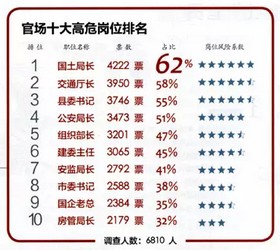
        Is it a false proposition that officials are at high risk? According to the survey results of People’s Forum magazine, 44% of the respondents agree that "being an official is a high-risk occupation" and think that the top ten high-risk positions in officialdom are land director, transportation director, county party secretary, public security director, organization minister, construction committee director, safety supervision director, municipal party committee secretary, state-owned enterprise boss and housing management director. The specific investigation contents are as follows:

        These posts can be described as "high-ranking" and serve the people well. What kind of official and social ecology is reflected behind their becoming high-risk posts?

        What are the outstanding characteristics of the high risk of officials that are different from other groups? What is the deep reason behind it? How should we strengthen the relevant system construction, so that the key positions of government departments are no longer "high-risk"?

I. Director of Land and Resources

"Land-related" Officials under Hidden Rules

Post risk coefficient: six stars

        Risk point: From planning and pricing to approval and supervision, power and risk are closely linked.

        1. Hidden rules prevail, and it is difficult to be immune;

        2. Fierce competition and strong public relations force;

        3. The supervision system is not perfect.

        According to the survey results of People’s Forum magazine, 62% of the respondents believe that the "land director" has the highest risk and ranks first. (Note: The risk coefficient is based on the percentage of people selected for this position, and the percentage is rounded to the nearest single digit, which is expressed in the form of star rating. If 62% of the respondents choose the director of land and resources, the risk coefficient is 6 stars. )

Too much power! Before the unspoken rules, the land directors have fallen.

        "Why is everyone called’ land acquisition’ instead of’ land acquisition’? This shows that there are doorways. The conditions for’ land acquisition’ can be set by the government, and the planning government can change it. All competent departments have the final say." The chairman of a real estate company in Wenzhou said this when interviewed by the media. He even bluntly said that the operation of the land market basically goes ahead of the hidden rules.

        On July 4, 2014, Li Junfu, director of Guangzhou Municipal Bureau of Land Resources and Housing Management and secretary of the Party Committee, was suspected of serious violation of discipline and accepted an organization investigation. Li Junfu was investigated for violating discipline, which once again exposed the loopholes in the land transaction supervision system. Many political and business people in Guangdong said that they were not surprised by Li Junfu’s accident. A real estate developer bluntly said: "Li Junfu is the god of wealth in Guangzhou, and he is in charge of important positions such as land storage, allocation of affordable housing, land transfer and real estate regulation and control, and his power is too great."

        Power is great, supervision is not in place, hidden rules prevail, and bribery is rampant, making the land department the hardest hit area for corruption cases. Not only that, because the interests involved are complicated, there are many cases and cases in this field from time to time.

        In 2009, five people were sentenced in Haikou planning land system. Among them, the former deputy director of Haikou Planning Bureau took bribes of 1.3 million yuan and was sentenced to 11 years in prison. The other sentenced officials were the former chief planner of Haikou Planning Bureau, the former chief of the land use department of Haikou Land and Resources Bureau and the former deputy director of the Treasury Payment Bureau of Haikou Finance Bureau.

        In 2008, a case of land corruption was exposed in Zengcheng, Guangdong Province. The staff of the land department colluded with private entrepreneurs to defraud the state of idle land compensation funds as high as 145 million yuan, and nine officials fell in this corruption case.

        A little earlier, during 2007-2008, the case of land subsidence in Chongqing shocked the whole country, including Tang Wenfeng, former director of Chongqing Development Zone Management Committee, Liang Xiaoqi, former deputy director of Municipal Planning Bureau, Huang Yun, director of Jiulongpo District Planning Bureau, Jiang Yong, former deputy director of Chongqing Land and Real Estate Bureau, etc. Nearly 10 departmental cadres were dismissed for accepting bribes from developers.

Hidden Rules-Latency, Violation and Rule

        There are many "tricky things" in real estate from land transfer to planning adjustment, which is already a self-evident "secret" in this field. Land officials waved the power stick in their hands and acted as "hidden rules" under the cover of "explicit rules" in order to seek personal gain and corruption, which made the crimes in the land system appear to be latent, illegal and covered up by law.

        Take the "bidding, auction and hanging" of land transfer as an example. Under the unspoken rules, government officials can resell the land to the intended buyers in various illegal ways according to the procedures of bidding, auction and hanging. The specific methods are as follows:

        First, limit the qualifications of developers and shut out a large number of developers from the beginning;

        Second, when auctioning land, additional conditions are set, such as the requirement to reach an agreement with the demolished person within 5 days, but these conditions may have been notified to the intended buyers long ago, and they began to prepare early, while other bidders may have to retreat because they don’t know;

        Third, the time difference, such as the day before the holiday, requires bidders to pay the deposit within 3 days after listing, deliberately crowding out foreign competitors;

        Fourth, what’s more, the default developer won the land with unusually high funds when bidding, but in the actual transaction, the government returned the high funds to the developer through some policies, and the actual transaction price of the land was the price agreed by both parties in advance. Therefore, the program of "bidding, patting and hanging" seems to have gone, but it is actually the same as not going.

        It is easier to adjust the planning and floor area ratio, as long as the main leaders are fixed. Because the planning department has the final say in adjusting the planning, and the process of planning adjustment is closed, lacking publicity, hearing and other procedures. According to the public prosecution materials, in the case of land corruption in Chongqing, Liang Xiaoqi, former deputy director of chongqing urban planning bureau, committed illegal acts, including helping developers to adjust the plot ratio and adjust the nature and use of land.

        Liang Xiaoqi’s case fully revealed that China’s land management departments have great power, but there are many loopholes and weak links in power norms and supervision mechanisms, and the decision-making, trial and supervision of land are not transparent and open enough, which is also the reason for the prevalence of hidden rules.

Eradicate hidden rules and scientifically evaluate land benefits

        How to control land corruption? People naturally point the finger at power, and think that the key to control corruption is to improve the system and mechanism, strengthen the checks and balances of power and supervision, and increase the transparency of decision-making, examination and approval.

        However, the interests in the field of land are huge. If what really happens under the appearance of checks and balances is the alliance of power and money, that is, it seems that it is actually a "hidden rule" according to the "explicit rules", and the law will be a dead letter. Without a scientific land revenue evaluation system and empty talk about power supervision, it is a tree without roots. Unspoken rules remind us that we need to put more energy into the evaluation of land benefits, introduce scientific evaluation system, control flexible benefits and gray benefits, and narrow the space of power rent-seeking, so as to truly minimize post risks.

Official testimony

        "With the gradual increase in contact with developers, in the communication activities with some big money, my thoughts have changed color and I envy the lifestyle of being intoxicated. There is a serious misunderstanding of the purpose, meaning and realization of one’s own value in life. He thinks that the market economy is the capital economy, and only when you have money can you have everything, and you have the right not to expire. Deviations in ideological understanding have led to bigger mistakes. " -Du Jianping, former deputy director of Huai ‘an Land and Resources Bureau of Jiangsu Province

Second, the director of transportation

What is the crux of "high-speed" corruption

Post risk coefficient: five and a half stars

        Risk point: the degree of marketization of China’s highway construction system is far from enough.

        1. Being both the Chief Executive and the business leader;

        2. The project is profitable and rent-seeking is simple;

        3. monopoly of power and lack of supervision;

        4. lax management and imperfect mechanism.

        In recent years, the incident of the director of transportation falling off the horse is not uncommon, and the problem of "traffic corruption" is becoming more and more serious. According to incomplete statistics, in the past 20 years, there have been 16 officials who have served as local transportation directors (full-time), and if deputy directors are counted, this number exceeds 30. Among them, in Henan Province, Zeng Jincheng, Zhang Kuntong, Shi Faliang and Dong Yongan were successively dismissed, and in Shanxi Province, Wang Xiaolin and Duan Jianguo were successively dismissed. The corruption of officials of the Communications Department can be described as "wave upon wave".

        On December 28th, 2009, Lei Jianmin, the former director of Linwei District Transportation Bureau in Weinan City, Shaanxi Province, was sentenced to life imprisonment and deprived of political rights for life by the Weinan Intermediate People’s Court for committing the crimes of corruption, bribery and huge amount of unidentified property. In the trial court, Lei Jianmin regretted it. "I finally fell on the’ corruption road’ laid by myself!"

        The above cases are only part of the corrupt traffic director, which is why public opinion calls the traffic director a "high-risk group". According to the survey results of People’s Forum Magazine, 58% of the respondents agree that the post risk of traffic director is high, ranking second.

        In order to put an end to the black hole in the traffic system, the central and local governments have promulgated relevant laws, regulations, systems and measures, and strengthened the anti-corruption efforts. However, the problem is that while laws and policies are constantly being promulgated, corruption cases are instead "wildfire never quite consumes them, they are tall once more in the spring wind". The director of transportation has "rotted in the past" and the traffic cadres have "collapsed" in a large area, which reflects that there are indeed loopholes in the system behind traffic construction. The key point is that at present, China’s highway construction is in an absolute monopoly position, which is directly operated by government officials, making it possible for them to seek rent through monopoly. Specifically, its institutional defects mainly include the following three points:

        First, China’s current transportation investment system operates in a closed way within the transportation system. Almost all of a transportation construction project, from project demonstration, bidding design, construction supervision, budget allocation to completion acceptance, is exclusively responsible or led by the Communications Department. In this way, the disadvantages of investment, construction, management and use of the "four in one" and the separation of government and enterprise make the person in charge of the relevant department both the chief executive and the enterprise leader in the construction project; Being a builder and a manager, it is easy to make construction projects lack mutual restriction and supervision.

        Second, power is a double-edged sword, which can not only benefit the people, but also be inherently corrosive and expansive. In order to prevent the abuse of power, it is necessary to use power to restrict power and establish the necessary supervision and restriction mechanism. However, the management power of the traffic management department is too centralized, which can easily lead to the abuse of power by the director of the department (bureau) who monopolizes the power and seeks personal gain for himself.

        Third, the project investment system and the organizational form of traffic construction. The form of highway construction headquarters in China is the product of planned economy system, and its internal management is lax. In addition, the relationship between the traffic administrative department and the company responsible for highway construction is mostly mother-child, which leads to the departmentalization of government power, the individualization of departmental power and the absolutization of personal power, which is the source of corruption in the traffic system.

Third, the county party secretary

The Achilles heel of the county party secretary.

Post risk coefficient: five and a half stars

        As the "top leader" of the county, the county party secretary holds a large part of power.

        1. Different powers and responsibilities make it difficult to perform their duties;

        2. Maintaining stability and testing ability;

        3. The status is outstanding, and corruption is hard to prevent.

        County officials have been "people-friendly officials" since ancient times, and they are the bridge between the party, the government and the people. The county party secretary, as the "top leader" of the county, is an extremely important position. According to the survey results of People’s Forum Magazine, 55% of the respondents agree that the post risk of county party secretary is high, ranking fourth.

The supervision weakness of the "number one"

        How powerful is the county party secretary? In fact, the political, economic and social development of the county is relatively independent, and the county party secretary can have the final say on anything and anyone in the county; By the way, the county party secretary can stick his finger in the end, that is to say, he can catch big things and small things.

        The "interest temptation" faced by the county party secretary is also great. The "projects" such as urban demolition and restructuring of small and medium-sized state-owned enterprises at the county level are often "major projects" involving hundreds of thousands, millions, tens of millions or even hundreds of millions of yuan. These projects often require the "final decision" of those county party secretaries with real power, and the "interest temptation" is a test for ordinary leading cadres.

        The county party Committee is not the grassroots, but it is close to the grassroots; Not on the front line, but face the front line. The secretary of the county party Committee, the party in charge, is in danger of "one careless move will lose the game" However, at present, there is no set of effective methods for the selection, management and supervision of the county party secretary, which often leads to the fact that the county party secretary has too much power and lacks real supervision, and there are problems such as "the supervision at the higher level is too far, the supervision at the same level is too soft, and the supervision at the lower level is too difficult".

        Because no one can really supervise the county party secretary, this kind of power is most prone to corruption. Some of them are rich by selling officials and titles, some are corrupt and bribery, and some are bent on being big officials to do their own things without dereliction of duty, indifferent to the interests of the masses, or even insensitive.

        Looking at the whole country, news of corruption of county party Committee secretaries has occurred from time to time. In Anhui, in the northern Anhui area with Fuyang as the center, 18 county party secretaries have been investigated and punished for corruption. In the past four years, Henan has investigated and dealt with 22 county party Committee secretaries for corruption and bribery. The most typical case is Long Guohua, the former county party secretary of Zhuzhou. Less than ten days after CPC Central Commission for Discipline Inspection and the Central Organization Department jointly issued the Opinions on Further Improving the Credibility of Selecting and Employing People, Long Guohua unexpectedly made a case against the wind and suddenly promoted and adjusted more than 100 leading cadres, becoming the first "unlucky" county party secretary who fell before the central "killing order".

        With too much power and lack of supervision, it is not surprising that "county party secretary" has become one of the typical high-risk positions.

        The county party secretary has become the "local tyrant" in the county, and it is difficult to find the power to effectively restrict him within his jurisdiction. Under such a system, the degeneration of the "number one" will directly lead to the deterioration of the regional political ecosystem.

Is it really "the mountain is high and the emperor is far away"

        Generally speaking, the county level far away from the central city is often on the edge of political geography, which makes the asymmetry of power and responsibility and "a thousand lines above and a needle below" the biggest difficulty in the work of the county party secretary. Under the tax-sharing system, the unreasonable financial distribution and the lack of local financial resources also make these secretaries "a clever woman can’t cook without rice." County-level is a high-incidence area of sudden public events. How to ensure development and stability is a test for all county party secretaries. If it is not handled properly, the "Weng ‘an Incident" is a lesson from the past.

        On the one hand, this "political geography edge" makes it difficult for the county party secretary to carry out his work, on the other hand, it makes the hidden rules of officialdom more popular.

        The power of the county-level supervisor is too large, and cadres will regard this county as the personal world of the county party secretary. At best, they will hold an attitude of being irrelevant and hanging high; The bad ones take the initiative to participate in the hidden rules of buying and selling officials.

        This phenomenon is particularly obvious in some poor areas, such as Chen Zhaofeng, the former county party secretary of Dingyuan, Anhui Province, and Lin Longfei, the former county party secretary of Zhouning, Fujian Province, who are "ten million county decrees", all of which are typical of the county party secretaries of poor counties who sell their officials and titles to get rich. Because they are located in poverty-stricken counties, there is no other way to "get rich" except selling officials. As long as the appointment and removal rights of cadres above several hundred department levels in a county are tightly held in the hands of the county party secretary, it is an inexhaustible wealth.

        Du Zaixin, the former secretary of Jianli County Party Committee, mentioned in his repentance book that someone had reminded me that the former secretary of Jianli had "Eight donkey kong" magical powers and asked me to be careful not to repeat the same mistakes. And what about me? As soon as I arrived at Jianli, I was targeted by Dai, Hu, Su and others. The direction of the car was not where I wanted to go.

        Facts show that in addition to strengthening the training and education of county party secretaries, we must further improve the mechanism, reform the system and innovate the system, strengthen the supervision and restriction on the county party secretary’s exercise of power, let the power run in the sun, and let ordinary people truly become the main force and fresh force of supervision, which will greatly make up for the institutional defects and luck of "the mountain is high and the emperor is far away".

Confessions of a county party secretary

        Chen Zhaofeng, secretary of the former county party committee of Dingyuan, Anhui Province: I came to Dingyuan with a fiery heart and the idea of doing something. In 1990, I was elected as the deputy county magistrate. At that time, I was strict with myself, so I was indifferent to money. I often tell my family members what to do if some farmers, workers and needy households send some agricultural and sideline products and can’t refuse them? I will exchange alcohol and tobacco at home with him. I feel more balanced in this way.

        Now it is a market economy society, and people pay attention to exchange. The word exchange was originally used in commodity trading, but with the development of society to the stage of market economy, the word exchange has far broken through the field of commodity trading, entered the political field, personnel field and ideological field, and even become an integral part or a factor of people’s world outlook. Nowadays, people pay attention to material benefits. For example, when you go to someone’s house, you just say "Thank you, old leader" and so on. After you leave, the old leader may not say anything, but his family or others will say that you are all lip-service, all empty-play, so will people still talk to you if you have sex twice? Of course not!

        Therefore, one reason why I have come to this stage today is that the consciousness of value exchange has penetrated into my ideas. The second is to pay attention to benefits, and the word benefits has been more concrete by me. Chen Zhaofeng was hailed as the biggest greed in Anhui Province, with 110 official hats sold for 1.5 million yuan, and his horse fell in 2006. )

Fourth, the public security bureau chief

"White and Black" of Public Security Bureau Chief

Post risk coefficient: five stars

        Risk point: Compared with other departments, public security organs have extensive powers, and their management and responsibilities cover both administrative law enforcement and criminal justice.

        1. The social network is complex and full of temptations;

        2. bloodshed and sacrifice, life is a matter of life;

        3. Great pressure and danger;

        4. Keep one’s word, weak supervision.

        In recent years, the constant exposure of shady scenes has caused the image of some public security bureau chiefs to plummet in the hearts of the people.

        On July 20th last year, CPC Central Commission for Discipline Inspection official website announced that Wu Changshun, vice chairman of Tianjin CPPCC and director of the municipal public security bureau, was under investigation for serious violation of discipline and law. According to insiders, Wu may be suspected of using patents to gain illegitimate interests in Tianjin’s transportation field. It is reported that Wu Changshun has been the director of traffic management for 11 years and the director of Tianjin Public Security Bureau for 11 years. The 34 patents he invented are related to intelligent transportation and other fields, and most of the companies that hold the patents have public security backgrounds, and their business scope also overlaps with their management fields. According to experts’ analysis, this operation mode is easy to exchange interests in the procurement process and the reward link for the patentee.

        According to previous media reports, Wang Lijun, the former director of Chongqing Public Security Bureau, had invented as many as 150 patents.

        In addition, Xiao Qiang, former director of Leiyang Public Security Bureau in Hunan Province, Li Ping, former director of Nanzhao Public Security Bureau in Henan Province, and Guo Liang, former deputy director of Datong Public Security Bureau in Shanxi Province … were dismissed one after another. According to the survey results of People’s Forum Magazine, 51% of the respondents agree that the post risk of public security bureau chief is high, ranking third.

        If the resumes of these fallen police chiefs go back to ten years ago, many of them are "excellent policemen" and "star policemen", and some are even "star directors" and famous "directors who crack down on gangsters". Ironically, some public security bureau chiefs actually hit themselves when they fell. Seven years ago, Xiao Qiang, the star public security director of Leiyang, Hunan Province, was awarded the title of "Black Hero" and won numerous honors; Seven years later, he was swept by the black storm launched by himself and was jailed; On September 19th, 2000, Wen Qiang captured Zhang Jun, the number one gangster in China, and gained great fame. Ten years later, Wen Qiang put an end to his official career in the crackdown on gangsters in Chongqing.

        Some people say that the public security bureau chief is walking on the edge of the dye vat, dealing with all kinds of criminal crimes, illegal acts, hooligans and triads every day, and easily falling into the dye vat. Although the police chief is a "white man", he is in charge of the "underworld". In this society where everyone needs what he wants, if he ignores the party discipline and state law and deviates from the correct values, public rights will be combined with the underworld to form a close community of interests, with extremely bad consequences. "Black boss" or directly pay "protection fee"; Or let the "umbrella" share dividends in its long-term entrenched industries and enterprises, and even directly become the boss behind the scenes. In this way, all kinds of unjust enrichment are continuously transported to the hands of "protective umbrellas" through the extortion of "black bosses". At the same time, the "umbrella" keeps them at large. Money and interests are like a magnet with strong magnetism. The public security bureau chief should always try his best to prevent being attracted and struggle between "black" and "white".

        Why do these fallen police chiefs walk between "white and black"? Some people say that after becoming a director, the world is different, so simple living, who can’t bear the salary of civil servants, is out of balance in front of some "rich people".

        In the administrative system of politics and law in China, most public security directors hold important positions, either the Standing Committee of the Municipal Party Committee (county party committee), the secretary of the Political and Legal Committee, or the deputy mayor (deputy county magistrate). If the public security bureau chief works part-time as the secretary of the Political and Legal Committee, the tentacles of power can also reach into the courts and procuratorates. Once the public security bureau chief deviates from the proper ruling idea and abuses his power, the harm is much greater than that of ordinary cadres.

V. Minister of Organization

The Dilemma of "Official among Officials"

Post risk coefficient: four and a half stars

        Risk point: the minister of organization holds the most valued power in officialdom and is in the most sensitive position.

        1. Subtle status and high sensitivity;

        2. Inside and outside the officialdom, layers of pressure;

        3. System defects are the biggest test.

        In the eyes of many people, the organization minister is an "official in charge of officials" and an "official among officials". He can directly serve as the party secretary or administrative chief, and he can "order hundreds of officials, but dare not disobey them". The organization department holds the most important power to select and employ people, and it is in the position of "taking the lead and moving the whole body". According to the survey results of People’s Forum Magazine, 47% of the respondents agree that the post risk of organization minister is high, ranking fifth.

The strong attraction of organizational personnel rights

        The greater the power, the more people pay attention to it, the more complicated the relationship needs to be handled, the more difficult the work is, and the more temptations it faces. Be responsible to the Party Committee and assist the secretary in selecting talents. Next, we should coordinate with the leaders of various departments, understand and master the basic situation of officials at all levels and departments, and provide reference for employment decision-making. Externally, the organization department is the department that has suffered the most "sugar-coated cannonball" attacks. It must not only resist the test from outside the public power system, but more importantly, it must face the intrusion of "running officials and wanting officials, buying officials and selling officials" within the system.

        This kind of erosion is pervasive, and sometimes it is hard to resist. Under the attack of huge interests, sometimes even family ties, those who are not strong-willed will corrupt and corrupt, and those who are honest and clean will be disturbed. The former, like Han Guizhi, took advantage of his position to sell officials and titles. Since serving as the deputy director of the organization department, he has sought benefits for 63 people or their relatives in terms of job promotion and job adjustment in ten years, and exchanged power for money, and the amount of bribes reached more than 7 million yuan. The latter, like an "honest official" in the organization minister, has to be careful from time to time in his work and be wary of everything.

        Several organization ministers working at the grassroots level interviewed by the author lamented that "the organization work is difficult to do, and the organization minister is not good." An organization minister even told reporters that he was afraid to go home during the Chinese New Year and hid in the classroom of the county middle school. An old friend wanted to see him, and he met him in a simple school building after being informed by his family. He said, "There are too many gift givers to send cards. I can’t stand it." This shows that it is difficult to be a good organization minister.

        Choosing a poor cadre is dereliction of duty, and the bigger test is the invasion of corruption. A little carelessness may violate the national law. The public power system is a huge "magnetic field", and the right to organize personnel has the strongest attraction in this magnetic field. Those officials who have fallen into the whirlpool of this power are unable to extricate themselves and eventually lose their reputation. Han Guizhi, who served as member of the Standing Committee of Heilongjiang Provincial Committee of the Communist Party of China and Minister of Organization Department in 1996, was involved in the "biggest official selling case since New China" and was sentenced to death with a suspended sentence. Xu Guojian, who served as the organization minister of jiangsu provincial party committee and secretary of Yancheng Municipal Committee, accepted bribes of more than 6.4 million yuan, and his death was suspended. Duan Yihe, Director of Organization Department of Qihe County Committee in 1976, Director of Organization Department of Provincial Party Committee in 1990. In 1998, he was the organization minister of Jinan Municipal Committee. In July 2007, he made a shocking "Jinan car bombing" and killed his mistress. In September 2007, he was brought to justice. Once crowding round, once keeping one word, all became distant dreams at the moment of sentencing, and hot power turned into cold handcuffs at that moment. I’m afraid only the parties themselves know the taste.

An irresistible temptation

        There are still loopholes in our current system, and violations of laws and regulations are sometimes hidden and difficult to investigate. But this one or two hand-reaching, is likely to become the beginning of corruption. There are many people who fail to grasp themselves in the position of organization minister and slide into the abyss of crime. The request of family members, the introduction of friends, and even luck make them embark on the evil road of helping others get promoted and collecting money for themselves.

        A good system can bring up a group of good officials, and an imperfect system makes many good officials "exhausted" and many mediocre officials and corrupt officials "successful in official career". Sometimes our system regulations are good, but it is precisely the executors who "skew the classics" in the process of implementation that make the system idle. The appointment of a cadre generally goes through the following procedures: after a vacancy occurs in a certain position, it is nominated by "relevant parties" and then organized for assessment. However, in practice, these procedures are greatly simplified.

        The case of Zhou Guangquan in Anhui is a typical example. As the secretary of the municipal party committee, the above organizational procedures were simplified to "those who buy officials send money-Zhou Guangquan instructed-the organization department inspected-Zhou Guangquan was appointed at the Standing Committee of the municipal party committee". Here, the organization department became the organ instructed by the executive secretary, and all the inspection procedures became a formality. Of course, the organization minister is to blame.

VI. Director of the Construction Committee

Post risk coefficient: four and a half stars

        Risk point: The Project Construction Committee can manage all aspects of urban construction in every detail.

        1. Work is directly related to people’s livelihood and interests are intertwined;

        2. Professional standards are involved, and social supervision is weak;

        3. The project has huge funds and abundant oil and water.

        The work of the Construction Committee is related to people’s livelihood, and the interests of real estate development, demolition and resettlement, and bidding for infrastructure projects are complicated. A decision of the Construction Committee may lead to social stability problems. In order to escort the construction project, businessmen from all walks of life can use all kinds of sugar-coated shells on the officials of the Construction Committee. Whether they can resist the temptation is a big test for the director of the Construction Committee. Personal professional risk is directly proportional to power and temptation level.

        Bi Chuanpu, the former director of dadukou district Construction Committee, said, "Being an official": The first step is to collect the boss’s "benefits" for many times, and he is more and more courageous. The second step is to collect the benefits and then lend them to the bribing boss. During the renovation of city street lamps in Dadukou, Bichuan Waterfall was taken care of by a company in the project contract, and the boss of the company gave Bichuan Waterfall a benefit fee of 140,000 yuan in five times.

VII. Director of Safety Supervision

Post risk coefficient: four stars

        Risk point: It is no exaggeration to say that the director of safety supervision is "sitting on the crater all the time" and "there is no trivial matter in safety work".

        1. Decentralized power, powerless;

        2. Local protection, heavy pressure;

        3. Corrupt profiteers are pervasive;

        4. Safety accountability, sword hanging high.

        According to the data of public opinion monitoring Analysis Center of Xinhuanet, from June 2012 to January 2013, in just half a year, 11 directors of work safety bureaus at all levels in provinces and cities were transferred or prosecuted or suspended for corruption, bribery or dereliction of duty.

        Each level of safety supervision director bears more important responsibilities than other departments and affects more important interests than other departments. Safety production accidents have always been the focus of public opinion. "If there is a safety accident, the relevant officials must be held accountable, which is a respect for life and law."

        The safety supervision system must face the pressures and challenges from many aspects at the same time. Although manubrium has been realized at present, there are still institutional and institutional problems, and it has to face the pressure of local protectionism all the time. The concentrated outbreak of long-term accumulated unsafe factors makes the director have to be afraid from time to time and walk on thin ice.

"I don’t know" the embarrassment of the director of safety supervision

        On March 15th, 2010, a fire broke out in Dongxing Coal Industry Co., Ltd., xinmi city, Henan Province, killing 25 miners. The reporter found Wang Ruilin, then director of xinmi city Safety Supervision Bureau, at the scene of xinmi city mine disaster and asked him more than 10 questions about mine disaster. Most of them said "I don’t know".

VIII. Secretary of the Municipal Party Committee

Post risk coefficient: three and a half stars

        Risk point: the city level between provinces and counties is the key layer connecting the preceding with the following, and it also shoulders the heavy responsibility of urban development and rural construction.

        1. Connecting the preceding with the following, with dual responsibilities;

        2. It is difficult to supervise the power of one party;

        3. Career turning point, a critical period.

        The secretary of the municipal party committee, as the "number one" in several or even a dozen districts and counties, some of whom also serve as members of the Standing Committee of the provincial party committee, is a powerful person, and there are no shortage of sycophants and speculators around him. In addition, these people have high status and great influence, which makes it more difficult to supervise them. In addition, when the secretary of the municipal party Committee takes office, he is generally about 50 years old, facing the "turning point of career". He will enter the ranks of senior cadres one step further and face the "career ceiling" when he stands still.

 The fall of the "number one" brings an official "earthquake"

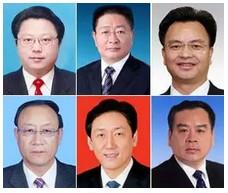
        The anti-corruption storm after the 18th National Congress of the Communist Party of China has knocked down six incumbent party secretaries of provincial capitals, namely Mao Xiaobing in Xining, Wan Qingliang in Guangzhou, Zhang Tianxin in Kunming, Chen Chuanping in Taiyuan, Wang Min in Jinan and Yang Weize in Nanjing.

        The first row from left: Yang Weize, Mao Xiaobing and Wan Qingliang.

        The second row from left: Zhang Tianxin, Chen Chuanping and Wang Min.

        In 2006, a case of collective corruption in Chenzhou officialdom led by Li Dalun, secretary of Chenzhou Municipal Party Committee, involved 158 party and government officials and business people. "In Chenzhou, Li Dalun has the final say." The Standing Committee of the Municipal Party Committee became his "centralized". In the later period of Li Dalun’s power, the selection of cadres was directly related to money. "The position promotion depends on the thickness of tickets".

Nine, the state-owned enterprise boss

Post risk coefficient: three and a half stars

        Risk point: the unique position of being both an official and a businessman makes improper interests within reach.

        1. Monopoly position and difficult supervision;

        2. It is also official and business, close to the water tower;

        3. Huge benefits are within reach;

        4. Bribery traps are everywhere.

        Li Yongzhong, an anti-corruption expert, believes that in more than two years after the 18th National Congress of the Communist Party of China, the main battlefield of anti-corruption began to break the stalemate. Although the situation is still severe and complicated, the internal corruption has begun to loosen, and the comparative advantage has been achieved. "It is urgent to open up the second battlefield of anti-corruption, that is, the anti-corruption in the hardest hit areas of state-owned enterprises and central enterprises."

        According to statistics, after the 18th National Congress of the Communist Party of China, there were 74 senior executives of state-owned enterprises and state-owned companies. Except for 13 people whose level information was unknown, there were 60 senior executives at or above the departmental level. Among them, there are four vice-ministerial executives, namely Song Lin, former chairman and party secretary of China Resources Group, Wang Yongchun, former deputy general manager of China Petroleum Natural Gas Group, Li Hualin, former deputy general manager of China Petroleum Natural Gas Group and Sun Zhaoxue, former general manager of China Aluminum Company. Central enterprises based on special status and advantages have become the hardest hit areas of corruption in state-owned enterprises, with 36 people falling off the horse, accounting for almost half of the country.

        On the one hand, it is the title of "red-top businessman" and its market position, on the other hand, it is a huge amount of bribes and a very high "imprisonment rate", which makes the boss of state-owned enterprises an enviable job and a high-risk position. "How much did the boss of state-owned enterprises take? How much should I get? " This is a controversial issue. The trap of bribery exists everywhere all the time, which is hard to prevent and fight.

If you can’t get "power", you can get "money"

        Wang Shengjie, former chairman and general manager of the board of directors of Guangzhong Enterprise Group, said, "I always think it’s unfair. Those farmers’ contractors used to be illiterate, but later they all made a fortune doing this and that. We have worked in state-owned enterprises for a lifetime and worked hard for a long time. In the end, there is no more income. So I want to get some benefits by running a company and holding shares. "

X. Director of Housing Management

Post risk coefficient: Samsung

        Risk point: As the last important supervision barrier set by the government for real estate management, the real estate management bureau has a great responsibility.

        1. Due diligence will prevent real estate disputes, while dereliction of duty will indirectly create real estate disputes;

        2. Due diligence will improve housing security, while dereliction of duty will condone speculation.

        Choose the former or the latter in the face of responsibilities and interests? Before the interests of the people and businesses, forward or backward? These problems have become the vane of the professional risk of housing management director. He can choose to bring the "black-hearted" director to justice in the management of real estate surveying and mapping, or he can choose to collude with the director. Imperfect system, inadequate supervision, and lack of sense of responsibility and mission may lead them to the point of no return under the temptation of interests.

 Zhou Jiugeng, the director of "sky-high smoke", encountered "human flesh search"

        At the end of 2008, when house prices began to fall, Zhou Jiugeng, the director of the Housing Management Bureau of Jiangning District, Nanjing, made a statement to prevent developers from selling houses at low prices. As soon as this statement came out, Zhou Jiugeng became popular on the Internet. Some netizens pointed out through "human flesh search" that Zhou Jiugeng usually smokes 1,500 yuan a piece of "sky-high cigarettes" and wears more than 100,000 yuan a piece of famous watches … Under the overwhelming attack of online public opinion, the local Commission for Discipline Inspection launched an investigation into Zhou Jiugeng.

        Wu Guangchun, member of the Standing Committee of the former Municipal Party Committee of Tongling City, Anhui Province, said: "I not only failed to manage myself well, but also failed to manage my family well. 90% of the money I received was transferred by my relatives and friends on behalf of my lover. These closest people sent me to court step by step."

(Source: People’s Forum, People’s Network, Xinhuanet, Zhongqing Daily, China Business News, compiled by People’s Forum reporter Wang Yufeng, original title: "Officialdom Ecology, which post has the highest risk factor? 》)

[Tencent Technology] Why do we all feel that traffic is running fast?

Since 4G, people no longer complain that the network speed is slow, but the traffic runs fast. In fact, this is just a new round of history, which has existed since there was a mobile phone online.

Different from voice, the unit usage of traffic is not fixed, and the unit price is not fixed. That is to say, in simple calculation, the previous voice consumption is equal to (how long it takes to make a phone call) multiplied by (unit price), and the current traffic consumption is equal to (how long it takes to surf the Internet) multiplied by (traffic in a unit time period) multiplied by (unit price). In the voice era, people only pay attention to the billing duration and unit price, while in the traffic era, people not only pay attention to the billing duration, but also pay attention to the quantity and unit price of traffic per unit time. What is more troublesome is that the flow rate and quantity of traffic per unit time are always changing because of different application scenarios, networks, terminals and applications.

Traffic does run fast, and it is getting faster and faster, just like being stolen.

Although the opinions of all parties are different, it is an indisputable fact that the consumption of traffic is accelerating. Everyone feels the same, including the operators’ staff, and there are data to support it.

According to the economic operation of China’s communications industry in September 2015 announced by the Ministry of Industry and Information Technology, the per capita mobile Internet access traffic in September exceeded 350.5MB, up 88.0% year-on-year and 2.8% quarter-on-quarter. In that month, the total traffic of mobile Internet access reached 390 million GB, a record high, and reached 2.79 billion GB in the first nine months, up 99.4% year-on-year. Among them, the mobile Internet traffic accumulated to 2.50 billion GB in the first nine months, accounting for 89.7% of the total mobile Internet traffic, and doubled for nine consecutive months.

Therefore, recently, people feel that traffic is running fast because it is really running fast, because the network speed is fast, the network coverage is good, and the terminal also supports it. This kind of speed is the inevitable result, and it will bring about the improvement of Internet service, the website is more gorgeous but consumes more traffic, and users use more content but more money.

First, the coverage of 4G networks is getting better and better, and more people can use fast networks in more places. If the channel is cleared, whoever flows will naturally flow faster. Don’t worry about what you have only used for so long and used so many things. After the high-speed rail is connected, many people can go back and forth to their hometown several times a year, and the ticket money will naturally be more, but you can’t blame the high-speed rail for being bad, but the services you enjoy are also increasing and getting better. In the past, one page was opened in one minute, but now it has become four, and the traffic naturally increases.

The 4G coverage of the three operators is greatly improved, and the network speed is accelerating, even beginning to spread all over urban and rural areas, and 4G+ has been rolled out nationwide. According to media reports, Guangdong Mobile focused on strengthening the optimization of 4G network in urban villages. By the end of June 2015, it had completed the deep coverage of nearly 90 urban villages in Guangzhou, and the average daily traffic of 4G in urban villages increased by nearly 50%. At the same time, the network speed is also improving. It is learned from Guangdong Mobile that by applying the "enhanced version" of new 4G technologies such as carrier aggregation, the 4G network in major urban areas and township hotspots in the province has been upgraded to more than 10,000 base stations, with the highest rate of 220Mbps, and the rate in some experimental areas in Guangzhou and Shenzhen can even exceed 300Mbps. Now, among 4G mobile phones, Huawei P8, Mate7, Samsung S6 and other models and new models to be launched by major brands mostly support dual-carrier aggregation aggregation, and Xiaomi note Top Edition, LeTV Mobile Music 1pro and Le max support three carrier aggregation. With the terminal fully supporting 4G+, the traffic consumption of these mobile phone users will be faster.

It should be said that this explosive growth of traffic is the expected result of operators’ traffic management, and only the rapid growth of traffic can promote the rapid development of the entire Internet industry, and can also bring operators enough operating income, thus promoting better network construction and technology upgrading.

The rapid increase of network speed brings content blowout, which makes users uncomfortable and unconsciously consumed.

From EDGE, people gradually began to learn to surf the Internet with mobile phones. In the 3G era, many people complained that the Internet speed of China Mobile was too slow. At that time, no one said that traffic consumption was too fast, because it took several minutes to send a photo, and it was impossible to consume much traffic. In the era of 4G, the network speed of China Mobile has soared, which makes many people who are used to snail speed very uncomfortable, and also causes the old users of China Mobile to complain about traffic consumption frequently after using 4G recently.

In contrast, the users of China Unicom and China Telecom now complain less about the increase in traffic consumption caused by the fast network speed, mainly because the network speed of China Telecom and China Unicom has not increased much so far, and the users feel less. It can be said that when the caravan used to the ancient tea-horse road suddenly changed into the high-speed railway, it must be surprised and suspicious, and it was deeply uncomfortable. However, passengers who were more and more used to the 200-kilometer bullet train changed into the 300-kilometer-per-hour high-speed railway, although they felt fast, they would not be uncomfortable. Many old 2G users of China Mobile have now achieved a speed increase from 0 to 1, while some 3G users of China Telecom and China Unicom only have a speed increase from 0.5 to 1. Everyone’s feelings are different.

More importantly, with more people using the high-speed 4G network, a brand-new era has arrived, traffic is beginning to repeat the story of voice, and the spring of traffic management is coming with the complaints of users, and operators will usher in the second golden age of development.

At the same time, if the traffic really runs fast, it will also give operators the space and possibility to lower their tariffs more quickly. Speed and price are both contradictory and mutually promoting. With the rapid growth of traffic, operators will lower their unit prices faster. Moreover, with the general increase of national traffic and technological progress, Internet applications will become more and more abundant, and the unit prices will be lower, and most people will enjoy the happiness of growth.

Passive consumption and loss of control in the circle are the real reasons why users feel that traffic is "stolen"

Nowadays, a large number of users think that traffic consumption is particularly fast, and it is difficult for them to believe that traffic consumption is fast under their own multiple controls, so they have to point the finger at operators. Newton couldn’t explain the source of gravity, but also let God be the master for once.

The high-speed loss of traffic, users and operators are not at fault, but the times have changed. In addition to the increase in network speed and rich applications, the increase in traffic from friends will also make your traffic "consumed", and this increase in traffic will make users lose control.

Users feel that the traffic consumption is too fast because they have lost control of the traffic. It is not that operators are cheating, but that users are forced to increase the social traffic that they can’t control.

When you send a big picture or video, you can choose to be in the WIFI environment. Conversely, when you watch a big picture or video sent by others in the WIFI environment, you may be in a network environment without WIFI. When you open it, the traffic is consumed unconsciously, and the use of this traffic is not easy to be detected.

Many people use WIFI to broadcast live, but many people can only watch it on the road or on the 4G network, because it is often overdue. This kind of traffic is forced, but it is not forced by operators. It is forced to use based on content or social interaction. The increase of real-time content is also one of the main reasons for the increase of traffic but out of control.

Many people are used to using taxi software, and they also use Alipay and WeChat to pay anytime and anywhere. Such payment is to link the network, and such traffic consumption is also that users can’t actively choose the network to control, and traffic consumption is also increasing. There is more and more social traffic, just as we talked on the phone more than ten years ago, even Alipay has launched social functions, and WeChat has WeChat campaigns and WeChat reading.

Different from the voice era, we have been locked in the circle in the use of traffic. In the voice era, users pay for making phone calls, while receiving phone calls is generally free, sending text messages is paid, and receiving text messages is free. Users and consumers are active and can control the duration or mode by themselves. In the era of traffic, active senders can choose different networks and scenarios, which can often be free and active, while receivers have to passively use traffic in different scenarios, which is often pulled, and it is difficult to control and choose free networks. At this time, traffic consumption makes users very uncomfortable, and even suspects that traffic has been stolen. It can be said that most of the traffic is not stolen by operators on purpose, but by the enthusiasm and wonderful content of friends.

In the past, most of the software only allowed users to connect with the software server. When the unit price of traffic continued to decline, the rapid growth of traffic brought ideal benefits to operators, and the traffic increment of operators did not increase, which completely deviated from the communication operation law in the voice era. Nowadays, there are more and more mesh connections between users. Although the value of traffic is hardly exponential, it has greatly surpassed the linear increase, and the future value of traffic has infinitely approached the golden age of voice.

Therefore, we can say that most users feel that traffic runs fast, which is the result of fast network speed, rich applications, good terminals and mutual traction between user circles. This is the future of traffic management that operators dream of, and it is also a new scene that Internet companies are eagerly awaiting. A new and brand-new Internet era is coming. We will all benefit!

The "dark net" cancer has to be shoveled by the whole world.

  On June 25, the Supreme People’s Procuratorate held a press conference, emphasizing the implementation of three major measures to crack down on new drugs, "dark net" transactions and other new drug crimes. The mysterious network of "dark net" has once again entered the public eye in the near future.

  The operation is secret and the supervision is difficult.

  The Internet is like an iceberg. What people contact and use is only the tip of the sea, that is, the "surface net", while the larger and more complex "deep net" is hidden outside the reach of the public and grows wildly. The "dark net" is an important part of the "deep net", also known as the "hidden net". Access to the "dark net" requires multiple special means, and ordinary users cannot search and access it through conventional Internet means.

  This is also the biggest feature of "dark network". It can connect every terminal through a special network protocol, but at the same time, these terminals have no determinable IP address, but transmit through the "dark network" protocol. This means that it is extremely difficult for people to supervise the "dark net".

  The concept of "dark net" was first put forward by American scientists. In 1996, three scientists from the U.S. Naval Research Laboratory proposed in their papers that the "dark net" came into being in order to build a system in which users could connect to the Internet without revealing their identities to the server.

  How can I get the content on the "dark net"? First of all, we can build a "hidden server" access according to the specific coding technology adopted by the "dark network". The user’s access request will not jump directly to the destination, but will be sent along a circuitous path. In addition, you can also obtain the "dark net" content with the help of targeted crawler (a program that automatically obtains the content of web pages) and specific search engines. Because the server address and data transmission of the "dark network" are usually "invisible" and the data and passwords are protected layer by layer, it seems that people can enjoy the ultimate "freedom" in the "dark network" space.

  Trade is rampant, threatening public safety

  Under the temptation of this extremely private space, the "dark net" has gradually become a breeding ground for evil deeds such as black-related, terrorism-related, child pornography, selling stolen goods and money laundering, killing people and stealing goods.

  It is also through the "dark net" that some drug transactions are bridged. The data shows that except for nearly half of meaningless data, drug information accounts for about 6.3% of the "dark net" information data, followed by extremist information, illegal pornographic information, hacker information and violent information, which also constitutes a threat to public safety and social order to some extent.

  At the same time, privacy security is also challenged with the rampant "dark net" transactions. In August 2018, the user information of hotel chains under the hotel group was suspected to be leaked, and the seller packaged and sold 500 million pieces of guest data in the "dark net". Such a "dark net" of unscrupulous sales of citizen information once again triggered public concerns about network information security.

  In addition, cryptocurrency has always been the biggest boosting factor for the "dark net" to mature. These cryptocurrencies with anonymous attributes enable criminals to circumvent the supervision of the government and banks and avoid the identification and tracking of relevant institutions when purchasing related "services" through "dark networks". The blockchain analysis agency released a report on July 1, saying that in 2019, the transaction volume of a virtual currency in the illegal online market of "dark net" is expected to exceed 1 billion US dollars, a record high.

  Upgrade technology and strengthen international cooperation.

  Using the "dark net" to commit cyber crimes has become one of the most prominent problems in the field of cyber security, and it is also the focus of international cyber security governance. In 2016, the Netan Corps of Beijing Public Security Bureau successfully destroyed a group that used Internet media such as "dark net" to spread obscene information about children for the first time, and arrested eight suspects. This case became the first case of overseas covert network crimes uncovered in China. In July 2017, the United States smashed the "dark net" black market trading website "Alpha Bay", which was the largest black market trading website smashed in the world at that time. In addition, Europol, the Netherlands, Thailand, Canada, Britain, France, etc. also participated in the action against the "dark net" black market.

  Although countries have been cracking down on "dark net" crimes, there are still many difficulties in technology and system. Breakthrough in technical means is one of the key elements to further crack down on "dark net" crimes. Qin An, director of the Institute of Cyberspace Strategy in China, said that at present, countries have made attempts in this regard, such as establishing a "dark net" space search engine based on threat intelligence clue mining, completing the detection and collection of "dark net" entries, links and contents, and trying to actively sniff "dark net", tracking "dark net" transaction data and reasonably mastering "dark net" network structure and data resources. Continue to map the "dark net" through technical means, mine threat information, and track and confront threats from the "dark net".

  Perfecting the system and strengthening international cooperation are also important means to crack down on "dark net" crimes. On the level of international cooperation, Lu Chuanying, secretary-general of the Center for International Governance of Cyberspace of Shanghai Institute of International Studies, believes that the main problem at this level lies in the differences in policies, laws, systems and technologies in different countries and regions. Therefore, in order to eradicate the "dark net", a cancer that threatens all mankind, we should actively promote the establishment of a comprehensive international law and mechanism to deal with the "dark net" cyber crime on a global scale, and at the same time strengthen interaction and coordination with relevant UN mechanisms and issues. (Diao Shifeng)

The filming of Sun Yat-sen, the father of the country, was hit by bad weather, heavy rain and hot summer.

    A few days ago, the cast of Sun Yat-sen, a film dedicated to the centenary of the Revolution of 1911, filmed an important scene in Zhongshan, Guangdong Province, where Sun Yat-sen officially took office as the interim president of the Republic of China in 1912. However, the weather was not beautiful, and typhoons, rainstorms and hot summer weather took turns in recent days, which greatly affected the filming progress. Under the bad weather conditions, all the actors are very dedicated and admirable.

On location, it was sunny and rainy, and 600 group performances took pains.

    When filming the exterior scene of Sun Yat-sen’s arrival at the presidential palace, it was sunny, sometimes it rained cats and dogs, and sometimes it blew typhoons. The crew had to seize the opportunity of sunny days to shoot. In addition to the active cooperation of a number of main actors, more than 600 extras also frequently walked on the scene, which was very hard. Later, the inauguration ceremony of the interim president was an indoor play. Hundreds of group performances and main actors gathered in the church with limited space, and the whole shooting environment was soaring and crowded. However, judging from the final shooting effect, these two scenes were very successful. The atmosphere of the inauguration ceremony under the camera was warm and solemn, and the scene of Sun Yat-sen reading the oath of office was exciting.

Wearing a robe with a thick cover is tested by a high temperature of 30 degrees.

    The reporter visited the class and learned that another scene was shooting Soong Ching Ling who was sick. At that time, it was raining outside, but the indoor temperature could still reach more than 30 degrees, and the narrow space was crowded with staff, which made the room even more sultry. The actor of Soong Ching Ling was lying on the bed wearing a robe and a thick quilt. The makeup team staff had to keep coming forward to wipe the sweat on the actor’s face and then make up the makeup. The filming of this scene lasted nearly three hours, and the high temperature environment was a big test for the actors’ physical strength and patience.

On the set, Liu Jin is witty and Ji Wang is lively.

    In the play, Liao Zhongkai is played by Liu Jin, an old actor. This powerful actor, who is well known to the audience for playing Zhou Enlai, is full of atmosphere. On the big screen, he has always maintained a serious and wise image. On the set, the old gentleman showed a humorous side. When he was ready to start work, he pointed to a staff member and said humorously, "Hey, it’s time to work, you can’t be lazy!" Ji Wang, a famous actress who plays Ni Guizhen, Soong Ching Ling’s mother, is even more active at the scene, and often gestures with a "V" in front of the documentary camera during filming.

    It is reported that the filming of Sun Yat-sen, the father of the nation, has been completed in Zhongshan, and the crew will move to Hengdian, Zhejiang Province to continue filming. As a film dedicated to the centenary of the 1911 Revolution, the film will be grandly screened in October this year.
 

Zhang Jiahui returns to the screen with Hu Xinger and Zeng Shunxi: "The Blood of the Dog" ignites 20 years of TV drama feelings!

Introduction

Time flies, and 20 years have passed like a wonderful long-form drama. Now, Zhang Jiahui, a legendary superstar in the Chinese film and television industry, has decided to write a new chapter in this drama of his life. He joined hands with powerful actress Hu Xinger and the new generation of Xiaosheng Zeng Shunxi to participate in the filming of the Youku criminal investigation drama "Blood of the Humble Dog", bringing the audience an audio-visual feast that spans time and space. This news was like a stone thrown into a calm lake, causing countless ripples, triggering the public’s enthusiastic attention and expectation for this drama.

Main characters and background, Zhang Jiahui: The Best Actor’s Screen Return

Cheung Ka Fai, the best actor who conquered thousands of audiences with his superb acting skills and low-key and restrained temperament, has created many characters that have been deeply rooted in the film and television industry since he stepped into the film and television industry in 1989. Whether it is the cold killer in "Witness" or the down-and-out boxer in "Guild Wars", his performances always accurately capture the soul of the character and give it life. Despite his brilliant achievements in the field of film, Cheung Ka Fai’s love for TV dramas has never diminished. His last starring role in a TV series can be traced back to the 2004 TVB classic "Tianya Hero Doctor". This return after a lapse of two decades is not only an important turning point in his personal artistic career, but also an affectionate look back on the golden age of Hong Kong TV dramas.

Xinger Hu: The Muse of Power

Wu Xinger, a tenacious force in the Hong Kong film and television industry, is widely praised for her solid acting skills and diverse character-building abilities. After participating in the Miss Hong Kong election in 1999 and winning the third place, Wu Xinger quickly rose to the forefront of TVB, participating in many well-known works such as "Up to the Sky" and "My Savage Grandma", and won the crown of the TV series many times. She and Zhang Jiahui have worked together tacitly in works such as "Street of Rage", and this time they joined hands again, which undoubtedly injected a strong chemical reaction into "The Blood of the Dog".

Zeng Shunxi: The new generation of forces is ready to go

Zeng Shunxi, as a rising star in the mainland film and television industry in recent years, has won the love of young audiences with his sunny and handsome image and increasingly mature acting skills. From "The Best Time of Youth" to "Yitian Dragon Slayer" and other works, he has shown great performance potential and character control. Joining "Blood of the Dog" this time, with his predecessors Zhang Jiahui and Hu Xinger on the same stage, is undoubtedly an important experience in his acting career, and will also add a touch of youthful vitality to the series.

An Overview of the New Drama "Blood of the Dog"

The Blood of the Pigeon Dog is a masterpiece of criminal investigation directed by former TVB gold medal team Su Wancong and written by UEFA Champions League. The drama takes complex and tortuous cases as the main line, deeply analyzes the light and darkness of human nature, and shows the fierce collision of justice and evil. Su Wancong and UEFA Champions Ying, a golden partner, have worked together to create many well-known masterpieces, such as the "Apostle Walker" series. Their addition has undoubtedly provided a solid guarantee for the quality of "Blood of the Pigeon Dog".

Shooting plan and location

According to reports, "The Blood of the Pummy Dog" is scheduled to start shooting at the end of September this year, and the crew will shoot in Macau and Jiangmen. These two cities full of story history not only provide a rich and diverse visual background for the series, but also have a deep connection with the Hong Kong TV drama industry. Macau’s unique cultural blend of Chinese and Western cultures, as well as Jiangmen’s historical sedimentation as an important city in the Pearl River Delta, will add a strong regional color to the plot, making the audience feel as if they are in the story.

Zhang Jiahui’s return significance

Zhang Jiahui’s return is not only a continuation of his personal artistic pursuit, but also an affectionate tribute to the style of traditional TV dramas. He admits that TV dramas give actors more abundant performance space, allowing them to dig deeper into the connotation of characters, which is why he misses and longs to return. Facing the new script and character challenges, Zhang Jiahui expressed his expectation to surpass other versions and pass on the "performance torch" in his hand. At the same time, his working partnership with Hu Xinger foreshadows that there will be wonderful antagonists waiting for the audience in the play.

Audience expectations and market reaction

As soon as the news came out, the majority of fans and the media responded enthusiastically to Zhang Jiahui’s return, and expressed their eagerness for "Blood of the Dog". On social media, the relevant topic trendiness continued to soar, which was enough to foresee the market potential of the drama after it was broadcast. Zhang Jiahui’s appeal, Hu Xinger’s stable play, and Zeng Shunxi’s fresh blood are expected to trigger a new round of drama chasing craze, injecting a boost into the long-sluggish Hong Kong TV drama market.

conclusion

Overall, "The Blood of the Hump Dog" not only carries the ambition of Zhang Jiahui to fight for the screen in 20 years, but also inherits and carries forward the spirit of the golden age of Hong Kong TV dramas. This work, which brings together the best actor, the queen and the new generation of actors, is expected to become an annual hit series with its excellent production, gripping plot and profound character portrayal, which has far-reaching significance for Zhang Jiahui personally and the entire Hong Kong TV drama industry.

Let’s look forward to the brilliant bloom of "The Blood of the Dog", witnessing how Zhang Jiahui, Hu Xinger, and Zeng Shunxi interpreted a police and bandit situation intertwined with crime, redemption, and human nature in the play, presenting a visual and spiritual double feast for the audience.

Responsible editor:

Japanese athletes bask in daily activities: buying ice piers, cooking rice and digging holes in the snow wall to "leave a seal for Beijing Winter Olympics"

4.png

  Hamada Hairen (Twitter screenshot)

  Overseas network February 18 thAccording to Japan’s "Daily News" on the 18th, in order to prevent the epidemic from spreading during the Winter Olympics in Beijing, foreign athletes can only travel between competitive venues, practice venues and the Winter Olympics Village, but Japanese snowboarder Hamada Hairen is obviously not bored. He exposed his daily life in the gap between competitions in Beijing on Twitter one after another, such as queuing to buy mascots and cooking for days, digging holes in the snow wall to "leave a mark on Beijing Winter Olympics" and sharing the charm of Beijing Winter Olympics and snowboarding with many Japanese people.

2.png

  Hamada is on the snow wall (Twitter screenshot)

  Beijing Winter Olympics snowboarding men’s platform held a qualifying match on the 14th. Hamada, who returned to the finish area, jumped on the snow wall happily and tried to show his skills on the wall. Although the second and third jumps failed, he still smiled with satisfaction and said that he had done skills that basically no player was willing to do and showed his style.

GIF.gif

  Twitter screenshot

  Japanese media said that Hamada started skiing at the age of 5, and his interest was not only skiing, but also editing videos. Recently, he exposed his daily life in Dongao Village on social media. For example, in order to buy the popular Winter Olympics mascot "Bingdundun", he waited in line before the store opened for two consecutive days. He also basked in the dining in Dong ‘ao Village and introduced it with subtitles. In addition to skiing, I also bought local products here. I think I am the most tossing person in Dong ‘ao Village.

GIF.gif

  Twitter screenshot

  In Hamada’s video, there is a picture of him digging a hole on the snow wall. Hamada said that although the results of the competition were not satisfactory, "I left a mark (on Beijing Winter Olympics)." In the interview after the game, he also expressed optimism: "I hope skiing is a happy thing. Although I fell down this time, skiing here is super happy." (Overseas Network-Wang Shanning)

Tesla’s heat pump air conditioner lost to the winter in Canada?

How is your pure electric car experience in the cold winter?

The discount on battery life may not be the worst thing. Recently, more than a dozen Tesla owners in Canada have reported that even the air conditioner can’t be used in winter. Not only is the car frozen at a discount, but people are also frozen with a snot and tears.

Moreover, the basic things that can’t be heated in winter are heat pump air conditioners.

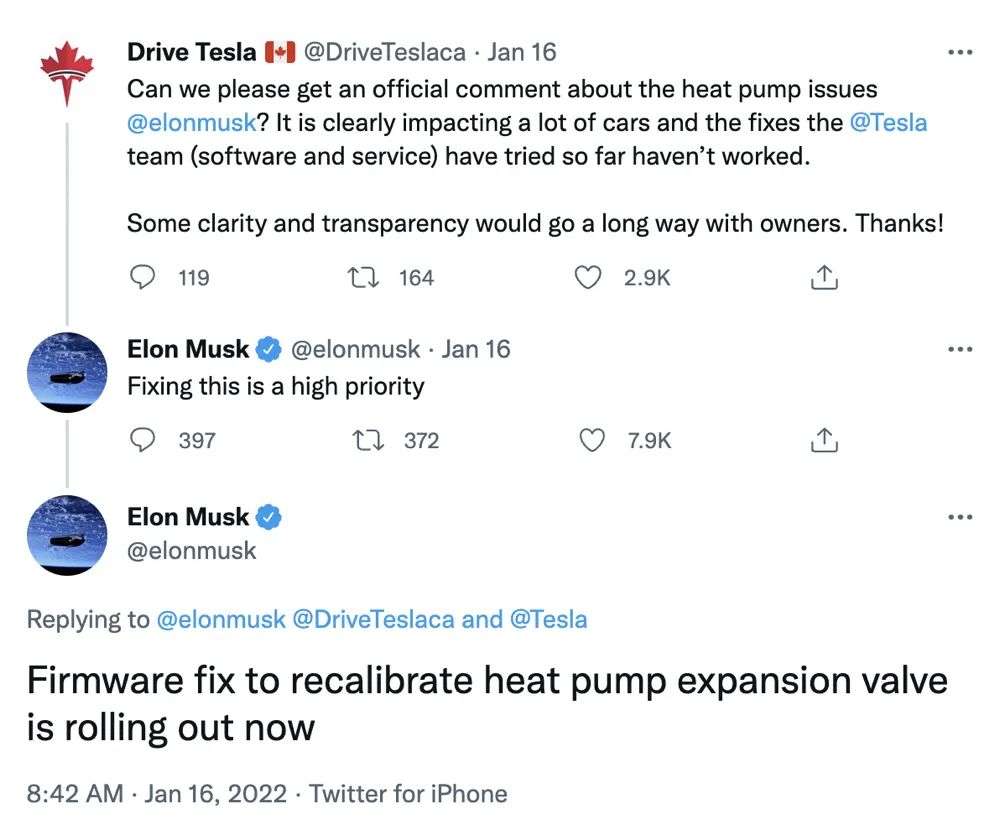
This is very strange. The high-efficiency and energy-saving advantages of heat pump air conditioners have not been brought into play, but they cannot be heated, which has attracted the doubts of some Canadian car owners and attracted the attention of Tesla’s R&D team. Musk said that this is a high priority for Tesla.

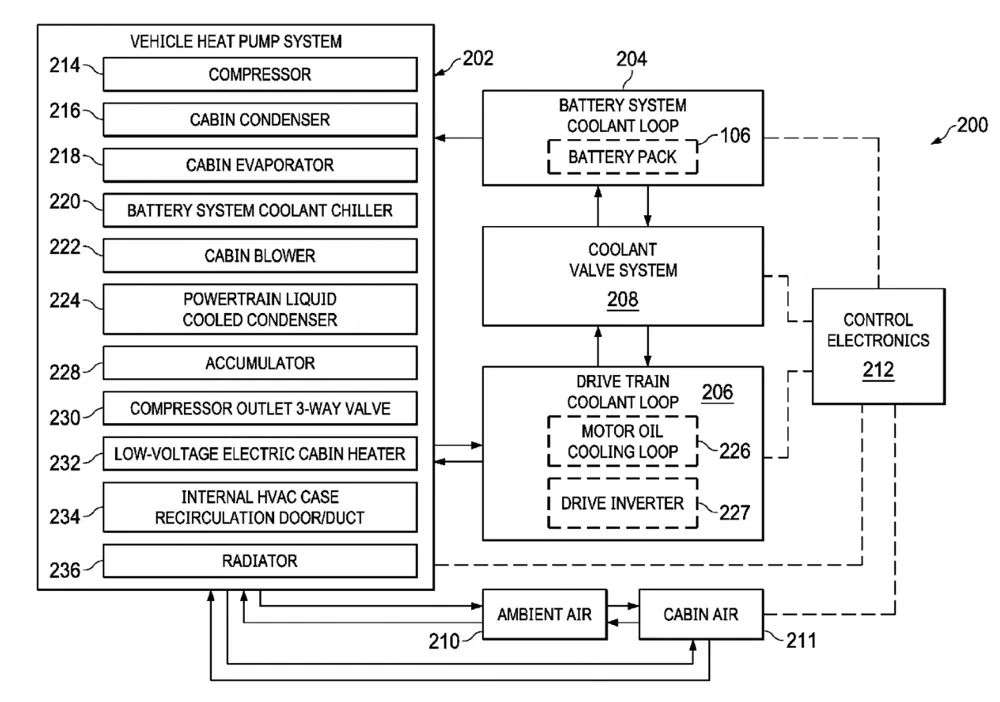
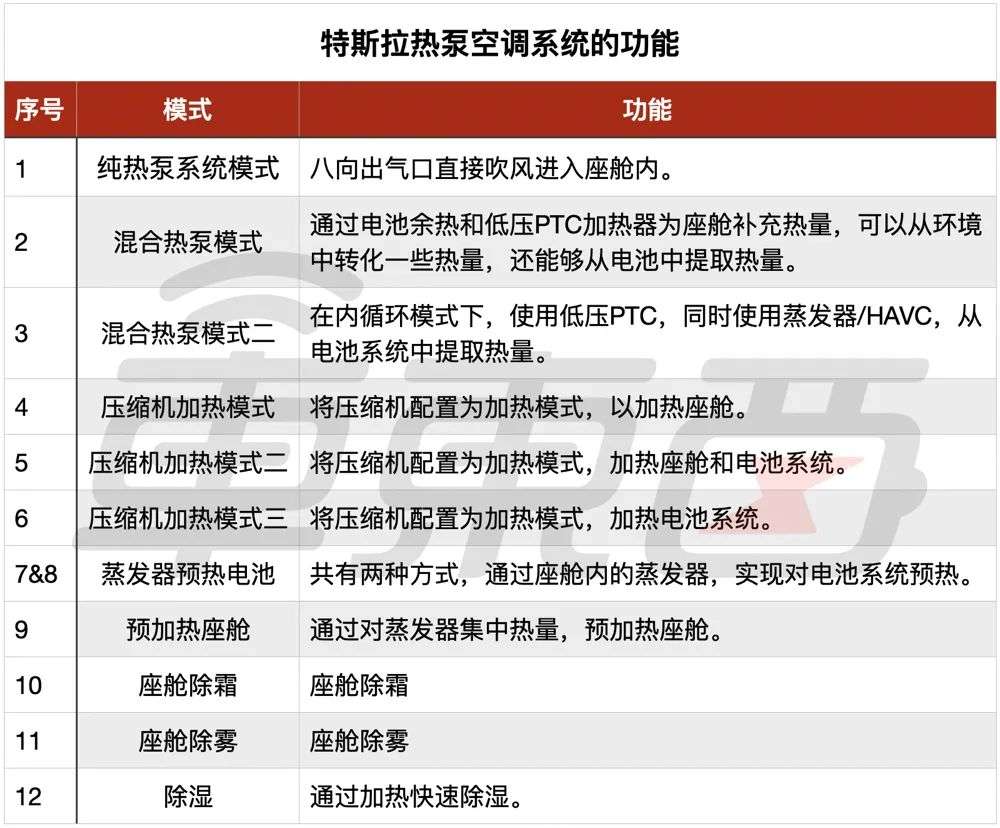
But even weirder, Musk said that the failure of heat pump air conditioner turned out to be a software problem, which can be completed by firmware update. Perhaps many people have never heard of it, and air conditioners still need OTA. However, after understanding the structure and working principle of Tesla heat pump air conditioner, we can find that this set of hardware can realize 12 different functions, and all the functions are controlled by software.

Therefore, the problem of Tesla heat pump air conditioning may really be a software problem.

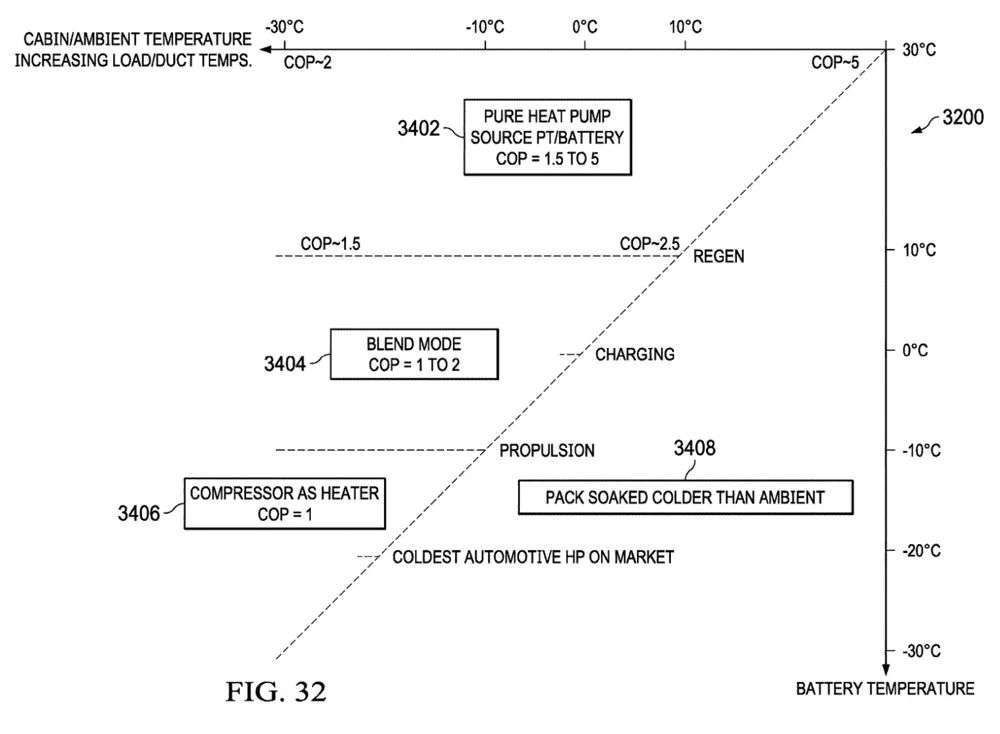
So, how amazing is Tesla’s heat pump air conditioner? Why can’t refrigeration occur under extremely cold conditions? Can the industry solve this problem? After reading the patent of Tesla heat pump air conditioner and having a conversation with the Weiling engineer of Midea, the car found the answer to the question.

This month, countries in the northern hemisphere ushered in the coldest time since winter, and electric vehicles also entered the worst stage of the year.

Recently, Tesla owners in Canada reported that they were driving in an extremely cold environment and the heat pump air conditioner could not be used.

Twitter user @TSelvig said that when traveling that day, the temperature had dropped to-40 C. In this extremely cold weather, when he was driving Tesla Model Y, the heat pump air conditioner could not be used. After trying to restart the vehicle and call Tesla customer service, this problem still cannot be solved, and the owner is a few hours’ drive from the nearest service center, so it is impossible to drive without air conditioning.

In the end, the family switched to a fuel car.

Another Model Y owner @paateach has a richer experience. His Model Y has no warm air for two consecutive winters.

He tweeted that he lived in Saskatchewan, southern Canada, and in February last year, he encountered the situation that the heat pump air conditioner could not be used, and there was no warm air for a whole month. Later, Tesla replaced a group of super manifolds for him, and the heat pump air conditioner could be used at that time. However, by this winter, when the temperature dropped to -30℃, he once again encountered the situation that the heat pump air conditioner could not be used.

At that time, he photographed the prompt on the car screen: the cockpit climate control system needs maintenance, and the heating and cooling systems will be restricted or unusable.

Two car owners questioned Tesla: Why did Tesla’s heat pump air conditioner fail in extremely cold weather? Tesla has been repaired several times, why is the maintenance plan still invalid?

Some car owners even said that after this winter, they hope to sell their Tesla in exchange for a fuel car, at least there will be no air conditioning and heating failure.

Angie Dean, chairman of Tesla Owner’s Club in Alberta, Canada, said: "In Alberta and Saskatchewan, Canada, more than a dozen Tesla owners have experienced the problem that heat pump air conditioners cannot be used."

Just last week, the owner community Drive Tesla Canada tweeted @ Musk, asking him to comment on the heat pump problem. Musk replied to the tweet within 5 minutes, saying that maintaining the heat pump air conditioner has a very high priority. After 40 minutes, Musk said that the new firmware of heat pump air conditioner has been introduced to users.

It is quite curious that why the failure of heat pump air conditioner can be repaired by firmware update? In addition, after the firmware update is completed, there is still feedback from the owner that heating cannot be done. Is the firmware update useful?

In a patent document published by Tesla in 2019, the structure and operation mode of the heat pump air conditioning system were demonstrated. At the beginning of 2020, with the mass production of Model Y, this patent was also transformed into the mass production application of Tesla.

If you open the front case of Tesla, you can see the heat pump air conditioner and many pipes and harnesses. In fact, this is just the tip of the iceberg of the heat pump system. From the patent drawing, Tesla’s heat pump air conditioner has 11 main components, and is responsible for the thermal cycle of the whole vehicle, which can lead to different parts of the vehicle such as cockpit, battery pack and motor.

These main components are compressor, cabin condenser, cabin evaporator, battery system cooling device, cabin blower, motor liquid-cooled condenser, storage battery, three-way compressor air outlet, low-voltage electric cabin heater (PTC), recirculating air conditioner and heating.

Among the 11 main components, Tesla did not directly cancel the traditional PTC heating, but still equipped with a low-voltage PTC heating. However, due to the lack of power, this PTC heating device can not directly heat the cabin, but provides auxiliary heating when the heat pump system is insufficient.

Surprisingly, Tesla’s hardware can realize 12 different working modes, which are completed by different software scheduling.

Among these 12 working modes, there are only three modes in which heat pump participates. Heat pump participation in heating can be divided into pure heat pump mode and mixed heating mode. When the heat pump efficiency is high, the pure heat pump mode is activated, and when the efficiency is low, the mixed heating mode is activated. The heat pump can be mixed with PTC heating and can also be added to the evaporator for heating together.

In addition, the cabin and battery system can be heated simply by using the compressor and evaporator. In addition, the in-vehicle thermal circulation system can also realize the functions of cabin defogging, defrosting, dehumidification and so on.

A conclusion can be drawn here: it is indeed feasible to fix the problem of heat pump air conditioning through firmware update.

When there is nothing wrong with the hardware of the heat pump air conditioning system, the adjustment of the heat pump air conditioning system can be realized by adjusting the software scheduling in different environments.

As far as the heat pump system is concerned, there is a strong relationship between the efficiency of heating the cabin and the efficiency of the heat pump. Because the working principle of heat pump air conditioning is to exchange heat energy inside and outside the car.

Through the evaporator, the refrigerant can absorb heat from the external environment, and after the refrigerant in the car is liquefied, it releases heat, so that it can heat the cabin.

However, if the temperature of the external environment is lower, it is more difficult for the refrigerant to obtain heat from the external environment, which leads to the low heating efficiency of heat pump air conditioning in extremely cold environment.

Tesla also knows this obvious problem, so it adds auxiliary heating devices in addition to heat pump air conditioning.

Tesla drew a chart in the patent, which can explain the efficiency of heat pump air conditioning at different temperatures. The efficiency coefficient of heat pump air conditioning is expressed by COP(Coefficient of Performance). When COP=1, it means that the consumed electric energy is equal to the generated heat energy. When COP>1, the heat pump air conditioner is in the high efficiency area, which means that it can get more heat energy by consuming less electric energy.

As can be seen from Tesla’s chart, when the ambient temperature and battery temperature are lower than -20℃ at the same time, the efficiency of heat pump air conditioning will be very low, which is also considered as extremely cold temperature by Tesla, and there is no solution below this temperature. But at this time, just heat the battery, the COP value will increase, and the heating system can be used normally.

When COP=1, the heat pump air conditioner does not work and relies on evaporation to achieve heating. When COP≥1, the heat pump air conditioner will participate in heating, and the temperature needs to be above -10℃.

The second conclusion can be drawn here: if the weather outside is extremely cold, even if the firmware of the heat pump air conditioner is updated, the heating effect will still be poor. The solution is to heat the battery, or preheat it before going out.

However, under the tweet that Musk replied to the updated firmware, there are still many users who feedback that the vehicle still cannot heat.

Then, there is probably a hardware problem.

Tesla owner @paateach said on Twitter that his Tesla Model Y has been replaced with two super manifolds, including the sensor of heat pump air conditioner, expansion valve and refrigerant pipeline. The heating system can be used temporarily, but I am very worried that it may be damaged again.

Twitter user Tesla owner revealed the research and development story of heat pump air conditioner online. Recently, Tesla’s engineers in California and Alaska are testing heat pump air conditioners. The test results show that Tesla’s heat pump air conditioners can work normally below -30℃ because the heat pump air conditioners have two refrigerant cycles.

At the same time, engineers also found the problem: in extremely cold weather, the cover plate of the front air inlet will be frozen and damaged, which will lead to the inhalation of cold air during driving. Because the cold air temperature is too low, the sensor will report an error to the system after sensing it. At this time, the compressor will stop working and the heating will stop.

In order to solve this problem quickly, Tesla may start the compressor by software, temporarily avoiding the heating failure in extremely cold weather. But to solve this problem completely, Tesla may need to update some hardware later.

For the automotive industry, heat pump air conditioning is still a new thing, and Tesla Model Y was mass-produced in early 2020. Prior to this, pure electric vehicles generally used PTC to heat the interior of the car. But even under ideal conditions, the COP of PTC is 1. Low efficiency leads to very large electricity consumption for PTC heating, which further becomes a major factor affecting the battery life of electric vehicles in winter.

The efficient performance of heat pump air conditioning has attracted the attention of electric vehicle companies. In 2021, all new pure electric vehicles were basically upgraded from PTC heating to heat pump air conditioning. However, due to the limitation of refrigerant, when the temperature is below -10℃, the efficiency of heat pump will be greatly reduced. At this time, it is necessary to rely on PTC heating to heat vehicles.

For example, Tucki P5 is equipped with a heat pump air conditioner to achieve efficient heating, but it is also equipped with PTC. When the temperature is lower than -10℃, the vehicle will start PTC heating to heat the interior.

It can be said that Tucki P5 has solved the shortcomings of heat pump air conditioning to some extent, but it has not been completely solved.

Weiling, another new auto parts manufacturer, has solved the heating problem in extremely cold weather. Speaking of Weiling, maybe many friends in the automobile circle are no strangers. Weiling is a subsidiary of Midea Group, a domestic appliance head enterprise.

Last year, several auto parts announced by Weiling included automotive heat pump air conditioners.

At present, R134a(CH2FCF3, tetrafluoroethane) is usually used as the refrigerant for heat pump air conditioning, but when the outside temperature is low, the heating capacity is obviously attenuated. Therefore, there are explorations of mixed refrigerants in the industry, but the performance cannot be significantly improved.

The engineers of Weiling parts found another way, using carbon dioxide as refrigerant, and the heating efficiency was obviously improved at extremely cold temperatures.

Weiling’s rotary CO2 electric compressor can achieve a heating efficiency of COP=2 at -30℃. At the same time, the noise is low during operation and the overall design is lighter.

Engineer Weiling introduced that in extremely cold weather, users don’t need to "cover the quilt" to drive. At the same time, compared with traditional heat pump air conditioners, the heat pump with carbon dioxide as refrigerant can increase the cruising range of vehicles by up to 20%.

The CO2 electric compressor alone has 220 domestic invention patents and 14 international invention patents, and has completely independent intellectual property rights. At the same time, CO2, as a common greenhouse gas, is collected and used as a refrigerant, which also contributes to "carbon neutrality".

Last year, the heat pump air conditioning products of Midea Group Weiling components have been installed on pure electric brand vehicles such as Tucki and Weilai, which has become a microcosm of the rapid transformation of domestic component enterprises to electrification.

In 2020, Tesla put the heat pump air conditioner into a pure electric vehicle, which led the electric vehicle industry to take another step towards high efficiency. In just one year, by 2021, heat pump air conditioning has become the standard of high-end electric vehicles.

Obviously, the technology that will not be used in the era of fuel vehicles may be a huge innovation in the era of electric vehicles. In today’s increasingly fierce global competition for electric vehicles, there is still huge room for innovation in the field of electric vehicles.

Summary of the achievements of national defense and army building in the new era (II): writing the answer sheet of the era of reforming and strengthening the army

  Writing the answer sheet of the times to reform and strengthen the army

  — — Summary of achievements in national defense and army building in the new era (II)

  ■ Liberation Army Daily reporter Qian Xiaohu Han Cheng

  In the desert Gobi, a certain unit of the army organizes multi-arms cross-domain maneuver and three-dimensional attack and defense; Over the East China Sea, the J -20 fighter formation thundered forward to carry out actual combat drills in the maritime direction; In the western Pacific, the carrier formation of Liaoning ships is breaking waves and tempering its offshore combat capability … … On the occasion of the people’s army’s 95th birthday, we can truly feel the profound changes brought by the reform and strengthening of the army through the turbulent pictures on the training ground of the three military exercises.

  A strong country must strengthen the army, and a strong army must reform. In November, 2015, when the snow began to fall in Beijing, the Central Military Commission’s reform work conference was held. President Xi issued a mobilization order to deepen the reform of national defense and the army: fully implement the strategy of strengthening the army through reform and unswervingly follow the road of strengthening the army with China characteristics. The unprecedented integrity and revolutionary changes in the strength, depth and breadth of our military history have thus begun.

  The spring tide is surging, and the torrent is brave. The organizational structure of our army has undergone a historic transformation, the road to elite soldiers with China characteristics has taken a historic step, and Socialism with Chinese characteristics’s military policy system is becoming more and more complete … … Today, the people’s army reborn from the fire is accelerating towards the goal of a world-class army by leaps and bounds.

  Strategic plan, "key trick" to win the future

  It is often a keen and powerful ideological lever that incites history.

  Standing at the new time coordinate point, looking back at the course of national defense and military reform again, and looking back at the holistic and revolutionary reconstruction and remodeling brought by this round of reform to the people’s army, we feel more deeply the profound historical vision, broad strategic considerations and strong mission responsibility of the military commander.

  Back to November 15th, 2012, just after the 18th National Congress of the Communist Party of China closed, President Xi presided over the first executive meeting of the new Military Commission, which clearly pointed out that we should always forge ahead in the spirit of reform and innovation and strive to seize the initiative in military competition. More than 20 days later, President Xi came to the forefront of China’s reform and opening up — — Guangdong, inspected the Haikou ship at Shekou Port in Shenzhen and sailed with the ship for 4 hours.

  "President Xi has high hopes for reforming the strong army and building a strong navy." After a lapse of 10 years, when President Xi inspected the scene overlooking the sea, Shan Donghui, the captain of Haikou Ship, was still vivid; The earnest entrustment of the commander-in-chief always haunts the hearts of naval officers and soldiers. Now, the photo of President Xi and the sailors at the bow of the ship is displayed in the Military History Museum of the detachment where Haikou Ship is located, always encouraging officers and men to be strong in the chart.

  If you can’t make the sea, you must make it. The Sino-Japanese War of 1894-1895, more than 100 years ago, was a very painful "national mourning" in the history of modern China, and was called "the pain of gouging out one’s heart" by President Xi.

  Gaze at history and observe reality. In the second decade of 21st century, China has become the second largest economy in the world. However, the road from the big to the strong is doomed to be uneven.

  Looking around the world, the international pattern and system are undergoing profound adjustment, the global governance system is undergoing profound changes, and the international power balance is undergoing the most revolutionary changes in modern times. In this unprecedented great change, the new military revolution in the world, with the essence of fighting for the strategic initiative, has developed in depth, and major countries have adjusted their security strategies and military strategies one after another, and adjusted their military organizational forms. Its speed, scope, depth and influence are rare since the end of the Second World War.

  "Once the military backwardness is formed, the impact on national security will be fatal. I often read some historical materials of modern China, and it hurts me to see the tragic scene of being beaten behind! " President Xi warned the whole army that the new military revolution provided us with a golden opportunity. We must hit the water in the middle stream, and we can’t do it without changing it, and we can’t do it if we change it slowly. This is a big exam that we can’t avoid. The army must hand over a qualified answer to the party and the people and to history.

  A hundred battles struggle, and those who struggle first. Focusing on the multiple considerations of history and reality, international and domestic, war and peace, a blueprint for profound changes in the future of the people’s army has been brewing in the commander’s mind.

  "What I think most is whether our army can always uphold the absolute leadership of the party when the party and the people need it, whether it can pull up and win the battle, and whether commanders at all levels can lead troops to fight and direct the war." At an important meeting of the army, President Xi’s words struck a deaf ear. This is the questioning of the times and the questioning of the mission.

  Examination and questioning come from a deep insight into the risk challenges on the road ahead, and more from a clear understanding of our military’s capabilities and shortcomings — — "There is still a big gap between the modernization level of our army and the national security demand, and between our army and the world’s advanced military level", "Our army is not capable of fighting modern wars, and cadres at all levels are not capable of commanding modern wars", "Without reform, we can’t fight and win battles" … …

  National rejuvenation, read here; Strengthen the army and build the army, and linger at night. President Xi profoundly pointed out: We must deepen the reform of national defense and the army with greater wisdom and courage. This is the requirement of the times to realize the Chinese dream and the dream of strengthening the army, the only way to strengthen the army and the key measure to determine the future of the army.

  Seek the layout of the article, and make a sound. On March 15, 2014, a message from Xinhua News Agency attracted much attention at home and abroad: the supreme leader served as the leader of the Central Military Commission’s leading group for deepening national defense and army reform. It is the first time in the history of the party that the general secretary of the party personally serves as the leader of the leading group for deepening the reform of national defense and the army.

  This year marks the 120th anniversary of the Sino-Japanese Sino-Japanese War of 1894-1895. After two Jiazi, China’s army embarked on a brand-new starting point of transformation and strength.

  "The easy and happy reform has been completed, all the delicious meat has been eaten, and the rest are hard bones." Facing the tough battle of national defense and army reform, President Xi encouraged all officers and men of the army: The more difficult it is, the more determined they must be and forge ahead, and they must never be hesitant and timid. As long as the whole army unites its will, dares to gnaw hard bones, and dares to wade in dangerous beaches, there will be no flaming mountain that can’t be crossed!

  At the critical moment, the strategic vision and political determination of the supreme commander are the decisive factors for the success of the reform. Focusing on promoting the reform of national defense and the army, President Xi presided over the collective study of the Political Bureau of the Central Committee twice, presided over the meeting of the leading group for the reform of the Military Commission three times, listened to the opinions and suggestions on the reform of large units many times in person, and personally organized and studied major issues of reform.

  Where are the institutional obstacles? What are the structural contradictions? How many policy issues are there? A number of reform special groups and expert advisory groups conducted extensive research, concentrated wisdom and repeatedly demonstrated — —

  More than 690 military units, more than 800 symposiums and demonstration meetings, more than 900 on-the-job and retired military leaders and experts, more than 2,000 team members of units above the military level and officers of divisions and brigades, and more than 3,400 opinions of officers and men of the army. The reform plan has been adjusted, revised and improved more than 150 times before and after … …

  The reform of national defense and the army concerns the overall situation and the whole country. From inside the military to outside the military, from the central government to the local government, all localities and departments have given strong support to deepening the investigation and demonstration of national defense and military reform and drawing up plans, thus forming a touching situation in which the party, government, army and people in Qi Xin work together to help reform. The National Development and Reform Commission, the Ministry of Industry and Information Technology and the Bureau of Science, Technology and Industry for National Defense actively participated in the reform demonstration; The Central Organization Department, the Ministry of Civil Affairs and Ministry of Human Resources and Social Security launched an in-depth study on the reform of management and security for retired military personnel & HELIP; …

  Fighting day and night, the Military Commission Reform Office launched a high-intensity, high-density and wide-ranging investigation. Opinions and suggestions from all sides, like a clear spring, inject fresh vitality into the scheme.

  In July 2015, President Xi presided over the third plenary meeting of the leading group for the reform of the Central Military Commission, and reviewed and approved in principle the Proposal on the Overall Plan for Deepening the Reform of National Defense and the Army. Subsequently, President Xi presided over the executive meeting of the Central Military Commission and the The Politburo Standing Committee (PSC) meeting respectively to review and approve the Overall Plan. A set of reform designs that solve deep-seated contradictions, have major innovation breakthroughs, and reflect the characteristics of the people’s army have emerged.

  The hoof is fast and steady, and the "three major battles" are like a rainbow.

  Some moments are destined to be unforgettable, and some events are destined to go down in history.

  In the snowy midsummer, the sky is high and the clouds are light, and the harsh alarm cuts through the tranquility of a brigade camp of the 76 th Army. Personnel gathering, unpacking equipment and loading formation … … A full-loaded pull drill kicked off. Looking at the new barracks which integrates the functions of command, training, living and security, Qiu Shaoyun’s company commander Dunzhi Bading really felt the strength of reform: five years ago, when the company moved thousands of miles from Hexi Corridor, it was still a desolate Gobi.

  Reform affects the hearts of every officer and soldier. "What is discipline, that is, the party will do whatever it wants." As a witness and witness, Dun Chi-Badin knows well the difficulty of relocation and the pain of reform. "But no matter how difficult and painful it is, we must be resolute and resolute."

  This is a historic moment: at 0: 00 on January 16, 2016, the seven military regions of Shenyang, Beijing, Lanzhou, Jinan, Nanjing, Guangzhou and Chengdu stopped exercising their command, and the five war zones in the east, south, west, north and central began to operate.

  In less than a month, 15 functional departments of the Central Military Commission were adjusted and formed, and the army leadership, rocket army and strategic support forces were established, which made a big step in the reform of the leadership and command system.

  Focusing on implementing the requirements of political army building under the new situation, promoting the organic unity of leading and commanding troops and deepening the reform of national defense and the army, the "first battle" starts with breaking the headquarters system, the military region system and the continental army system, and the first move is to build a leadership and command system of "the Central Military Commission is in charge of the general, the main battle of the theater and the main construction of the service".

  With one order, the headquarters system that has been running for decades has become history overnight. Among them, the number of institutions above the division level has been reduced by more than 200, and the number of personnel has been reduced by one third. Military Commission — War zone — The operational command system of the army and the Central Military Commission — Services — The leadership and management system of the army started to operate, and the long-standing institutional obstacles of the army were effectively solved.

  According to experts’ evaluation, the new pattern is of great significance for ensuring the party’s absolute leadership over the army, ensuring the efficient command of the army by the military commission, ensuring the scientific planning of the military commission and strengthening the management of army building.

  The first battle laid the foundation stone and took advantage of the situation. In December 2016, a conference on the reform of the military scale structure and strength of the Central Military Commission was held in Beijing. President Xi personally deployed and deepened the "second big battle" of national defense and army reform.

  The reform of scale structure and strength organization is not simply "addition and subtraction", but the optimization of structure and function leads to scale adjustment, focusing on cracking structural contradictions and realizing the revolutionary reshaping of our military strength system, which is "slimming" and "strengthening the body". Throughout the history of world military development, the scale structure and strength of the army cannot be fixed, but must change with the changes of war forms and combat methods, as well as with the changes of national strategic needs and military missions and tasks. Otherwise, no matter how powerful the army is, it will be out of date and even vulnerable.

  On April 18th, 2017, President Xi met with the heads of 84 corps units newly reorganized by the whole army. Ten days later, the regular press conference of the Ministry of National Defense revealed that the army’s 18 group army titles were revoked, and the 13 group army titles after adjustment and formation were announced at the same time. In that reform, Qiu Shaoyun’s former army, like many troops deployed for relocation, left the old camp that had been stationed for more than 40 years, came to a strange new station, and came to a place closer to the front line of military struggle, set up camp, and prepared for training and consolidation.

  The boldness and boldness of China’s military reform once again shocked the world: the number of military posts was reduced by 300,000, and the total number of active posts was reduced to 2 million; More than 1,000 units and institutions above the corps level have been reduced, the number of active posts in non-combat institutions has been reduced by nearly half, and the number of combat troops has increased rather than decreased, making it more substantial; The thinking pattern and historical inertia of the concept of mechanized warfare in the "Great Military Region" and "Continental Army" have been gradually changed. The mode of focusing on military groups and winning by quantity, the power structure and deployment of land-based and homeland-defensive forces have been changed, and the degree of integration of troops, the flexibility of operational grouping and application have been significantly improved.

  If the reform of the leadership and command system focuses on "strengthening the brain", the reform of scale structure and strength formation focuses on "strengthening the bones and muscles", and the reform of the military policy system focuses on "connecting the meridians". In mid-November 2018, the Central Military Commission’s policy system reform work conference was held in Beijing, which opened the prelude to deepening the "third big battle" of national defense and military reform.

  "The military policy system regulates military relations, standardizes military practice, and ensures military development. The reform of the military policy system is very important for realizing the party’s goal of strengthening the army in the new era, building the people’s army into a world-class army in an all-round way, and realizing ‘ Two hundred years ’ The Chinese dream of striving for the goal and realizing the great rejuvenation of the Chinese nation is of great significance. " President Xi’s important speech pointed out the direction for promoting reform.

  Four days after the meeting, the list of policies and systems issued just before was released. Twenty-seven policies and systems were included in the list, including strengthening the construction of party organizations, selecting and transferring cadres in war zones, improving the relevant policies of troops stationed in plateau islands, encouraging scientific and technological innovation, managing employment contracts for civilian personnel, and providing medical care for military personnel and their families.

  Promote the reform of military expenditure management, military salaries, housing and medical security, improve the management and security system and mechanism of retired military personnel, and build and improve the military honor system … … A series of policies and systems embodying the characteristics of military occupation have been stepped up, providing a solid institutional guarantee for improving the combat effectiveness and stimulating the vitality of the troops.

  Rebuild and rebuild, and the "big country array" has taken on a new look.

  Time is the best developer and the best touchstone.

  At the foot of Helan Mountain, the wind and thunder surge. The "Western Joint -2021" exercise, which attracted worldwide attention and was full of bright spots, was launched at the Army Qingtongxia Contract Tactical Training Base.

  In this exercise, China and Russia sent more than 10,000 troops, invested in multi-type aircraft, artillery and armored equipment, and conducted dozens of exercises such as joint air defense, joint obstacle breaking and joint three-dimensional capture. The armed forces of the two countries reached a new height in coordinated operations.

  The exercise was led by our army, instead of the independent grouping planning before, it was changed into the mixed grouping and joint planning of the two armies, and the bilingual command information system was used throughout, and the situation data was shared … …

  Seeing many new changes, the military experts on the spot can’t help feeling the performance of China’s army: the command level of this exercise is flatter, the operational grouping is more flexible, and the degree of integration and modularization is higher. It can be seen that a joint combat force system with elite combat forces as the main body is taking shape, which vividly shows the new achievements and new leaps of China’s military reform.

  Looking back at the Gobi smoke, focusing on the future battlefield. In just a few years, the People’s Army has accelerated its changes in the "new system time": the army’s mobile operations and three-dimensional offensive and defensive capabilities have been significantly enhanced, the navy has accelerated the transformation from offshore defense to offshore defense, the air force has accelerated the transformation to air and space integration, and both offensive and defensive capabilities have been enhanced. The Rocket Army has continuously strengthened its nuclear and conventional capabilities, and the strategic support forces have made every effort to promote the leap-forward development of key areas & HELIP; … With a new system, a new structure, a new pattern and a new look, a new combat force with a leaner scale, a more optimized structure and a more scientific organization is accelerating its rise.

  — — The command system is lean and efficient. Military Commission — War zone — The operational command system of the army started to operate, and the highest leadership and command of the army were concentrated in the CPC Central Committee and the Central Military Commission. Compared with the original four headquarters, the new Military Commission has a clearer path of command, construction, management and supervision, a more rational allocation of functions of decision-making, planning, implementation and evaluation, and a more focused strategic planning and macro management, and has truly become a staff organ, an executive organ and a service organ of the Military Commission. The focus of joint operational command is on the war zone, and the focus of army construction management is on the arms and services. The war zone specializes in fighting and is mainly engaged in joint operations, and the services take fighting to lead and seize construction as the battle. Implement the military in the main combat troops of the whole army — Brigade — The battalion system, the combat forces of various arms have been strengthened, the command level has been reduced, the operational command has become flatter and smoother, and the combat formation has become more comprehensive and flexible.

  — — The scale structure is constantly optimized. An exercise of crossing the sea and landing on the island started in the summer storm, and the Marines dressed in starry camouflage uniforms made a new appearance. In this round of reform, the Marine Corps, Air Force Airborne Forces, Rocket Forces, Strategic Support Forces, Joint Logistics Support Forces and many other new combat forces were newly adjusted and formed, and the active posts of the Navy and Rocket Forces were moderately increased. For the first time, the posts of the Army were reduced to less than 50% of the total posts of the whole army, and the proportion of services and arms and the proportion of officers and men were greatly improved; The establishment of organs at all levels has been reduced, the internal organs, leadership levels and personnel of organs at all levels have been reduced, and the staff of organs at or above the regimental level have been reduced by about a quarter; Elite combat forces such as aircraft carriers, large destroyers, strategic early warning aircraft, air assault and special operations have been strengthened, which has effectively promoted the transformation of the people’s army from quantitative scale to quality and efficiency.

  — — Joint war and joint training start a new game. The roar of air fighters, the array of ground missiles, and the galloping of warships at sea … … In early May, the Eastern Theater organized naval, air and naval forces to conduct normalized live-fire drills in a certain sea and airspace. After the reform and adjustment, the whole army’s concept of preparing for war and joint training has been further strengthened: the Central Military Commission has made great efforts to solve practical problems such as the theory and regulations of theater construction, and established a theater joint operation command system with "four beams and eight pillars"; Each theater plays the role of joint warfare and joint training hub, pulling joint training with realistic tasks, leading joint training with operational plans, inciting joint training with inspection and evaluation, and truly realizing joint training to lead and support joint training of arms and services; All services and arms closely meet the needs of joint combat capability in the theater, innovatively organize a series of service and arms campaign training, and jointly train with the service and arms capability training support system to continuously improve the contribution rate of winning the war.

  — — The policy system has become more perfect. On January 1, 2021, the "Provisional Regulations on the Administration of Officers in Active Service" and related supporting regulations were implemented; On March 31, 2022, the Provisional Regulations on Non-commissioned Officers, the Provisional Regulations on Conscripts and related supporting regulations were implemented … … Officers and men have called for reform, and a large number of laws and regulations that are in urgent need of reform and preparation for emergency have been formulated, promulgated or revised. Establish the professionalization system of military officers, optimize the treatment guarantee for military personnel, improve the policy system of military training, equipment development, logistics construction, military scientific research, national defense mobilization, etc. The system of military laws and regulations with China characteristics has been continuously improved, so that all factors conducive to the construction of combat effectiveness can compete with generate’s vitality, attract and gather outstanding talents to the maximum extent, and effectively stimulate the enthusiasm, initiative and creativity of officers and men in reforming and strengthening the army.

  China’s military reform has attracted worldwide attention. At the School of International Defence of National Defense University, middle and senior officers from multinational armies once held a round-table discussion entitled "Military Reform in China". A foreign military student said with emotion, "The military reform in China involves a wide range of issues, and it is a huge and complicated project. The smooth progress of the reform fully reflects the Communist Party of China (CPC)’s strong leadership. "

  Standing at the new historical tide and looking back at the magnificent picture of reforming and strengthening the army, we firmly believe that under the strong leadership of the CPC Central Committee with the supreme leader as the core, the people’s army in the middle stream will always maintain its determination to reform and the courage to overcome difficulties and create "new and greater miracles that will impress the world"!

On three monopolistic behaviors stipulated by law

????????On the afternoon of June 25th, 2007, the 28th meeting of the 10th the National People’s Congress Standing Committee (NPCSC) reviewed the draft anti-monopoly law of the People’s Republic of China in groups, and the speeches were summarized as follows:

????????(A) on the monopoly agreement
????????Alex Chen (deputy to the National People’s Congress) said that it is proposed to amend Item 6 of Article 13: "Other monopoly agreements recognized by anti-monopoly law enforcement agencies" to "Other monopoly agreements that exclude or restrict competition". Because the original text excludes the due process of judicial review. It is suggested to add provisions on the application for exemption procedure after Chapter 2. Because there are no requirements for applying for exemption and application procedures in the draft, operators cannot judge the legality of their actions. We should let the law guide enterprises to declare independently, not just rely on government inspection, change the way of government control and save administrative costs.

????????Committee member Fang Xin said that Article 14 "prohibits business operators from reaching the following monopoly agreements with counterparties", including "fixing the lowest price for reselling goods to third parties". But in practice, this is a common practice for domestic and foreign enterprises. In order to maintain the brand image of the enterprise, the final market price will be limited in the sales contract, such as the market price of specialty stores and brand stores. Whether the current writing is too absolute, and whether the lowest price of goods sold by consignment or agency and the price limit between parent and subsidiary companies should be allowed can be reconsidered.

????????Member Nan Zhenzhong said that Article 15 (5) of the draft anti-monopoly law stipulates that "due to the economic downturn, in order to alleviate the serious decline in sales or the obvious surplus of production". "Economic depression" is very complicated, including global economic depression, national economic depression, regional economic depression, industrial economic depression and so on. It is suggested that the exact meaning and judgment standard of "economic recession" should be further clarified in order to make the exemption standard more clear.

????????(2) Abuse of dominant market position
????????Member Nan Zhenzhong said that Article 16 (2) of the draft anti-monopoly law stipulates that "goods are sold at a price lower than the cost without justifiable reasons;" It is suggested that "without justifiable reasons" be changed to "for the purpose of crowding out competitors". Because the standard without justifiable reasons is vague, and selling goods below the cost price to crowd out competition and then monopolize is a common means of abusing market dominance, this amendment makes this provision more targeted. Article 16 (5) of the draft anti-monopoly law stipulates that "tying goods or attaching other unreasonable trading conditions to transactions without justifiable reasons;" It is suggested that "without justifiable reasons" be changed to "against consumers’ wishes" and amended to "against consumers’ wishes, tying goods or attaching other unreasonable trading conditions to transactions;" Because the standard of no justifiable reason is vague, whether tying goods is legal should be judged by the wishes of consumers. The anti-monopoly law restricts the tying of goods against consumers’ wishes.

????????Ying Songnian (member of the Internal Affairs Judicial Committee of the National People’s Congress) said that Article 16, the legal responsibility for abusing market dominance lies in Article 46. If an operator abuses market dominance and excludes or restricts competition in violation of the provisions of this Law, it seems that the abuse of market dominance will bear legal responsibility only in the case of restriction and exclusion, but in fact, the abuse of market dominance mentioned in Article 16 is not just exclusion and restriction. I suggest that the legal liability of Article 46 should be further improved, and it should correspond to all kinds of situations mentioned in Chapter 3, Abuse of dominant market position, and have specific legal liabilities.

????????Committee member Fang Xin said that the first paragraph of Article 16 "sells goods at an unfairly high price or buys goods at an unfairly low price", and I think "unfair" is not very accurate. I suggest changing it to "sells goods at a significantly higher price than the market price or buys goods at a significantly lower price than the market price". The last few paragraphs all say "without justifiable reasons". I think if possible, it’s best to write clearly what we want to limit. For example, in paragraph 2, "without justifiable reasons" can be changed to "selling goods at a price below the cost for the purpose of excluding competitors". In paragraph 5, "without justifiable reasons" can be changed to "tying goods or attaching other unreasonable trading conditions when trading". Article 18, paragraphs 2 and 3 have two or three operators as a whole or three operators as a whole. I think "as a whole" is also a very vague concept. The key is to see if these two or three operators have a specific relationship. If there is a specific relationship, it should be restricted. If there is no specific relationship, how can it be regarded as a whole and it can be said that it has a dominant market position? It is suggested to stipulate whether there is a specific relationship.

????????Committee member Wang Weicheng said that regarding the abuse of market dominance in Article 16, it is suggested to add one item after the six items, namely, "the enterprise has acquired advanced technology, which is not used or not actually promoted", which also belongs to the abuse of market dominance. Enterprises have money, and this technology is beneficial to the country and the market, but it may be unfavorable to the main traditional business of the enterprise, which hinders technological progress.

????????Dai Songling (deputy to the National People’s Congress) said that the enterprises that abuse market dominance are mainly public enterprises, and the law should increase the punishment for these enterprises. For example, the water company forces users to buy their designated water supply equipment, and the gas company forces users to buy their designated gas stoves and water heaters. All kinds of information service fees imposed on users by communication departments when they buy mobile phones, such as caller ID, weather forecast, reading newspapers and so on. For these enterprises that abuse the dominant market position, we should increase the punishment, and at the same time give corresponding punishment to those responsible.??

????????Liu Qingfeng (deputy to the National People’s Congress) said that Article 16 of Chapter 3 talked about the abuse of market dominance, and I think it is very important to lead to the abuse of market dominance by market dominant operators. Article 5, tying goods without justifiable reasons, or attaching other unreasonable trading conditions, has something to do with what I mentioned above, but it is not exactly the same. Tying goods means selling another kind of goods that we already have, hoping to bundle them together, but when our industry faces transnational competition, some situations are more serious than this. I suggest adding "bundling other commodities or giving other commodities free of charge among commodities in a dominant market position without justifiable reasons, which seriously affects the market order of bundled commodities or giving other commodities free of charge". For example, if the operating system provided by Microsoft is to regard intelligent voice technology as an inseparable part of the operating system, this is malicious binding, rather than the general concept of goods. In addition, if it is not an integral part of the operating system, but it is given away for free when the operating system is sold, this is a hitchhiking. It will have a serious impact on the national voice industry. Therefore, it is suggested that this issue be further clarified, otherwise, the development of our national intelligent software will always face huge monopoly risks.

????????Alex Chen (deputy to the National People’s Congress) said: First, it is suggested that the second paragraph of Article 18 be amended as follows: "In the cases specified in the first, second and third paragraphs, if an operator has evidence to the contrary to prove that it does not have a dominant market position, it should not be presumed that the operator has a dominant market position." The reasons are as follows: First, in most cases, operators with the market share specified in Article 18 generally have a dominant position in the market, but in some cases, it is wrong to make the above presumption, such as when the barriers to entry in the relevant market are low, or when the entry into the relevant market is short, or when the superior resources of the above operators are almost exhausted, or when the patent right is about to expire, and so on. Second, in this clause, the burden of proof is assigned to the operator, and the law enforcement agencies can save law enforcement resources according to this presumption, and also give the operator a chance to refute it to ensure that the presumption is fair and accurate. Two, it is suggested that the second paragraph of article sixteenth be amended as "operators shall not sell goods at a price lower than the operating cost for the purpose of excluding competitors". The reasons are as follows: First, the amendment is copied from Article 11 of the Anti-Unfair Competition Law, which will make the "two laws" consistent in regulating predatory pricing. Second, as far as predatory pricing is concerned, there is a dispute between "purpose" and "effect" in the practice and theory of anti-monopoly law. The United States uses the "effect" standard to determine whether it constitutes predatory pricing, that is, whether the operators with dominant market position can implement predatory pricing,And take the competitors out of the market and recover the losses suffered by predatory pricing or earn non-competitive profits as the standard. If the "cost" can be recovered, it will constitute predatory pricing. Australia, on the other hand, adopts the "purpose" standard, that is, as long as the operators with dominant market position abuse their dominant position and compete with competitors at a price lower than the cost price for the purpose of excluding competitors, it constitutes predatory pricing, regardless of whether the predators can recover the "cost" afterwards. Comparing the "purpose" and "effect" standards, the "purpose" standard is more effective in combating predatory pricing, more operable and more in line with the purpose of competition law. However, the "effect" standard will affect the enthusiasm of operators for competition, and it is difficult to distinguish between what is beneficial to competition and what is anti-competitive, because the effect of competition will hurt one side of competition. Moreover, before the predatory price war has an "effect", the plundered will not be able to stop the predatory behavior of the marauders, because it has not yet had an effect. If you can, you can only assume that the predator can recover the "cost" after excluding the prey. This assumption is obviously not conducive to competitive behavior. The "purpose" standard can make up for the defects of the "effect" standard in this respect. First of all, the "purpose" standard can prevent operators with dominant market position from abusing their dominant position. Secondly, the element of "market dominance" in predatory pricing can also play the role of "effect" standard, because only operators with market dominance can recover costs or obtain excess profits after the predatory price war.Therefore, we suggest making the above amendments to this clause. Third, it is suggested to delete the "financial resources" of the operator in Item 3 of Article 17, because such a provision may make the enterprise conceal its financial situation, and this is not a necessary condition for measuring monopoly ability.

????????(3) Concentration of business operators
????????Commissioner Li Lianning said that Chapter 4 deals with the substantive norms of concentration of business operators. Concentration of business operators is an important field of anti-monopoly. If a certain field is too concentrated, it is not conducive to competition. But at present, the expression of this chapter is basically a procedural norm. According to the truth, the procedural specification is based on the entity specification, to implement the entity specification concretely. In other words, we should first stipulate the entity norms for the concentration of operators, and then stipulate how to declare and review. According to the current regulations, such as Article 20, if the concentration of business operators meets the declaration standards set by the State Council, the business operators shall report to the anti-monopoly law enforcement agency in the State Council in advance, and the concentration of those who fail to report shall not be implemented. This is a procedural expression. According to the truth, the concentration of business operators should first be in accordance with the substantive provisions of the state, and under this standard, the business operators should implement the examination system of concentration of business operators, and then how to declare. In addition, from the standard point of view, only the issue of share is stipulated now, but the concentrated share and assets owned by operators vary greatly in different industries and fields. It is actually difficult to give consideration to different industries by using a unified share. Therefore, it is suggested that the State Council should distinguish between different industries and fields, so as to formulate the declaration standards for concentration of operators separately, instead of the unified standards stipulated in Article 21. The substantive norms, examination standards and conditions of concentration of business operators should be stipulated in different fields and industries. Of course, a principle requirement can be made, and the authorization should be specified by the State Council.

????????Member Guo Shuyan said that Article 21 mentioned that an operator may not report to the anti-monopoly law enforcement agency of the State Council in any of the following situations, and pointed out two situations. First, one operator owns more than 50% of the voting shares or assets of each other operator. Second, more than 50% of the voting shares of each operator who participated in the concentration are owned by the same operator who did not participate in the concentration. I don’t understand why this concentration does not need to be reported to the anti-monopoly agency in the State Council. However, it has been clearly pointed out in the article 19 on what is the concentration of operators that operators obtain the control rights of other operators by acquiring equity or assets. Since the situation pointed out in Article 21 is "concentration" as defined in Article 19, why not declare it to the State Council? If Article 21 is established, will all enterprises take the way of obtaining controlling rights when they are engaged in "concentration" in the future, so there is no need to declare to the State Council. Article 21 seems to open a back door for "concentration". Therefore, recommendation 21 needs to be considered again.

????????Member Wang Songda asked whether the third item of Article 26 "the influence of concentration of operators on market entry and technological progress" and the first item of Article 15 "for improving technology and researching and developing new products", such as these places, could the technological progress be fully described? Natural monopoly is not uncommon in daily life, and we have many experiences and feelings. For example, the media often disclose that some telecom industries are constantly juggling, such as packages, but there are not many benefits for consumers. This kind of magic trick of natural monopoly can’t reduce the cost and improve the economic benefit. When summarizing the achievements of Hong Kong in the past 10 years after its return to China, the news media cited an example, saying that when Hong Kong’s telecommunications industry was controlled by British or American people, long-distance calls were made at 10 yuan per minute. Later, the monopoly was broken, and Hong Kong people controlled the telecommunications industry themselves, but now it is a few cents per minute. For example, in the Ministry of Railways, it is very difficult and technically complicated to continuously improve the speed over the years. Taking improving the speed of locomotives as a breakthrough, a series of technological progress is reflected. Natural monopoly enterprises should use scientific and technological progress to counter all kinds of barriers set by foreign countries.

????????Commissioner Uzitu said that this law should have stricter regulations on foreign capital entering the China market. Only article 29 of Chapter 4, on concentration of business operators, deals with foreign capital’s merger and acquisition of domestic enterprises. In recent years, foreign investment in various fields of China’s economy really needs attention. Relevant information shows that before 2004, foreign investment in China in the form of mergers and acquisitions only accounted for 5% of the investment. By 2004, the proportion had risen to 11%, and in 2005 it reached 20%. What was the figure in 2006? I haven’t seen the data yet. I think there may be more. The leading bosses and backbone enterprises in many domestic industries have been acquired and controlled by foreign-funded enterprises. For such a situation, it seems a little weak to rely on this one alone. How to deal with this situation abroad? For example, in the United States, a foreign investment committee composed of the Ministry of Finance, the the State Council, the Ministry of Commerce, the Ministry of National Defense, the Ministry of Justice, the national security affairs department, and the Economic Advisory Committee has been set up, which is responsible for examining the merger and acquisition of American domestic enterprises by foreign investors. For example, CNOOC’s acquisition of Yunik Company in the United States was abandoned because of the intervention of Congress and the security review. A few years ago, we bought some US Treasury bonds. In recent years, the dollar has depreciated. Many people think that we are losing a lot now, but in this case, in the eyes of Americans themselves, there have been many comments on the impact of holding US Treasury bonds on US economic security. Another example is that our newly established foreign exchange company is going to buy the Blackstone Fund in the United States, which has caused discussion in the US Congress and relevant government departments.I believe that this behavior may affect the national security of the United States. Since China’s entry into WTO, our financial field has been opened in all directions recently, but it is almost impossible for our domestic finance, insurance and securities to enter the American market. It can be seen that as a free and open market economy country like the United States, they attach so much importance to this. In contrast, our country has not paid enough attention to this aspect. I hope it can be reflected in this law.??

????????Commissioner Chen Shineng said that the draft anti-monopoly law under discussion today involves my industry, and now there is a very serious problem, that is, industrial safety. I just want to give you an example, and I also want to ask you how to truly stop malicious mergers and acquisitions and protect our national industry in this anti-monopoly law. For example, batteries are used by everyone in daily life, including lithium batteries for mobile phones. After more than ten years’ development, the production of batteries in our country has reached more than 30 billion, compared with more than 40 billion in the world, and our export volume has reached 80% of the world trade volume, among which alkaline manganese batteries with relatively high technical content and high added value were monopolized by enterprises in the United States, Japan and other countries ten years ago. However, after ten years of our own efforts, we are now the world’s largest battery producer and exporter, so the United States and Japan felt threatened, and they took a series of measures, first of all, they took technical barriers to trade and the 337 investigation case of intellectual property protection, and made investigations in 2004 and 2005, but we responded positively and won. In anti-dumping, we also responded and won. Improve environmental protection indicators, and we have also kept up with them through our technical measures. In this case, the United States has adopted the practice of fundamentally changing the property rights of the backbone battery enterprises in China. It has bought the leading battery enterprises in China, Nanfu Battery Co., Ltd. in Fujian and the battery co., Ltd. jointly invested by China Bank and Hongkong Bank in Ningbo at a high price.They are the backbone enterprises in our battery industry, adopting high and new technology. Their alkaline manganese batteries are the first and second in our country and the top ten in the world. Nanfu brand and Shuanglu brand mercury-free alkaline manganese batteries are brand-name products in China, which have been recognized by AQSIQ. These two enterprises, whose predecessors were small and medium-sized enterprises, began to work hard in the 1990s. They gradually developed by introducing advanced foreign equipment and technology, and solved the initial funding problem. They respectively set up joint ventures with international finance and investment companies and Hong Kong companies. After long-term hard work and capital accumulation, by 2002, the total assets of these two companies had reached 880 million and 390 million respectively, and their sales revenue had reached 757 million, and their tax profits had also reached. Such a high profit rate is unmatched by foreign battery industry. But no one expected that these two companies, which are developing at a high speed, were both acquired by foreign battery companies from 2005 to 2006. Nanfu battery was acquired 72% equity by Duracell in the United States, the largest battery company in the world, and BOC was acquired 85% equity by GT Company in Singapore, and the main business rights of the company were given to foreign battery companies. There is also the third Leopard King, which is also 85% owned by American companies. In other words, the top three most profitable alkaline manganese battery enterprises in China have been acquired by foreign enterprises. Acquisition of property rights of China battery enterprises,It may be a very important strategy for international famous battery enterprises to monopolize the international high-end battery market. In recent ten years, American Duracell Group has poured a lot of financial and material resources into the China market. At that time, China’s battery industry itself was not mature, so their brands occupied a large share of us. By the middle and late 1990s, several domestic battery enterprises, such as Nanfu, which I mentioned just now, had introduced technology and equipment, digested and absorbed them, and gradually acquired their own intellectual property rights, with improved quality and grade. In the domestic market, it has been supported by AQSIQ and China Battery Association. We have blocked Duracell, Energizer and Hitachi in Japan, and their output, sales volume and profits in our country have dropped greatly. At this time, foreign enterprises have taken the above series of measures. Although we responded to the US 337 investigation case and the anti-dumping case, we all won, but in this case, due to the short-term behavior of the local governments where these domestic enterprises are located, these enterprises all have local government investment, and the local government originally invested tens of millions, but now it can get back hundreds of millions, so it also strongly advocates. I don’t know if there is any unfair trade here. Bank of China, for its own sake, as a financial institution, now has a relatively high profit, so take it back quickly, or maybe the relevant parties have done some work. In this kind of "mercenary" and "short-term behavior", the high-priced acquisition with foreign companies "hit it off". In order to successfully acquire, foreign companies,For a period of time, they can promise to play your brand, but the most important thing is to make use of your sales channels. First, China has a large market. In addition, China’s export volume is already very large, accounting for 70%-80% of the international market. Slowly, at the beginning, I signed a contract with you. One was to pay a high price, and the other was to promise that your brand still existed. Finally, he became the big boss, and he had the final say, and your brand gradually disappeared. Finally, it was his brand that was completely played. This is a malicious merger. Under such circumstances, China’s battery industry leader, the enterprise that was cultivated in the past ten years of reform and opening up, was slowly "eaten" and withdrew from the market. Therefore, what we have to think about is how to maintain the industrial safety of these industries in our country. Now this phenomenon not only occurs in the battery industry, but also in the household appliances industry, hardware industry, daily chemical industry, plastic industry and so on in my light industry. For example, in the home appliance industry, through the efforts of these ten years, our output and sales, including world trade volume, air conditioners and microwave ovens account for 70% of the world trade volume, refrigerators and freezers account for 50% of the world trade volume, washing machines account for more than 40% of the world trade volume, and small household appliances account for 80% to 90% of the world trade volume. Therefore, the foreign enterprises in the world corresponding to us must be jealous of us, so they will take various measures to us, including buying him at a high price, which is strategic. For example, in recent years, Dabao in Beijing, as a welfare enterprise for the disabled,The state has given preferential policies, and now, after it is developed, Procter & Gamble will also buy it, and it is said that it seems that we have talked about it. Supor rice cookers in the hardware industry are to be acquired by French companies. I mean, from a battery industry, we can see that the whole light industry in China and hundreds of famous brands are threatened, and so is Wahaha, a beverage company in Hangzhou. Of course, there are also some strategic problems of its own. These problems are worthy of our deep thinking. Therefore, in our anti-monopoly law, I want to ask you how to withstand it. Because we know very well that when we want to buy American oil companies, CNOOC has already talked about it, and finally American parliamentary legislation blocked us. Our legislation should give full consideration to the protection of China’s industrial safety, such as the self-discipline of trade associations. Article 20 of Chapter 4 stipulates that if the concentration of business operators meets the reporting standards stipulated by the State Council, the business operators should report to the anti-monopoly law enforcement agencies in the State Council in advance, and if they fail to report, they may not implement concentration. As a matter of fact, our trade association knew all those things afterwards, because the State Council didn’t authorize us, so they didn’t have to report to us. We didn’t know until afterwards, but it was too late. As far as the State Council is concerned, the declaration standards can only be set in principle, and each industry and product can be set quantitatively, which the State Council can’t do, not to mention the State Council, and the National Development and Reform Commission can’t be so detailed. Therefore, for specific industries, the State Council should authorize trade associations. If not,It can’t do it at all.

????????Dai Songling (deputy to the National People’s Congress) said that the merger between enterprises should be clearly controlled in the draft. In recent years, China’s economy has developed rapidly. Under the market economy, enterprises with fixed assets of about 5 billion have a natural tendency to expand their scale and market share. Moreover, in some areas, large enterprises buy, merge and control small and medium-sized enterprises in these areas by virtue of their scale and advanced technology, resulting in competitors with certain capabilities gradually withdrawing from the market and forming a monopolistic market structure. Therefore, the merger between enterprises should be clearly controlled in the draft. If the purchase, merger and holding between enterprises form a monopoly in a certain market, or even the price of the products of the enterprise has completely influenced the market price, the state must intervene.