Distinguish between "pseudo-green links" and agricultural products that do not enjoy free passage.

[Original Truck House] A green passage for the transportation of fresh agricultural products canEnjoy the "green traffic" policy of free passage, which not only reduces the circulation cost, but alsoIt is a great thing to make it easier for farmers and card friends.

Distinguish between "pseudo-green links" and agricultural products that do not enjoy free passage.

Free passageFresh agricultural productsLvtong",I believe that card friends have a better understanding. Today, the author will take stock of some" pseudo-Green Pass "agricultural products that are easily mistaken for fresh agricultural products, and talk to you about the situation of free mixed loading and overload in the transportation of Green Pass.

●  Easily mistaken "Pseudogreen pass"Agricultural products

Liveness is the element, and an agricultural product that is easily confused by some card friends does not belong to the toll-free "Lvtong”。 In the future, when encountering the following items, card friends should not mistake them for fresh agricultural products. They negotiated the freight rate with the owner according to the "Green Pass". After loading the car and driving to the toll booth, they found that they could not enjoy free passage and suffered a dumb loss on the freight rate.

Ginger, fungi Such as: dried fungus, dried mushrooms and other non-fresh fungi;

Nuts Such as: walnut, hickory, chestnut, ginkgo, torreya grandis, etc.;

Ornamental fish Such as: goldfish and tropical fish raised at home;

Non-livestock Such as scorpions, silkworms, frogs, etc.

Grain category Such as: rice, barley, wheat, millet, corn, peanuts, soybeans, red beans, sugar cane, etc.

Nonmeat Such as: animal viscera;

Seasoning Such as: pepper, aniseed, etc.

Cold (Tibetan) frozen species Including: all kinds of frozen, refrigerated, chilled and frozen products.

●  Keep in mind "Legal loading of whole vehicle20% and 5%

If the agricultural products of the whole vehicle are mixed, what should I do if there may be overloading? The country also has clear regulations on "legal loading of whole vehicles", and card users must keep in mind the two thresholds of 20% and 5%:

Mixed loading cannot exceed 20% If the free fresh agricultural products are mixed with other agricultural products, and the mixed other agricultural products do not exceed 20% of the vehicle’s approved load mass or compartment volume, it can be regarded as a vehicle loaded with fresh agricultural products and enjoy free "green pass". Those who mix more than 20% will no longer enjoy the free "Green Pass".

Overload cannot exceed 5% Taking into account the possible reasonable error of vehicle weighing equipment, the fresh agricultural products transport vehicles whose overload range does not exceed 5% shall be carried out according to the legally loaded vehicles. More than 5%, as illegal loading, no longer enjoy free "green pass".

For more information about Lutong Logistics, please continue to pay attention to the follow-up reports of Truck House. (Text/Figure Xie Chun)

Credit card customers are misled by insurance sales and want to cancel their cards.

  Now when receiving a call from the insurance company, Mr. Zhu has a firm attitude: No consideration! He no longer trusts the bank as before, and even considers canceling the bank’s credit card.

  Recalling that he bought an insurance five years ago, Mr. Zhu still regrets it very much, and this regret will accompany him for five years until the payment expires in 10 years. Since he bought insurance, the insurance company has called him every now and then to promote other insurance products, and he feels overwhelmed.

  He said: "This insurance is in the name of the bank credit card center. I bought it out of trust in the bank, but after carefully studying the contract, I think this insurance is not suitable for me. I want to surrender, but I can only negotiate with the insurance company!"

  Should I add insurance if my credit record is good?

  "When they called me, they first exchanged pleasantries with you and told you that from your credit card consumption record, your credit is very good. Soon, they will tell you that your current insurance coverage is low, and there are more suitable ones for you, so let me continue to add insurance. The 10-year payment period should be recalculated from the date of adding insurance. In this case, I can only resolutely refuse. " Mr. Zhu told reporters.

  "This doesn’t mean that if I accept their advice again, the payment for the first five years will not count, so it won’t be a bottomless pit?" Mr. Zhu was very excited when he talked about it.

  After the mood calmed down a little, Mr. Zhu recalled to the reporter the situation when he bought this insurance.

  At that time, during the Beijing Olympic Games, Mr. Zhu just got off the bus when he returned to Beijing on vacation from other places, and he received a phone call from his credit card issuer recommending him to buy an insurance from a foreign insurance company. "Buying an insurance policy means an extra guarantee, which is a good thing. At the same time, I trust this bank, so I readily accept the products they recommend." Mr. Zhu said.

  However, in fact, Mr. Zhu, then 25, knew so little about insurance that he had never even heard of the name of the company that recommended buying insurance.

  "At that time, people who claimed to be the bank credit card center only briefly introduced the function of this insurance on the phone and told me that if they suffered from serious diseases during the 20-year insurance period, they could get compensation from the insurance company, but they didn’t even tell me how much they could pay at that time." Mr. Zhu told reporters.

  Because Mr. Zhu was outdoors when he received the phone call, he didn’t calm down and think carefully about what major diseases were included. If he felt that it was inappropriate to surrender, he would have any losses, and he agreed to buy insurance.

  Credit card transfer is silent.

  According to Mr. Zhu’s insurance contract, the main insurance he purchased is the endowment assurance of Happy Life (2008 edition), and the monthly insurance premium is 442.80 yuan, and the long-term critical illness insurance (2008 edition) is paid in advance with Happy Life, and the monthly insurance premium is 44.30 yuan. The payment period is 10 years and the insurance period is 20 years.

  "I remember calling me on Friday afternoon, and they sent the insurance policy on Monday morning, only one weekend apart." Mr. Zhu said. At that time, the insurance policy was sent to the unit by express delivery. "When I arrived, the courier asked me to sign it. Without telling me any information, I didn’t think much, so I signed it." Mr. Zhu said.

  These seemingly ordinary things have quietly buried hidden dangers for Mr. Zhu. Because the monthly payment of this insurance product is 487.10 yuan, the amount is not large, and this fee is directly transferred from the credit card, and Mr. Zhu does not have to go to the bank to pay in person. In addition, he has just come back from vacation and is busy with work, so at first, buying insurance did not attract his high attention.

  When he was free, Mr. Zhu began to carefully consider whether it was appropriate to buy this insurance, and at this time it was three months since the policy came into effect.

  Looking at this contract, Mr. Zhu felt more and more wrong, so he searched online. This search doesn’t matter. Some comments on the Internet made Mr. Zhu gasp.

  "I found that this insurance is very poor in the evaluation of netizens, and I think it is not suitable. I want to surrender." Mr. Zhu told reporters, however, after communication, Mr. Zhu learned that if he surrendered, his losses would be great. "If the payment is less than one year, I will not get any premium when I surrender, which is equivalent to three months of premium payment. My monthly salary was not high at that time, and the three-month premium was definitely not a small amount for myself. " Mr. Zhu said.

  Faced with such an outcome, Mr. Zhu felt very helpless and could only continue to pay the premium. The reporter saw in the insurance contract that his main insurance period was less than one year without cash value, and the cash value at the end of the first year was 8.82 (calculated by the amount of insurance in 1000 yuan). Then, even if he surrendered his insurance at the end of the first year, he could only get 1,764 yuan, while the premium paid in one year was 5,845.2 yuan.

  In an interview with reporters, Mr. Zhu admitted that he was ill-considered in purchasing this insurance at that time and made a hasty decision.

  Are deep cooperation advantages and disadvantages?

  In the cooperation between insurance companies and banks, in addition to borrowing bank outlets for sales, more cooperation has gone deep into credit card centers. Because credit card customers generally have good credibility, strong economic strength and high insurance awareness, insurance companies attach great importance to it.

  At the same time, because of the natural trust in banks, it is easier for insurance companies to sell insurance in the name of bank credit card centers. However, insiders pointed out that it is understandable for insurance companies and banks to carry out in-depth cooperation. If the sales behavior norms will make customers more convenient, it will be good for everyone. However, if the sales behavior of bancassurance is not more standardized, there will be misleading sales or telephone nuisance, and even insurance disputes, which will make consumers feel rebellious towards insurance companies and banks, and banks may lose some of their customers.

  "No matter when the bank credit card center sold it to me on the phone or when the insurance policy was sent to me by courier and asked me to sign it, they didn’t emphasize the risk of surrender, nor did they prompt what should be determined before signing. I think they avoided the weight and misled me. I made a decision too quickly." Mr. Zhu said.

  After this incident, Mr. Zhu’s attitude towards insurance changed from accepting to refusing. He said: "If insurance companies are dishonest when selling insurance, even if they have insurance, they may not be guaranteed."

  Five years later, Mr. Zhu still pays the premium every month, but he has long ignored the significance of this policy. He said: "It’s time to deposit a current deposit and take it out when the insurance expires. But who knows what will happen in 20 years? Maybe insurance still has some effect. " In his speech, Mr. Zhu has both helplessness to insurance and a little affirmation of the significance of insurance. (Securities Daily Leng Cuihua)

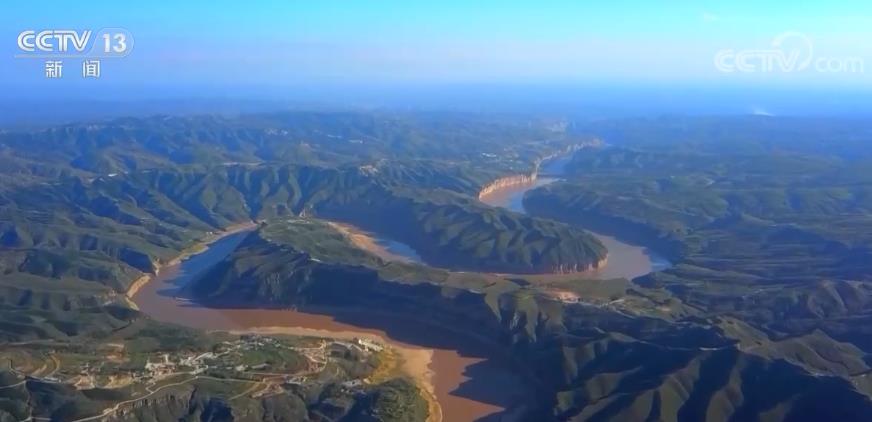
China’s legislation protects the mother river and the ancient Yellow River is reborn.

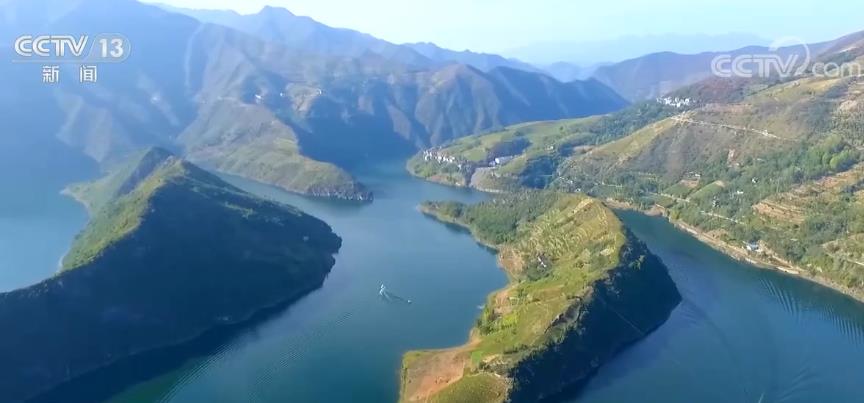
       CCTV News:Today (March 22nd) is the 31st World Water Day, and the United Nations has determined that the theme of World Water Day in 2023 is "accelerating change". From March 22nd to 28th, the 36th China Water Week was held, with the theme of "Strengthening water control according to law and working together to protect the mother river".

       Water is the source of all things and the foundation of all things. First of all, let’s learn about the familiar "water" in our daily life through a word. Now displayed on the big screen is the earliest word "water" in China. It appeared in Oracle Bone Inscriptions in Shang Dynasty, and it looks like water flowing along water veins, but its original meaning is river.

       Early human civilization originated from both sides of the river, and our mother river, the Yellow River, gave birth to an uninterrupted Chinese civilization for more than 5,000 years. "The Yellow River is peaceful and the world is peaceful". How to better protect the mother river has become an important topic in modern water conservancy construction.

Legislation to protect the mother river, the ancient Yellow River, rejuvenated.

The Yellow River is the mother river of the Chinese nation, and its protection is a great plan for the great rejuvenation of the Chinese nation. On April 1st, the Yellow River Protection Law will be implemented soon, and there will be laws to protect the Yellow River.

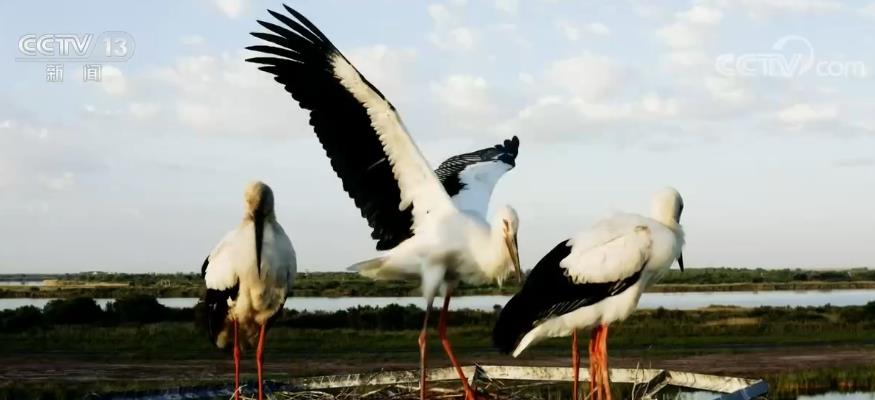
In Shandong Yellow River Delta National Nature Reserve, the oriental stork, a national first-class protected bird, entered the breeding period. After a long incubation period, recently, the first chick hatched this year.

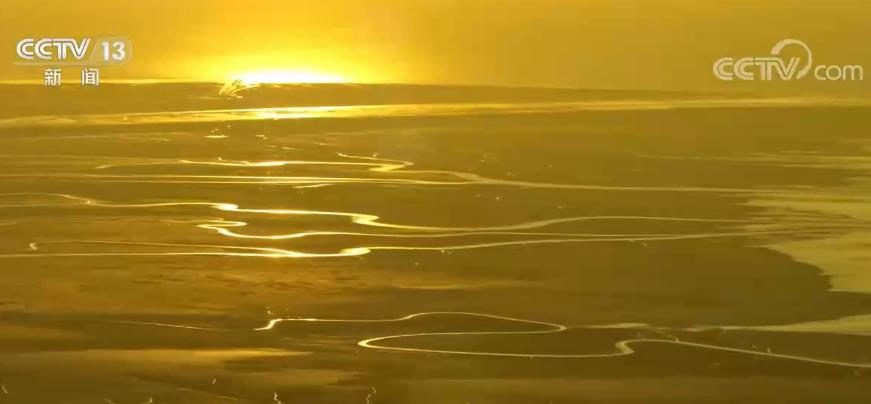
Thanks to the start of the Yellow River ecological water supply and wetland restoration project, the Yellow River Delta National Nature Reserve has become the most important breeding ground for oriental storks in the world, and millions of birds migrate and winter here every year. It has also become the most complete, extensive and youngest wetland ecosystem in the warm temperate zone of China.

In the Yellow River Protection Law, which will be implemented on April 1, specific measures such as ecological water replenishment and silt dam construction in the Yellow River Delta have been written into the legal provisions.

Gui Fan, Deputy Director of Policy and Regulation Bureau of Yellow River Conservancy Commission:The Yellow River Protection Law is a summary of many years’ experience in harnessing the Yellow River, which has raised an effective experience in harnessing water and sediment loss in the Yellow River basin to a legal level, which was not found in any previous law.

The Law on the Protection of the Yellow River clearly states that the state strengthens the ecological protection and restoration of the Yellow River basin, adheres to integrated protection and restoration, and implements systematic management with natural restoration as the mainstay and natural restoration combined with artificial restoration. The state implements a rigid restraint system for water resources in the Yellow River Basin, and insists on setting cities, land, people and production by water.

       Li Xiaojing, Deputy Director of Policy and Regulation Department of Ministry of Water Resources:On the basis of fully performing their statutory duties, the nine provinces and regions in the Yellow River Basin should focus on the key points in combination with the actual situation. The upstream provinces should strengthen the protection and restoration of water conservation areas, the middle provinces should strengthen the soil and water conservation on the Loess Plateau, and the downstream provinces should strengthen the economical and intensive use of water resources, jointly do a good job in great protection and promote great governance, and create a new situation of ecological protection and high-quality development in the Yellow River Basin.

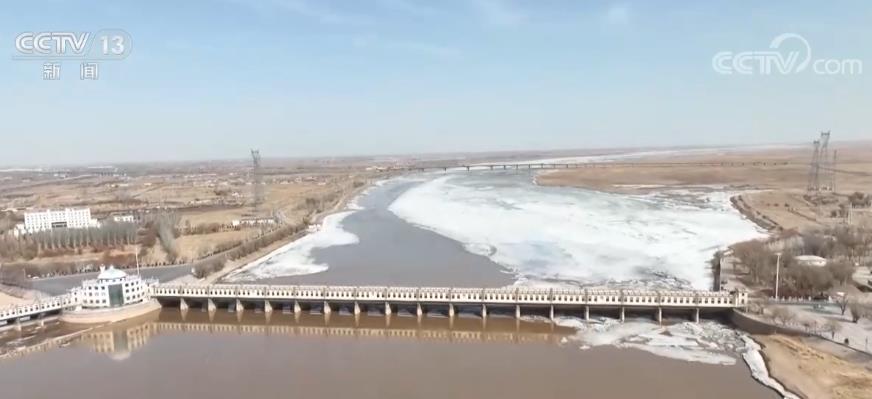
This year, China will further promote the recovery of the Mother River.

Just now, we saw that the measures for the protection and management of the Yellow River are constantly being iteratively updated. In addition, this year, China will further promote the recovery of the mother river, make the river flow, restore the lake, and build a harmonious symbiotic system of people and water.

Bi Shouhai, Director of Water Resources Protection Division, Water Resources Management Department, Ministry of Water Resources:This year, the Ministry of Water Resources will select 88 mother rivers (lakes), formulate the mother river recovery action, "one river, one policy" and "one lake, one policy" programs, strengthen the unified regulation of water resources, promote river regulation, water system connection, ecological water replenishment, groundwater overexploitation control, and gradually return the occupied ecological water, so as to restore the life of rivers and the vitality of basins.

At the same time, this year, the state will focus on the Beijing-Hangzhou Grand Canal and rivers and lakes in North China to continue to promote centralized and normalized water replenishment, so as to realize the 707-kilometer-long connection of the Beijing-Hangzhou Grand Canal to the north of the Yellow River, and the water surface area of Baiyangdian Lake will be stable at more than 250 square kilometers throughout the year.

Recently, the Ministry of Water Resources has formulated and issued the "Key Points of River and Lake Management in 2023", which will comprehensively start the health evaluation of rivers and lakes and gradually establish a national river and lake health archive; Strictly control the shoreline space and sand mining management in rivers and lakes, and further promote the normalization and standardization of the "four chaos" in rivers and lakes.

Li Xiaojing, Deputy Director of Policy and Regulation Department of Ministry of Water Resources:(River and lake management) Pay more attention to the basin as a unit, strengthen the unified planning, unified management, unified dispatching and unified management of the basin, and plan the overall situation of basin protection and management as a whole.

Central Meteorological Observatory: From September 26 to 28, the super typhoon "Olu" will seriously affect the South China Sea and the coastal areas of South China.

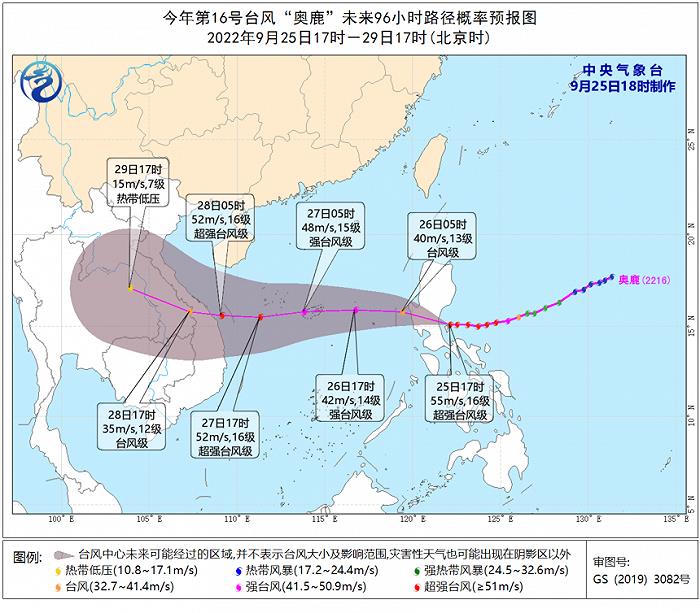
  According to the website of the Central Meteorological Observatory on September 25th, Typhoon Olu, the 16th this year, was formed in the east of the Philippines on the afternoon of September 23rd, and rapidly strengthened from a strong tropical storm to a super typhoon from the evening of the 24th to the night. At 17: 00 on the 25th, its center (super typhoon level) was located on the northwest Pacific Ocean about 135km north-east of Manila, Philippines, and the maximum wind force near the center was 16 (55m/s).

  It is estimated that Olu will move to the north-north direction at a speed of about 25 kilometers per hour. It will land on the eastern coast of Luzon Island in the Philippines this evening (48-55 meters/second, with a magnitude of 15-16, strong typhoon or super typhoon), and it will pass through Luzon Island at night, with a weakened intensity. It will enter the central and eastern South China Sea from the morning of 26th, then move to the west, and gradually approach the eastern coast of Vietnam. The Central Meteorological Observatory issued a typhoon blue warning on the morning of September 25th.

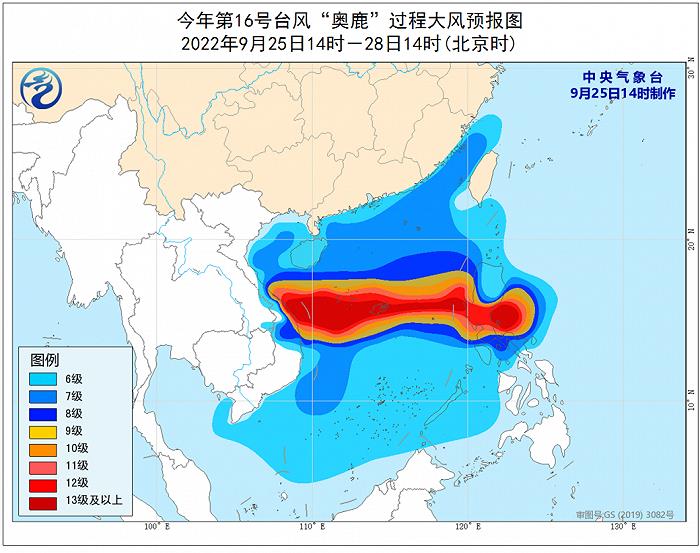
  Gale forecast: Affected by cold air and Olu, there will be 6-8 gale in the western coast of Taiwan Province Island, Fujian coast, Guangdong coast, Hainan island coast, Taiwan Province Strait, bashi channel, most of the South China Sea, Beibu Gulf, Qiongzhou Strait and Sansha Islands from the night of 25th to 14: 00 on 28th, with gusts of 9-10, among which the winds in the central South China Sea, Xisha Islands and the waters near zhongsha islands.

  Rainfall forecast: From 26th to 28th, there will be heavy rain in Hainan Island and Sansha Islands, and local heavy rain; The accumulated precipitation in the above areas can reach 80 ~ 120 mm, and the local area is more than 200 mm; The maximum hourly rainfall is 30 ~ 50 mm.

  Meteorological disaster risk forecast: From 26th to 28th, flash floods and geological disasters occurred in eastern Hainan Island, and some small and medium-sized rivers had meteorological risks close to the warning water level.

  Typhoon Olu has a fast moving speed and strong intensity. When it affects the South China Sea and South China coast, the strongest typhoon level or super typhoon level can be reached, and the wind is strong. Ships and personnel sailing in the central South China Sea, Xisha Islands and waters near zhongsha islands need to be evacuated in time, and ships near the South China coast need to return to Hong Kong in time to take shelter from the wind.

  In addition, there has been continuous rainfall in Hainan Island since September 20, especially in the eastern part of Hainan Island. Due to the superposition of typhoon heavy rainfall, the risk of mountain torrents, geological disasters and floods in small and medium-sized rivers is high, so it is necessary to strengthen prevention, and low-lying farmland should be dredged in advance to prevent waterlogging disasters.

A number of new energy projects in China Power Construction are connected to the grid for power generation.

Pray for the renewal of everything.

beginning of a new year

Guoan neng frontline staff

Stick to your post and pay silently.

A number of key projects have been connected to the grid, connected and poured.

They bid farewell to the old and welcome the new in a unique way for engineers.

  01

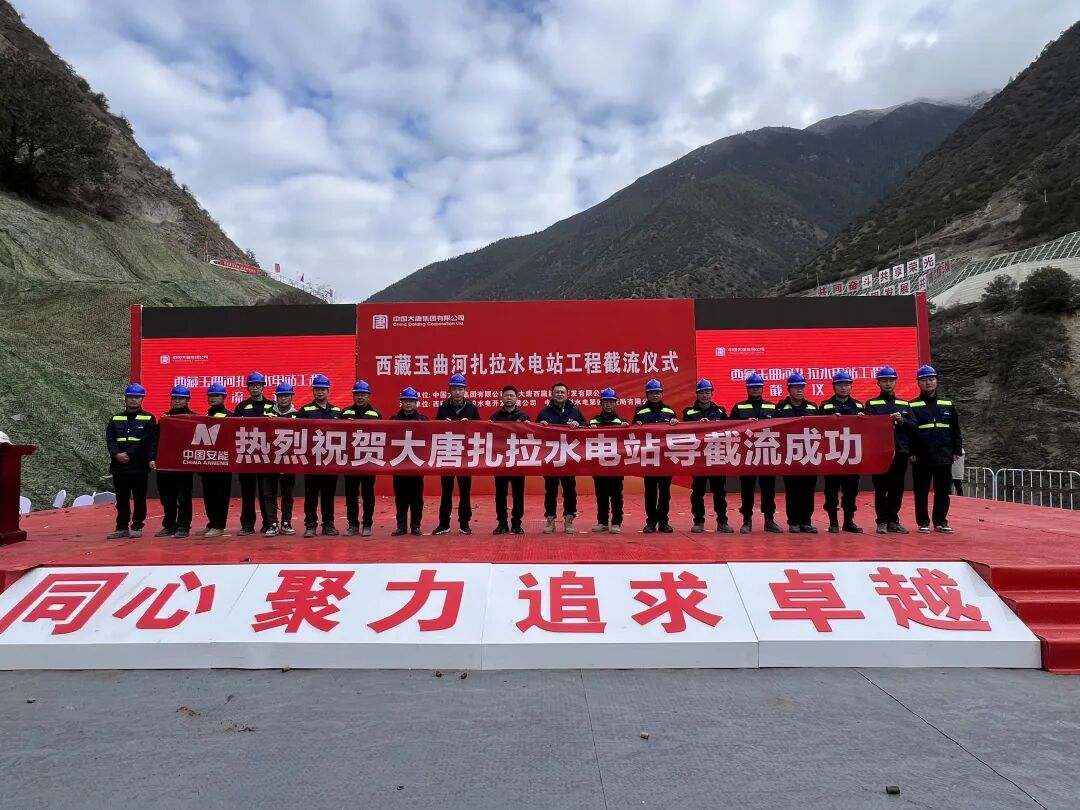
Zhala Hydropower Station successfully realized diversion and closure.

picture

  Recently, the diversion tunnel project of Zhala Hydropower Station in Yuquan River, Xizang, China’s Datang, which was built by Chengdu Branch of the Third National Security Bureau, ushered in an important node-the diversion tunnel project officially overflowed, laying a solid foundation for the interception task of Zhala Hydropower Station.

  Zhala Hydropower Station is located in Zhalang Village, Bitu Township, Zuogong County, Changdu City, Xizang Autonomous Region, with a total installed capacity of 1.015 million kilowatts. The construction of this project will play an important leading and demonstrating role in realizing the complete localization of intellectual property rights in the whole industrial chain of impulse turbines and the independent control of key core technologies of hydropower equipment.(Contributed by: Zhang Yonghu Wang Hongjiang)

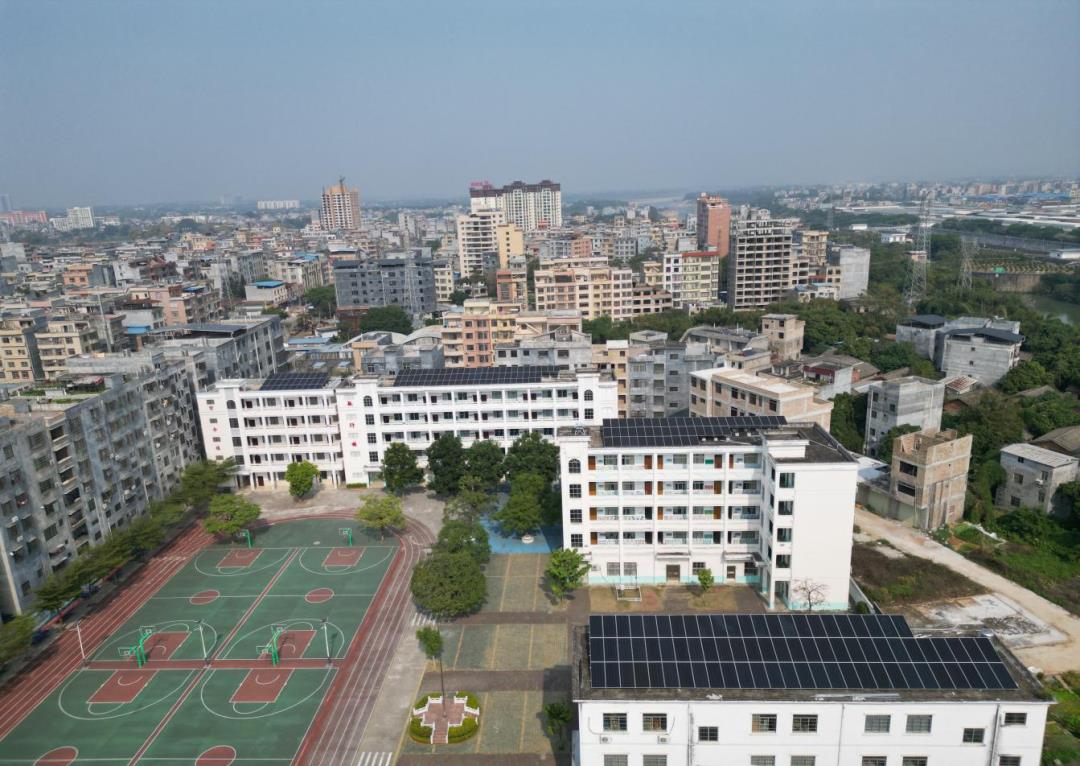
The whole county roof distributed photovoltaic project in Guiping realizes full capacity grid-connected power generation.

picture

  On December 30, 2023, the distributed photovoltaic (Phase I) power generation project in Guiping County, Guangxi Province, which was built by Nanning Branch of the First National Security Bureau, realized full-capacity grid-connected power generation. The completion of this important node lays a good foundation for the next step of power generation, and is of great significance to promoting the development of green energy, improving ecology and promoting rural revitalization in Guigang City.

  The distributed photovoltaic project in the whole county of Guiping is mainly based on 27 local campuses in Guiping City, with a total construction scale of 4.65 MW, a total investment of about 17.3 million yuan, and an average annual power generation of about 4.81 million kWh. It is connected to the grid-connected rooftop distributed photovoltaic project with a voltage level of 380 volts. The project adopts the mode of "spontaneous self-use and surplus electricity connected to the grid" to generate electricity, which can save about 173 tons of standard coal every year and reduce the emission of 480 tons of carbon dioxide, effectively realizing the green, low-carbon, energy-saving and renewable utilization of energy.(Contributed by: Jiang Jianming)

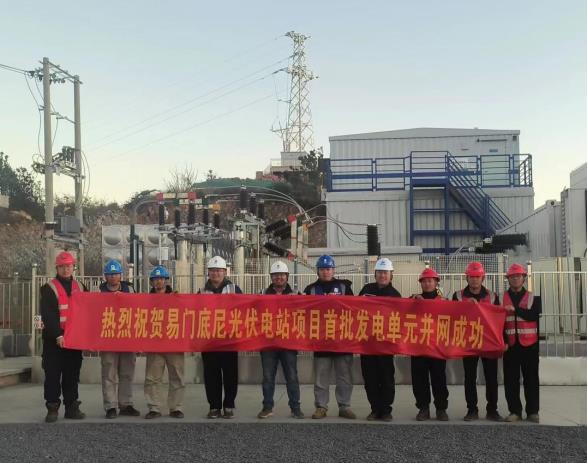
The first batch of power generation units of Yuxi Yimendini photovoltaic project were successfully connected to the grid.

picture

  On December 31, 2023, the first batch of power generation units of Yunnan Yuxi Yimendini photovoltaic power generation project, which was built by Yunnan Company of the First National Security Bureau, were successfully connected to the grid, injecting new vitality into the local green energy field.

  The project is located in Tongchang Township, Yimen County, Yuxi City, Yunnan Province, with a total area of 696.45 mu and an installed capacity of 25 MW. The construction contents of the project include photovoltaic field, switching station, collecting line and sending line, etc.(Contributed by: Li Wei)

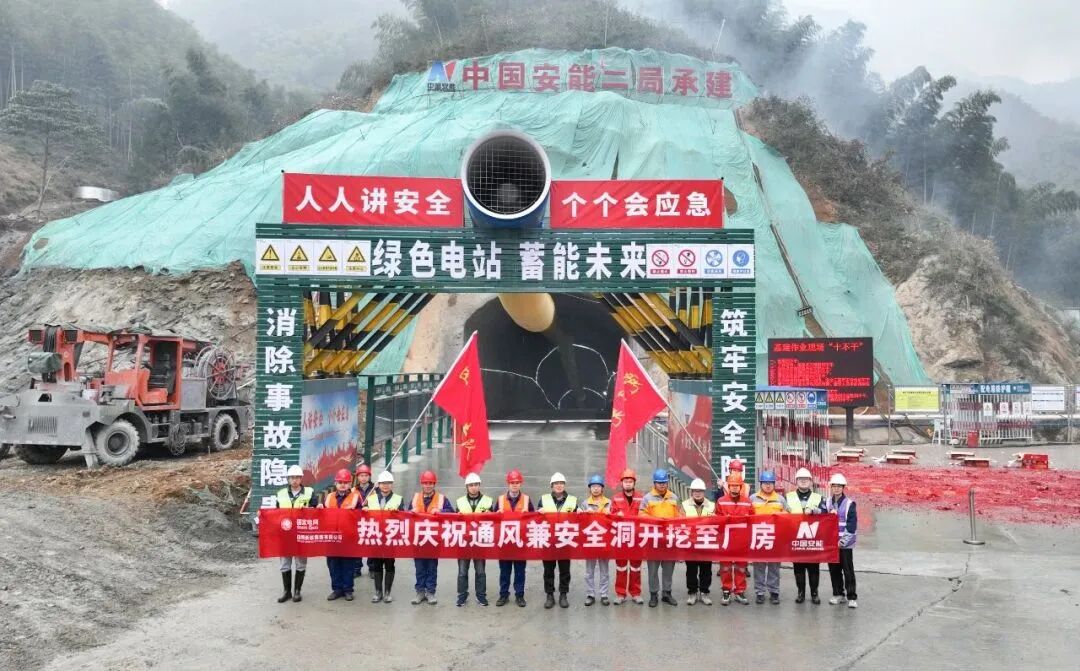
The ventilation and safety tunnel of Ningguo Pumped Storage Power Station was excavated to the powerhouse in advance.

picture

  On December 30, 2023, the ventilation and safety tunnel of Anhui Ningguo Pumped Storage Power Station, which was built by Nanchang Branch of the Second National Security Bureau, was successfully excavated to the factory building, and the node goal was completed five months ahead of schedule.

  The ventilation and safety tunnel has a total length of 885 meters, and the excavation section is 7.2 meters *7 meters. The full-face blasting method is adopted for excavation.Ventilation and safety tunnel is the key work of the whole power station construction, which determines the construction period of the power station and lays a solid foundation for the underground powerhouse construction of the power station to be delivered to the working face in advance.(Contributed by Zhou Zhaoxiang)

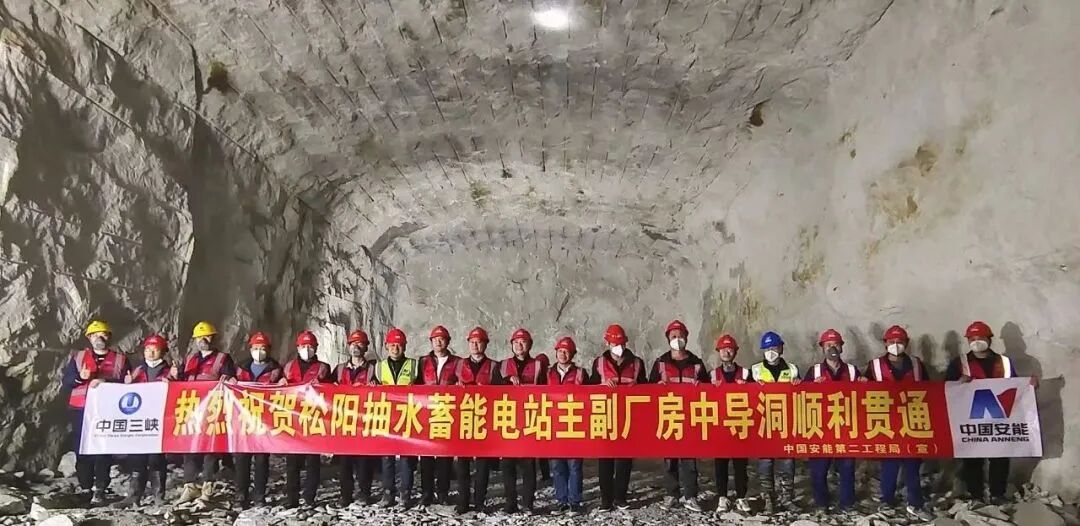
The pilot tunnel on the first floor of the main (auxiliary) powerhouse of Songyang Pumped Storage Power Station was successfully connected ahead of schedule.

picture

  On December 30, 2023, the pilot tunnel on the first floor of the main (auxiliary) powerhouse of Zhejiang Songyang Pumped Storage Power Station project, which was built by Changzhou Branch of the Second National Security Bureau, was successfully completed ahead of schedule, which marked the important construction progress of the project and created favorable construction conditions for the expansion and excavation of the upstream and downstream side walls of the main (auxiliary) powerhouse.

  The underground powerhouse is composed of a main engine section, an auxiliary engine section and an installation room, which are arranged in a "I" shape, and the installation field and the auxiliary engine section are arranged at the left and right ends of the main engine section respectively. The total excavation size is 185.2m * 25m * 56.8m (length * width * height), and the elevation is 313.5-370.3m. The stonework cave is excavated in 7 layers, with the maximum excavation height of 10.6m..(Contributed by Li Jiaan)

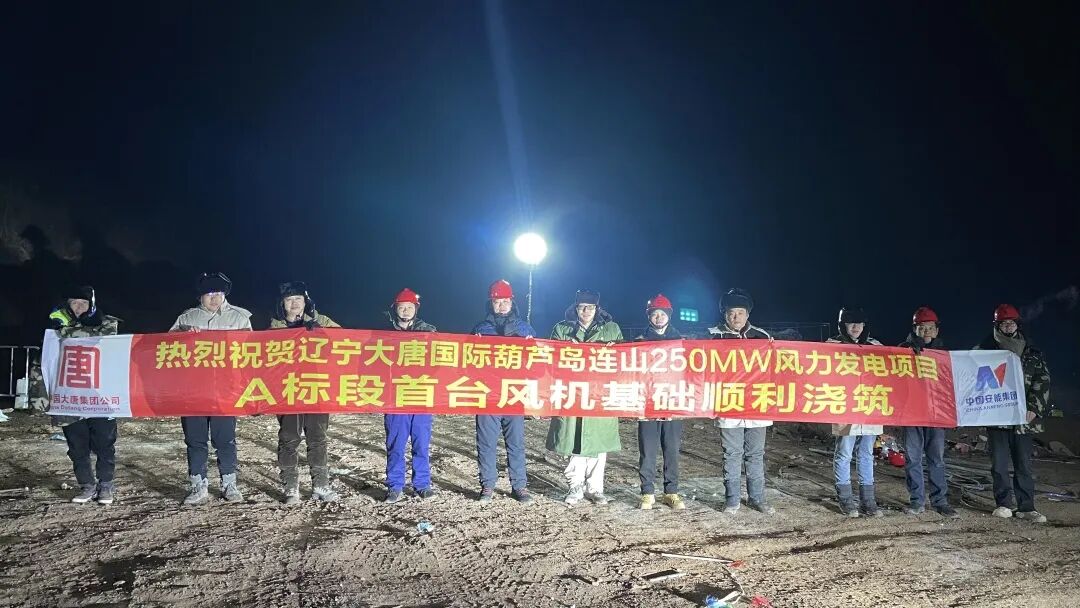
The foundation of the first turbine of Huludao Wind Power Project was successfully poured.

picture

  On December 30, 2023, the foundation of No.45 wind turbine in Bid A of Lianshan 250 MW wind power project in Huludao, Datang, Liaoning Province, which was built by Xiamen Branch of the Second National Security Bureau, successfully completed concrete pouring, which sounded the clarion call for comprehensive engineering construction.

  The project is located in Lianshan District, Huludao City, Liaoning Province. The total installed capacity of the project is 110 MW, and 22 5.0 MW wind turbines are installed. The tower is designed as a steel tower with a hub height of 120 meters and an impeller diameter of 193 meters. After the completion of the project, it will provide a cleaner and more reliable power supply for Huludao City and its surrounding areas, effectively promote energy conservation and emission reduction, protect the ecological environment to adapt to sustainable development, promote the high-quality development of regional economy, and achieve a double harvest of environmental and economic benefits.(Liu Yisheng)

  Editor in Charge: Gao Huijun

  Proofreading: Zhang Dongjun


The medical insurance negotiation will start soon, and the domestic innovative drugs will compete with each other.

  Comparison of Medical Insurance Negotiations from 2017 to 2020

  Source: National Medical Insurance Bureau and Essence Securities Research Center.

  After enterprise declaration, formal review and expert review, the national medical insurance drug list adjustment entered the negotiation stage in 2021. The reporter learned that the on-site negotiation of the medical insurance catalogue is about to begin.

  Under the background of the rapid development of biotechnology and the accelerated rise of innovative drug industry in China, more domestic innovative drugs are accelerating to the medical insurance catalogue. According to institutional data, about 20 domestic innovative drugs will be negotiated for the first time, and the new indications that have been included in the varieties will be superimposed. In this round of medical insurance negotiations, investors have paid a lot of attention.

  About 20 domestic innovative drugs were negotiated for the first time.

  According to the previously published Work Plan for National Medical Insurance Drug List Adjustment in 2021 (referred to as the "Plan") and the medical insurance negotiation process in previous years, it is widely expected in the industry that this year’s medical insurance catalogue negotiation will start soon. The National Medical Insurance Bureau has previously made it clear that if the progress is smooth, this catalogue adjustment work will be completed before the end of this year, and efforts will be made to start implementation in January next year.

  According to many brokerage research institutions, it is estimated that about 20 domestic innovative drugs will be negotiated for the first time this year, including PARP inhibitors, BTK inhibitors, ALK inhibitors, ADC drugs (antibody conjugated drugs), CAR-T therapy (chimeric antigen receptor T cell immunotherapy), etc., involving many listed pharmaceutical companies such as Beida Pharmaceutical, Baekje Shenzhou, Hengrui Pharma and Zejing Pharmaceutical. Among them, the CAR-T therapy, which is priced at 1.2 million yuan by Fosun Kate, has attracted much attention from the market. Some institutions pointed out that as a representative of expensive new technology, the negotiation result of this variety will closely affect the pricing of new technology products.

  In addition, the anti-tumor drug PD-1 monoclonal antibody is still the focus. In the medical insurance negotiations in 2019 and 2020, the price reduction of PD-1 monoclonal antibody was remarkable. At present, the competition in the domestic PD-1 market is fierce. Ten PD-1/L1 have been approved for marketing, and new indications have been continuously approved, and the listing of new drugs has continued to accelerate. Ma Shuai, an analyst at Essence Securities, said that among the domestic varieties, the enterprises and varieties that are eligible to participate in the medical insurance negotiation in 2021 are still the four varieties that participated in the medical insurance negotiation last year, and the competition pattern of domestic varieties is relatively relaxed. It is expected that the PD-1/L1 monoclonal antibody will face fierce competition in the medical insurance negotiation in 2022.

  Regarding the issue of price cuts that the public and investors are concerned about, Industrial Securities said that the current negotiation system for innovative medicine and medical insurance has gradually matured and improved, and it is expected that the future negotiation results will probably continue the overall price cuts in the past few rounds. Although the price reduction is not small, innovative drugs are successfully included in the negotiation list after the game of quantity and price, which will still bring incremental contributions to the corresponding varieties. Rapidly promoting R&D, seizing the first-Mover advantage and reasonable pricing strategy will become important factors in the market competition of innovative drugs.

  Listed pharmaceutical companies are actively preparing for the war in order to increase the volume.

  At present, many pharmaceutical companies are actively preparing for medical insurance negotiations. The third quarterly report disclosed by Baekje Shenzhou on November 5 shows that the company is preparing for the upcoming national medical insurance drug list negotiation for qualified products, including adding first-line treatment for non-squamous non-small cell lung cancer, first-line treatment for squamous non-small cell lung cancer and second-line or third-line treatment for hepatocellular carcinoma indications. On the 4th, Rongchang Bio disclosed the prospectus, saying that the company’s core products, Taitacip for the treatment of systemic lupus erythematosus and Videcituzumab for the treatment of gastric cancer, were approved for listing in China with conditions in March 2021 and June 2021 respectively, and the company is actively preparing relevant materials for participating in medical insurance negotiations, with a view to rapidly expanding the sales channels of products in a short time and effectively and rapidly promoting product sales. In the record of investor relations activities disclosed on the 2nd, Beida Pharmaceutical said that at the moment of a new round of medical insurance negotiations, the company is also actively docking the access of Kemena and Bemena.

  Inclusion in the medical insurance catalogue has undoubtedly become an important catalyst for innovative drug volume. In July this year, the National Medical Insurance Bureau said in its reply to Recommendation No.9562 of the Fourth Session of the 13th National People’s Congress that after three years of continuous adjustment, a total of 233 drugs were successfully included in the medical insurance catalogue through negotiation, and the accessibility of patients to drugs was greatly improved, and the enterprise also reached the market sales expectation. Finally, the goal of "market for price" was realized. According to the data of Medicine Rubik’s Cube, a drug data platform, in 2017, 2018 and 2019, the sales of drugs that were included in the medical insurance catalogue through medical insurance negotiation increased by 128%, 337% and 39% respectively in 2020.

  The Blue Book on the Progress and Effectiveness of Medical Insurance Drug Management Reform published by China Pharmaceutical Association and China Medical Insurance Research Association shows that among the 34 innovative drugs listed from 2016 to 2020, 26 drugs have entered the medical insurance catalogue, accounting for 76.5%. The time from listing to medical insurance for innovative drugs has also been greatly shortened. In 2017, it will take 4 to 9 years for new drugs to enter medical insurance, shortened to 1 to 8 years in 2019, and further compressed to 0.5 to 5 years in 2020.

  Huachuang Securities believes that from the perspective of sales amount, except for some products with expired patents, most innovative drugs have achieved price-for-quantity exchange, and the amount has rapidly increased after entering medical insurance.

  "Innovative drugs are expected to improve the difficulty of access after entering medical insurance, and achieve rapid penetration of hospitals and pharmacies." Ma Shuai analyzed that, on the one hand, after the drug enters medical insurance, it will be less difficult to obtain the recommendation application from clinicians, pass the preliminary selection of departments and finally pass the drug selection meeting in the hospital, which greatly reduces the difficulty of drug entering the hospital and lays a good foundation for the future drug in the hospital; On the other hand, in May this year, the National Medical Insurance Bureau and National Health Commission issued the Guiding Opinions on Establishing and Perfecting the "Dual-channel" Management Mechanism for National Medical Insurance Negotiation Drugs. After the drugs enter the medical insurance catalogue, it is expected that the "dual-channel" mechanism will accelerate the volume of products at the pharmacy side.

The implementation of this new regulation is related to the wallet security of hundreds of millions of users such as WeChat and Alipay.

  BEIJING, July 9 (Li Zhanghong) On the 9th, this new regulation of the central bank was officially implemented, involving the wallets of hundreds of millions of users of many payment institutions such as WeChat Pay and Alipay, making it safer for you to spend money in buy buy.

  That is to say, the payment institution will gradually increase the centralized deposit ratio of customers’ reserve funds every month from July 9, and realize 100% centralized deposit to the central bank by January 14, 2019.

  What is customer reserve?

  The money you have in the account of the payment institution, such as Alipay balance, WeChat change, prepaid card balance, etc., all belong to the customer reserve. They are not deposits, but prepaid value in essence.

  It should be pointed out that the funds in the accounts of wealth management products such as Yu ‘ebao are monetary funds, not customer reserves, and are subject to different supervision.

  According to the definition of the central bank, customer reserve is the monetary fund to be paid by the payment institution in advance from its customers.

  Specifically, when we buy goods or services on the e-commerce platform, we first transfer the money to the virtual account of the payment institution. After you get the confirmation of the goods, the payment institution will transfer the payment to the merchant, and when the payment is retained in the account of the payment institution, the deposited funds formed belong to the reserve fund.

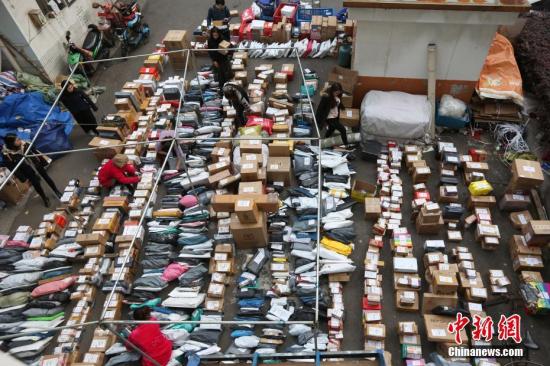
  On November 14, 2017, after the "Double Eleven" online shopping, the express delivery peak in the campus of a university in Nanjing. Photo by Luo Bo

  What is the scale of customer reserve?

  According to Analysys data, in the third quarter of 2017, the overall transaction scale of comprehensive payment services of non-financial payment institutions in China has reached 42 trillion yuan. This means that the customer’s reserve fund is not decimal.

  According to the relevant person in charge of the central bank, it took only three years for the stock balance of customer reserve funds of payment institutions to rise from 126.6 billion in 2013 to more than 460 billion at the end of the third quarter of 2016. According to the calculation of market institutions, the scale of customer reserve of payment institutions is likely to have exceeded one trillion.

  By the end of May 2018, the deposits of non-financial institutions in the balance sheet of the central bank’s monetary authorities were 500.923 billion yuan, a fourfold increase compared with January. If calculated according to the 50% deposit ratio implemented before July 9, the scale of customer reserve of payment institutions has exceeded one trillion.

  "Non-financial institution deposit" refers to the customer reserve deposit deposited by the payment institution with the People’s Bank of China.

  Without effective supervision, is this money safe?

  The ownership of the customer’s reserve fund belongs to the customer of the payment institution, but unlike the customer’s bank deposit, it is not protected by the Deposit Insurance Regulations, nor is it deposited in the bank in the name of the customer. Previously, it was deposited in the bank in the name of the payment institution, and the payment institution initiated the fund transfer instruction to the bank.

  In other words, the reserve fund originally belongs to the customer, but it is actually dominated and controlled by the payment institution.

  Before the centralized depository system was implemented, the deposit method of customers’ reserves of payment institutions was mainly to open accounts in several banks in their own names for decentralized deposit. According to the data of the central bank, on average, each payment institution opens 13 customer reserve accounts, and the largest number of customer reserve accounts is 70.

  Therefore, the debate and discussion on the safety of user’s reserve funds and whether there is any misappropriation has been going on.

  What are the specific risks of our money?

  First, there is a risk that the customer’s reserve fund will be misappropriated by the payment institution.

  The reporter found out that the phenomenon of payment institutions misappropriating customers’ reserve funds has occurred from time to time across the country. Shanghai Changbu Company, whose payment business license was cancelled by the central bank in 2016, maliciously misappropriated the reserve fund, resulting in a capital risk exposure of 780 million yuan, involving 51,400 cardholders, and the rights and interests of customers were seriously infringed. Since 2018, payment institutions in Hangzhou, Qingdao and other places have been punished for misappropriating customer reserve funds.

  Second, some payment institutions illegally occupy customers’ reserve funds for purchasing wealth management products or other high-risk investments.

  Zhao Xijun, deputy dean of the School of Finance and Finance of China Renmin University, said in an interview with Zhongxin.com that if the payment institution invests in projects with high risks, there may be risks and losses. Once there is liquidity problem during payment, it will affect the normal operation of the whole payment business.

  Third, payment institutions may provide channels for criminal activities such as money laundering.

  Payment institutions handle inter-bank capital settlement through reserve accounts opened in various commercial banks, operate beyond the scope, and exercise the inter-bank clearing function of the central bank or clearing organizations in disguise. What’s more, some payment institutions take this opportunity to provide channels for criminal activities such as money laundering, which also increases the hidden dangers of cross-system transmission of financial risks.

  Fourth, the decentralized storage of customer reserves is not conducive to the overall fund management of payment institutions, and there is liquidity risk.

  So, the central bank shot!

  That is to implement "centralized depository".

  Centralized deposit of customer reserve funds means that the payment institution deposits the customer reserve funds into the special deposit account of the designated institution according to a certain proportion.

  At the beginning of 2017, the central bank issued a document requiring the payment institution to deposit the customer’s reserve funds into the designated institution’s special deposit account according to a certain proportion, with the highest proportion of 20%. At the beginning of 2018, the central bank gradually increased the deposit ratio of reserve funds to 50%, and from February to April 2018, the centralized deposit ratio was increased by 10% every month.

  On June 29, the central bank issued a new notice, clarifying that from July 9, 2018, the proportion of centralized deposit of customer reserve funds of payment institutions will be gradually increased on a monthly basis, and 100% centralized deposit will be realized by January 14, 2019.

  The central bank also requested thatThe depository bank of reserve funds has been changed from a qualified commercial bank to a branch of the People’s Bank of China where the legal person is located (that is, the customer reserve funds of payment institutions will be directly supervised by the central bank, and the customer reserve funds accounts will no longer be scattered in various commercial banks).. At the same time, the deposit time of the reserve fund is also the second Monday of each month instead of the original quarterly deposit, and the deposit base is the daily average balance of the customer’s reserve fund in the previous month.

  Zhao Xijun believes that centralized depository eliminates the phenomenon that payment institutions can misappropriate customers’ reserve funds, makes the management of reserve funds more standardized and safe, reduces the risk of reserve fund management, and also reduces the risk of liquidity of payment institutions.

  Will it affect the shopping experience of users?

  Some users are worried that the centralized deposit of customers’ reserve funds by payment institutions will affect the shopping experience during the payment process. The relevant person in charge of Tencent Tenpay said that it will not have a direct impact on users.

  In fact, after the centralized deposit of customers’ reserve funds, the phenomenon of illegal misappropriation of reserve funds by payment institutions will be curbed, and it will be safer to spend money on third-party payment platforms such as Alipay and WeChat. Moreover, the balance of consumers in various prepaid cards will also be more effectively guaranteed.

  The relevant person in charge of Alipay and Tencent Tenpay told the reporter of Zhongxin.com that the central bank’s move is conducive to the healthy, stable and sustainable development of the industry.

  The latest report released by Ipsos shows that the number of mobile payment users in China is about 890 million. Among them, there are 820 million Tenpay users and 650 million Alipay users related to WeChat payment, and their user penetration rates are 85.4% and 68.7% respectively.

  In the past, payment institutions deposited customers’ reserves in commercial banks in the form of deposits and charged interest, which was called "lying down to make money". According to the relevant regulations, the customer’s reserve funds deposited by the payment institution will not be subject to interest. On the surface, the payment institution will lose part of its profit source, resulting in losses.

  In fact, many payment institutions earn interest income by expanding the scale of customers’ reserves, which deviates from the main business of providing payment services, causing disorder and confusion in the payment service market to a certain extent and destroying the market environment of fair competition.

  The Notice of the General Office of the State Council on Printing and Distributing the Implementation Plan for Special Remediation of Internet Financial Risks clearly puts forward that payment institutions should be prevented from taking "eating spreads" as the main profit model, the incentive mechanism for business development of payment institutions should be rationalized, and non-bank payment institutions should be guided to return to the purpose of providing small, fast and convenient micro-payment services.

  The relevant person in charge of the central bank said that the centralized deposit and management of customer reserves of payment institutions is conducive to restoring the business origin of payment institutions, protecting the legitimate rights and interests of consumers, maintaining financial stability and market order, and better promoting the sustained and healthy development of the payment service market.

Rules for Supervision and Discipline of Discipline Inspection Organs in communist party, China (for Trial Implementation)

  Chapter I General Principles

  Article 1 These Rules are formulated in accordance with the Constitution of the Communist Party of China and combined with work practice for the purpose of strictly administering the Party in an all-round way, maintaining the Party’s discipline and standardizing the supervision and discipline of the discipline inspection organs.

  Article 2 Under the guidance of Marxism–Leninism, Mao Zedong Thought, Deng Xiaoping Theory, Theory of Three Represents and Scientific Outlook on Development, the work of supervision and discipline should thoroughly implement the spirit of the series of important speeches by the Supreme Leader General Secretary, adhere to the principle of governing the party and discipline according to the rules, put the power of supervision and discipline into the system cage, and implement its own hard requirements while the iron is hot, so as to build a team of loyal and clean discipline inspection cadres.

  Article 3 The supervision and discipline work shall follow the following principles:

  (1) Adhere to the centralized and unified leadership of the CPC Central Committee with the Supreme Leader as the core, firmly establish political awareness, overall awareness, core awareness and conformity awareness, reflect the political nature of supervision and discipline, and strictly abide by political discipline and rules;

  (two) adhere to the dual leadership system of discipline inspection, supervision and discipline work is dominated by the leadership of the discipline inspection commission at the next higher level, and the clue disposal and filing review must be reported to the discipline inspection commission at the same level;

  (three) adhere to the facts as the basis, the party discipline as the criterion, grasp the policy, temper justice with mercy, learn from the past and save lives;

  (four) adhere to the trust can not replace supervision, strict working procedures, effective control of risk points, strengthen supervision and control of all aspects of supervision and discipline.

  Article 4 Supervision and discipline work should put discipline ahead, grasp the relationship between "trees" and "forests", and use the "four forms" of supervision and discipline to make "blushing and sweating" become the norm; Disciplinary punishment and organizational adjustment have become the majority of disciplinary actions; The party discipline has been severely punished and major job adjustments have become a minority; Serious violations of discipline and suspected illegal filing for review have become very few.

  Article 5 Innovate the organizational system, and establish a working mechanism in which discipline supervision, discipline review and case trial are coordinated and mutually restricted. The Municipal Commission for Discipline Inspection at or above the prefecture level can explore the separation of discipline supervision and discipline review departments. The discipline supervision department is responsible for contacting the daily supervision of regions and departments, and the discipline review department is responsible for preliminary verification and filing review of violations; The case supervision and management department is responsible for comprehensive coordination, supervision and management, and the case trial department is responsible for auditing and checking.

  Chapter II Leadership System

  Article 6 The supervision and discipline work shall be carried out in a graded responsibility system:

  (1) The Central Commission for Discipline Inspection accepts and examines violations of discipline by members of the Central Committee, alternate members of the Central Committee, members of the Central Commission for Discipline Inspection, leading cadres of party member under the central management, and party groups (party committees) established with the approval of the Party Central Committee, party committees and discipline inspection committees of all provinces, autonomous regions and municipalities directly under the Central Government.

  (II) The local disciplinary inspection committees at all levels accept and examine the disciplinary problems of Party members and alternate members at the same level, members of the Disciplinary Committee at the same level, party member cadres managed by Party committees at the same level, and party groups (party committees) approved by Party committees at the same level, and party committees and disciplinary committees at the next lower level.

  (3) The grass-roots commission for discipline inspection accepts and examines party member, who is managed by the Party Committee at the same level, and the disciplinary problems of Party organizations at all levels under the Party Committee at the same level; The party’s grass-roots committees that have not set up discipline inspection committees are responsible for supervising the work of discipline.

  Seventh of the party’s organizational relationship in the local, cadre management authority in the competent department of party member cadres, should be in accordance with the principle of who is in charge of who is responsible for supervision and discipline, and timely notify the other party.

  Article 8 The discipline inspection organ at a higher level has the right to designate the discipline inspection organ at a lower level to conduct disciplinary review on the disciplinary problems of Party organizations and party member cadres under the jurisdiction of other discipline inspection organs at a lower level, and may also conduct disciplinary review directly when necessary.

  Article 9 The system of asking for instructions and reporting shall be strictly implemented. For important matters such as making a decision to file a case for examination and giving disciplinary sanctions, the discipline inspection organ shall ask for instructions and report to the Party committee (party group) at the same level and report to the superior discipline inspection commission, and then formally ask for instructions after forming a clear opinion. In case of important matters, it should be reported in time, not only the results but also the process.

  Adhere to democratic centralism, clue disposal, conversation and inquiry, preliminary verification, case filing review, case trial, and disposal of important issues in execution shall be reported to the principal responsible person and relevant responsible person of the discipline inspection organ for approval after collective research.

  Article 10 The case supervision and management department of the discipline inspection organ shall be responsible for the supervision and management of the whole process of supervision and discipline, and perform the functions of clue management, organization and coordination, supervision and inspection, supervision and handling, and statistical analysis.

  Eleventh agencies should strengthen the supervision and discipline of the discipline inspection team stationed in the leadership, often listen to the work report. The stationed discipline inspection team shall, in accordance with the relevant provisions and the authorization of the dispatched office, carry out supervision and discipline work on the party organizations and cadres in party member of the supervised unit. Important issues shall be reported to the dispatched office for instructions, and when necessary, it may be notified to the party organizations of the supervised unit.

  Chapter III Clue Disposal

  Article 12 The complaint reporting department of the discipline inspection organ accepts complaints and reports of party organizations managed by Party committees at the same level and cadres in party member who violate the Party discipline, uniformly receives relevant complaints and reports submitted by the discipline inspection commission at the next lower level and the discipline inspection team stationed there, and transfers them to the case supervision and management department after classification and summary.

  Clues to related problems found by discipline supervision departments, discipline review departments and cadre supervision departments shall be sent to the case supervision and management departments for the record if they are within the scope of acceptance of this department; If it is not within the scope of acceptance of this department, it will be transferred to the case supervision and management department after approval, and it will be transferred to the relevant supervision and discipline departments according to the procedures.

  The case supervision and management department uniformly accepts the clues related to the transfer of patrol institutions and audit institutions, administrative law enforcement organs, judicial organs and other units.

  Article 13 The discipline inspection organ shall report to the discipline inspection organ at a higher level the problems and clues that reflect the members of the Party Committee at the same level, the Standing Committee of the Discipline Inspection Commission, and the principal leaders of the regions and departments under its jurisdiction.

  Fourteenth case supervision and management departments to implement centralized management, dynamic update, regular summary and check, put forward the opinions of the branch office, reported to the principal responsible person of the discipline inspection organ for approval, and transferred to the undertaking department according to the procedures. The undertaking department shall designate a special person to be responsible for the management of problem clues, register one by one, and establish a management ledger. All links of clue management and disposal must be signed by the handlers and registered for future reference.

  Fifteenth discipline inspection organs shall, according to the needs of the work, hold special meetings on a regular basis, listen to the comprehensive report of the problem clues, make analysis and judgment, conduct in-depth research on important reporting matters and areas that reflect the concentration of problems, and put forward disposal requirements.

  Article 16 The undertaking department shall, in combination with the overall situation of the regions, departments and units involved in the problem clue, make a comprehensive analysis and deal with it in four ways: conversation and inquiry, preliminary verification, temporary storage pending investigation and closure.

  The disposal of clues shall not be delayed and overstocked, and the disposal opinions shall be put forward within 30 days from the date of receiving the problem clues, and the disposal plan shall be formulated and the examination and approval procedures shall be fulfilled.

  Article 17 The undertaking department shall regularly summarize the handling of clues and timely notify the case supervision and management department. The case supervision and management department regularly summarizes and checks the clues of problems and the disposal situation, and reports to the main person in charge of the discipline inspection organ.

  All departments should do a good job in the filing of clues, and the filing materials should be complete, indicating the instructions of the leaders and the disposal process.

  Chapter IV Conversation and Inquiry

  Eighteenth to deal with the problem clues by way of conversation and inquiry, it should draw up a conversation and inquiry plan and related work plan, and submit it for approval according to the procedures. The principal responsible person of the Party committee (party group) at the next lower level who needs to talk and consult shall be reported to the principal responsible person of the discipline inspection organ for approval, and if necessary, report to the principal responsible person of the Party committee at the same level.

  Nineteenth conversations should be conducted by the relevant person in charge of the discipline inspection organ or the principal responsible person of the undertaking department, and can be accompanied by the principal responsible person of the party Committee (party group) or the discipline inspection commission (discipline inspection group) where the interviewee is located; Upon approval, it can also be entrusted to the principal responsible person of the party Committee (party group) where the interviewee is located.

  A work record shall be formed during the conversation, and a written explanation shall be written by the interviewee as appropriate after the conversation.

  Twentieth letters should be sent to the respondent in the name of the general office (room) of the discipline inspection organ, and copied to the main person in charge of the party Committee (party group) where it belongs. The respondent shall, within 15 working days after receiving the letter, write the explanatory materials, and send a letter to reply after the main person in charge of the party Committee (party group) where he belongs signs the opinions.

  If the respondent is the principal responsible person of the Party Committee (Party Group), or the explanation given by the respondent involves the principal responsible person of the Party Committee (Party Group), it shall directly reply to the discipline inspection organ that sent the letter.

  Twenty-first conversation and inquiry work should be completed within 30 days after the end of the conversation or the receipt of the reply to the inquiry, and the undertaking department should write a report on the situation and submit it for approval. Make corresponding treatment according to different situations:

  (a) reflect the untrue, or there is no evidence to prove that there is a problem, to be settled and clarified;

  (two) the problem is minor, and it is not necessary to investigate the responsibility of the party discipline, and it is handled by means of conversation reminding, criticism and education, ordering inspection, and admonishing conversation;

  (three) reflect the problem is more specific, but the person who is reflected denies it, or that there are obvious problems, it shall talk again or make a preliminary verification.

  Conversation and inquiry materials shall be deposited in personal integrity files.

  Chapter V Preliminary Verification

  Twenty-second to deal with the problem clues by means of preliminary verification, a work plan shall be formulated, a verification team shall be established, and the examination and approval procedures shall be performed. If the person being verified is the principal responsible person of the Party Committee (Party Group) at the next lower level, the discipline inspection organ shall report to the principal responsible person of the Party Committee at the same level for approval.

  Article 23 Upon approval, the verification team may take necessary measures to collect evidence, talk with relevant personnel to understand the situation, ask relevant organizations to make explanations, obtain personal reports on relevant matters, consult copied documents, accounts, files and other materials, check assets and relevant information, and conduct appraisal and inspection.

  If it is necessary to take measures such as technical investigation or exit restriction, the discipline inspection organ shall strictly perform the examination and approval procedures and submit them to the relevant authorities for implementation.

  Article 24 After the initial verification, the verification team shall write a report on the initial verification, listing the basic information of the verified person, the main problems reflected, the basis for handling, the results of the initial verification, the existing doubts and suggestions for handling, which shall be signed by all the personnel of the verification team for future reference.

  The undertaking department shall comprehensively analyze the initial nuclear situation, and put forward disposal suggestions in accordance with the proposed filing review, closing, conversation reminder, temporary pending investigation, or transfer to the relevant party organizations for handling.

  The initial nuclear report shall be submitted to the principal responsible person of the discipline inspection organ for examination and approval, and if necessary, it shall be reported to the principal responsible person of the party Committee (party group) at the same level.

  Chapter VI Filing Review

  Twenty-fifth after preliminary verification, if there is a serious violation of discipline that needs to be investigated for party discipline responsibility, it shall be filed for review.

  Anyone who applies for approval to file a case should have mastered some facts and evidence of violation of discipline and have the conditions for review.

  Twenty-sixth to meet the conditions for filing, the undertaking department shall draft a report for filing and examination, which shall be approved by the principal responsible person of the discipline inspection organ and reported to the principal responsible person of the party Committee (party group) at the same level for approval.

  The main person in charge of the discipline inspection organ presided over a special meeting on discipline review, studied and determined the review plan, and put forward the review measures that need to be taken.

  The decision to file a case for review shall be notified to the principal of the party Committee (party group) where the person under review is located. If a person suspected of committing a serious violation of discipline is examined, he shall notify the relatives of the person under examination within 24 hours.

  If a serious violation of discipline is suspected of committing a crime and is subject to organizational review, it shall be publicly released to the public.

  Article 27 The principal responsible person of the discipline inspection organ approves the examination plan.

  The relevant person in charge of the discipline inspection organ approved the establishment of a review team, determined the review talk plan and the external investigation plan, and approved the important information inquiry and the disposal of the money and materials involved.

  The main person in charge of the discipline review department studied and put forward the review talk plan, external investigation plan and disposal opinions, approved the general information inquiry, and checked the investigation and evidence collection.

  The leader of the review team shall strictly implement the review plan and shall not change it without authorization; Report the progress of the review in written form, and ask for instructions in time in case of important matters.

  Article 28 The review team may, in accordance with relevant laws and regulations, conduct investigation and talk with relevant personnel upon examination and approval, consult and copy relevant documents and materials, inquire about relevant information, temporarily detain, seal up and freeze the money and materials involved, and request the relevant authorities to take technical investigation, exit restriction and other measures.

  The review time shall not exceed 90 days. Under special circumstances, it may be extended once with the approval of the discipline inspection organ at the next higher level, and the extension time shall not exceed 90 days.

  Need to draw the assistance of the relevant authorities, by the case supervision and management departments to handle the formalities, and check the situation at any time, to prevent unauthorized expansion, extension of the time limit.

  Twenty-ninth review talks, the implementation of review measures, investigation and evidence collection and other matters, must be jointly carried out by two or more discipline personnel. Talking with the person under review and important persons involved in the case, conducting important external investigation and obtaining evidence, temporarily detaining and sealing up the money and materials involved in the case should be based on the personnel of this organ. If it is really necessary for seconded personnel to participate, they are generally arranged to engage in auxiliary work.

  Thirtieth after filing a case for examination, the relevant person in charge of the discipline inspection organ shall talk with the auditee, announce the decision to file a case, explain the party’s policies and disciplines, and ask the auditee to correct his attitude and cooperate with the investigation.

  During the period of review, the auditee was commensurate with his comrades, arranged to study the party rules and regulations of party constitution, and through in-depth and meticulous ideological and political work, he was urged to reflect deeply, recognize mistakes, explain problems, and write confession and reflection materials.

  The examination shall fully listen to the statements of the auditees, ensure their diet, rest and provide medical services. It is strictly forbidden to use means that violate the party rules and regulations of party constitution and the national laws, and it is strictly forbidden to insult, abuse, abuse, corporal punishment or corporal punishment in disguised form.

  Thirty-first external inspection work must be carried out in strict accordance with the external inspection plan, and it is not allowed to expand the scope of investigation or change the objects and items of investigation at will, and important matters should be reported in time.

  During the external inspection, the disciplined personnel shall not personally contact any person involved in the case and their specific related persons, take investigation measures without authorization, or engage in activities unrelated to the external inspection.

  Article 32 Evidence shall be collected and identified in strict accordance with regulations, so as to be comprehensive and objective, and a mutually corroborating, complete and stable chain of evidence shall be formed.

  The investigation and evidence collection shall collect the original materials, count them one by one, register them on site, and be signed and sealed by the personnel present; An investigation conversation shall be made on the spot and signed by the interviewee after reading it. The obtained evidence must be submitted to the review team for unified custody in time.

  It is strictly forbidden to collect evidence by threats, temptations, deception and other illegal ways; It is strictly forbidden to conceal, destroy, tamper with or forge evidence.

  Thirty-third withheld, sealed, frozen and handed over the money and materials involved, should strictly fulfill the examination and approval procedures.

  When the measures of withholding and sealing up are implemented, the disciplined personnel shall, together with the original money and materials holders or custodians and witnesses, take photos, register and number one by one in person, fill in the registration form on the spot and sign it by the personnel present. Items of unknown value shall be identified in time and specially sealed and kept.

  The discipline inspection organ shall set up special accounts and special places, determine special personnel to keep the money and materials involved, strictly perform the handover and transfer procedures, and conduct regular reconciliation and verification. It is strictly forbidden to possess and dispose of the money and goods involved and their fruits without permission.

  Thirty-fourth review conversations, important investigation conversations, and investigation and evidence collection links such as withholding and sealing the money and materials involved should be recorded and recorded throughout the process. Audio and video materials shall be kept by the case supervision and management department and the review team respectively and checked regularly.

  Article 35 Without approval and going through the relevant formalities, the auditee or other interviewees shall not be taken away from the specified conversation place, and the auditee or important investigation conversation shall not be conducted in the place without monitoring equipment, and the audio and video recording equipment shall not be turned off during the conversation.

  Article 36 The principal responsible persons and leaders in charge of the discipline review department shall regularly check the audio and video recordings, conversation notes and registration forms of money and materials involved during the review period, and correct and report any problems found in time.

  Thirty-seventh after finding out the facts of violation of discipline, the review team shall write the facts of violation of discipline, meet with the person under review and listen to opinions. Require the person under review to sign opinions on the facts of violation of discipline, and if he signs different opinions or refuses to sign opinions, the review team shall make an explanation or indicate the situation.

  At the end of the review, the review team shall discuss collectively and form a review report, which shall list the basic situation of the person under review, the source of the problem clue and the basis for review, the review process, the main facts of violation of discipline, the attitude and understanding of the person under review, the suggestions for handling and the party discipline basis, and shall be signed by the leader of the review team and relevant personnel.

  A special report shall be formed on the important issues and opinions and suggestions found in the process of discipline review.

  Thirty-eighth review reports, confession and reflection materials, disciplinary facts, money and materials involved in the case shall be submitted to the principal responsible person of the discipline inspection organ for approval, together with all evidence and procedural materials, and transferred to trial in accordance with regulations.

  The materials formed in the whole process of review shall be filed after the case is completed.

  Chapter VII. Deliberation

  Article 39 The case hearing department of the discipline inspection organ shall examine and deal with cases in which the Party organization and party member violate the Party discipline and should be given disciplinary treatment or punishment in accordance with the provisions, and cases for reconsideration and review.

  The trial shall be conducted in strict accordance with the rules and regulations, and opinions on disciplinary treatment or punishment shall be put forward, so that the facts are clear, the evidence is conclusive, the nature is accurate, the treatment is appropriate, the procedures are complete and the procedures are in compliance.

  Adhere to the separation of examination and trial, and the examiners shall not participate in the trial.

  Article 40 The trial shall be conducted in accordance with the following procedures:

  (a) after receiving the review report, the case hearing department shall set up a hearing group composed of two or more people to comprehensively hear the case files and put forward the hearing opinions.

  (two) for major, complex and difficult cases, the discipline review department has found out the main facts of violation of discipline and put forward tendentious opinions; Or if there are great differences on the nature of the disciplinary action, it may be involved in the trial in advance upon approval.

  (three) adhere to the collective deliberation, and form opinions on the basis of democratic discussion; If there is a big dispute, it shall be reported in time, and a decision shall be made after reaching an agreement. The trial department shall, according to the trial of the case, talk with the person under review, check the facts of violation of discipline, listen to the defense opinions and understand the relevant situation.

  (four) the main facts are unclear and the evidence is insufficient. With the approval of the main person in charge of the discipline inspection organ, it will be returned to the discipline inspection department for re-investigation; If it is necessary to supplement and improve the evidence, with the approval of the relevant person in charge of the discipline inspection organ, it can be returned to the discipline inspection department for a replacement certificate.

  (five) after the trial, a trial report is formed, which lists the basic situation of the person under review, the source of clues, the facts of violation of discipline, the money and materials involved, the opinions of the examination department and the opinions of the trial. The trial report should reflect the characteristics of inner-party review, identify the nature of the facts of violation of discipline according to the Regulations on Disciplinary Actions in the Communist Party of China (CPC), analyze the wrong nature of the auditee’s violation of party constitution and deviation from the nature and purpose of the party, and reflect the process of his attitude, understanding and ideological transformation.

  If disciplinary action is given to members of the Party Committee, alternate members and members of the Commission for Discipline Inspection at the same level, they shall communicate with the Commission for Discipline Inspection at a higher level before deliberation by the Party Committee at the same level and form a handling opinion.

  The trial shall be completed within 30 days from the date of acceptance, and major and complex cases may be extended appropriately upon approval.

  Article 41 After the trial report is submitted to the principal responsible person of the discipline inspection organ for approval, it shall be submitted to the meeting of the Standing Committee of the Discipline Inspection Commission for deliberation. If it needs to be reported to the Party Committee at the same level for examination and approval, it shall solicit the opinions of the organization department of the Party Committee at the same level and the Party Committee (party group) where the auditee is located in the name of the general office (room) before the approval.

  After the decision on punishment is made, it shall notify the Party Committee (Party Group) where party member is punished, send a copy to the Party Committee organization department at the same level, and announce it to all party member and himself in the grass-roots organization of his party within 30 days. The implementation of the punishment decision shall be reported in a timely manner.

  Article 42 If the person under review is suspected of committing a crime, the case supervision and management department shall coordinate the transfer to judicial organs. The disciplinary review department shall, within 7 working days from the date of notifying the judicial organ, complete the transfer work.

  After the case is transferred to the judicial organ, the disciplinary review department shall follow up and understand the disposal situation, report the problems found in time, and shall not interfere with the disposal work in violation of regulations.

  After the completion of the trial, other clues about party member and cadres involved shall be promptly transferred to the relevant discipline inspection organs for disposal upon approval.

  Article 43 The money and property obtained by the auditee in violation of discipline shall be confiscated, recovered, ordered to make restitution or registered and handed in according to the rules and regulations.

  Money and property suspected of criminal gains shall be transferred to judicial organs along with the case.

  Those who are found not to belong to disciplinary income shall be returned according to the law after the case is concluded, and the signing formalities shall be handled.

  Forty-fourth complaints against the decision of punishment shall be accepted by the party Committee or the discipline inspection organ that approved the punishment; If reconsideration is needed, it shall be accepted after approval by the relevant person in charge of the discipline inspection organ.

  The complaint handling department shall set up a review team to access the original case file, and if necessary, it may investigate and collect evidence. After collective research, it shall put forward handling opinions, report to the relevant person in charge of the discipline inspection organ for approval or the meeting of the Standing Committee of the Discipline Inspection Commission for research and decision, and make a reconsideration and review decision. The decision shall be informed to the complainant, copied to the relevant units, and announced within a certain range.

  Adhere to the separation of reconsideration and review, and the original case review and trial personnel shall not participate in reconsideration and review.

  The reconsideration work shall be completed within 90 days.

  Chapter VIII Supervision and Administration

  Forty-fifth discipline inspection organs should strictly follow the "Regulations on Inner-Party Supervision in the Communist Party of China (CPC)", strengthen self-supervision, improve the internal control mechanism, and consciously accept inner-party supervision, social supervision and mass supervision to ensure that power is strictly restricted.

  The discipline inspection organ shall strictly enforce the cadre admission system and political security, and the personnel who supervise and discipline must be loyal to the party, loyal to their duties, dare to take responsibility, strictly observe discipline, and have the basic conditions for performing their duties.

  The discipline inspection organ shall strengthen the leadership over the work of supervision and discipline, strictly educate, manage and supervise, and earnestly fulfill the main responsibility of self-construction.

  The review team should set up a temporary party branch, strengthen the education and supervision of the members of the review team, carry out policy and theoretical study, do a good job in ideological and political work, find problems in time, criticize and correct them, and play the role of a fighting fortress.

  Forty-sixth of the discipline inspection cadres to inquire about the case, ask questions, intercede, the trustee shall report to the review team leader, discipline review department is mainly responsible for registration.

  If it is found that the members of the review team contact the person under review, the persons involved and their specific related persons without approval, or there are communication situations, they shall report to the leader of the review team, the principal responsible person of the discipline review department and the principal responsible person of the discipline inspection organ in a timely manner and register for the record.

  Forty-seventh strict implementation of the challenge system. If the examiner is a close relative, major witness or interested party of the censor or the prosecutor, or there are other circumstances that may affect the fair review and trial, he shall not participate in the relevant review and trial work, and shall take the initiative to apply for withdrawal. The censor, the prosecutor and other relevant personnel also have the right to ask him to withdraw. When selecting seconded personnel, nurses and examination places, the withdrawal system shall be strictly implemented.

  Forty-eighth review team needs to be seconded, generally from the review talent pool, the discipline inspection organ shall organize the department to go through the formalities, and one case shall be borrowed, and it shall not be seconded for many times in a row. Strengthen the management and supervision of seconded personnel, and the review team will write the appraisal after the secondment. Seconded units and leading cadres shall not interfere with the post adjustment and promotion of seconded personnel.

  Forty-ninth strict implementation of the confidentiality system, control the scope and time of knowledge of the review work, are not allowed to keep, conceal, consult, extract, copy, carry clues and information involved, and it is strictly forbidden to disclose the review work.

  During the work of the review team members, they should use special mobile phones, computers, electronic equipment and storage media, implement numbering management, and take back the inspection after the review.

  Encryption facilities should be used to report the case and transfer the examination materials, and the case file materials should be carried by a special car and never leave.

  Article 50 After leaving the post, the secret personnel involved in the supervision and discipline of the discipline inspection organ shall abide by the regulations on the management of the confidentiality period, strictly perform the confidentiality obligation, and shall not disclose relevant secrets.

  Supervision and discipline personnel shall not engage in occupations related to discipline inspection and judicial work that may have conflicts of interest within 3 years of resignation and retirement.

  Article 51 In the process of supervision and discipline, the clues to the interviewee who are not directly related to the case and should be reported to the principal responsible person of the discipline inspection organ according to the procedure shall be written by him, not recorded in the form of question and answer, and sealed and delivered to the principal responsible person of the department.

  Article 52 The main person in charge of the discipline review department and the leader of the review team are the first responsible persons for discipline review safety, and the review team shall designate a special person as a safety officer. In case of a safety accident of the auditee, it shall be reported to the Central Commission for Discipline Inspection step by step within 24 hours, and the public opinion shall be guided in time.

  In the event of a serious safety accident, the main person in charge of the provincial discipline inspection organ shall make a review to the Central Commission for Discipline Inspection, and make a notification and serious accountability.

  The case supervision and management department shall carry out regular inspections and irregular spot checks, report problems in a timely manner and urge rectification.

  Article 53 Disciplinary cadres who contact the leaders of the Party committees (party groups) of relevant regions, departments and units beyond their authority, keep clues privately, leak information, violate the provisions on security and confidentiality, accept entrustment, interfere in examination, seek personal gains from cases, handle human cases, collect evidence in violation of laws and regulations, intercept, misappropriate and embezzle money and materials involved, accept banquets and property, etc., shall be severely dealt with in accordance with the Regulations on Disciplinary Actions in the Communist Party of China (CPC).

  Fifty-fourth to carry out the "double investigation of a case", after the review, it is found that the basis for filing a case is insufficient or inaccurate, there is a major mistake in the handling of the case, and the discipline inspection cadres are seriously in violation of discipline, not only the direct responsibility, but also the responsibility of the relevant leaders should be seriously investigated.

  Chapter IX Supplementary Provisions

  Fifty-fifth provinces, autonomous regions and municipalities directly under the central government, the Commission for Discipline Inspection may, in accordance with these rules and combined with the actual work, formulate implementation measures.

  The Central Military Commission (CMC) Municipal Commission for Discipline Inspection may formulate relevant regulations according to these rules.

  The discipline inspection commission stationed in the discipline inspection group (dispatched discipline inspection agency) and the discipline inspection agency of state-owned enterprises and institutions shall implement these rules in light of the actual situation.

  Article 56 The Central Commission for Discipline Inspection shall be responsible for the interpretation of these Rules.

  Article 57 These Rules shall come into force as of the date of promulgation. Previously issued regulations on the supervision and discipline of discipline inspection organs, which are inconsistent with these rules, shall be implemented in accordance with these rules.

  (Xinhua News Agency, Beijing, January 20th)
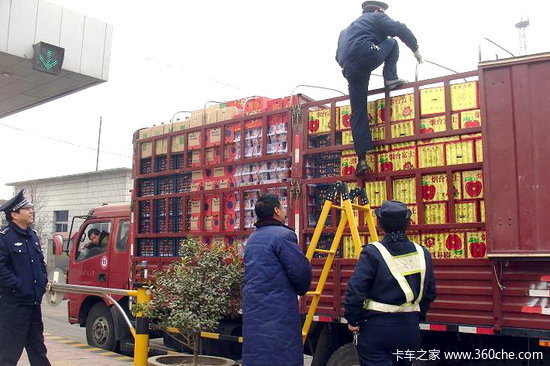
Oktoberfest promotes a variety of food activities. online celebrity snacks and special products "go shopping" all the way.

On-site staff showed tie-dyed and batik handbags.

Text/Peninsula reporter Shang Qinglong

Figure/Peninsula reporter Meng Da

Good wine and good food are not negative. How can you drink refreshing beer without food? In order to make tourists eat and drink well, this year’s Oktoberfest really broke their hearts. It not only launched a series of food activities such as "Knowing the Taste of Beer City", famous chefs cooking on the spot, Haixiaoqing Tea Station and so on, but also featured products from Anshun, Guizhou, Shimonoseki, Japan and other domestic and foreign countries on the spot, so that you can’t stop all the way.

Go to the green west golden beer tent

Try a celebrity chef’s star-rated dinner

In addition to the beer tent and beer garden block, it will bring domestic and international specialties. This year, Golden Beach Beer City launched the "Knowing Taste Beer City" food activity, with a total of 56 food stalls. It will also fully integrate beer culture and catering culture to create a "good life market" with rich food and sought after by the public. Collect domestic and foreign famous brands, time-honored brands, non-legacy foods and various online celebrity snacks, online celebrity fun, online celebrity performances, online celebrity artists and other formats to create a food activity market. Among them, Ant Financial, a subsidiary of Alibaba, set up a "Good Life Market" unit in the "Zhiwei Beer City" activity, with 15 booths, which lasted for 10 days, and invited famous online celebrity such as "Thai Ice Sister" and "Horn Brother" to drive fans’ traffic.

In addition, 10 famous domestic chefs are invited. Every day from 5: 00 to 6: 00 pm, two famous chefs will give a food performance at the Qingxi Golden Beer Canopy for 30 minutes each, and provide some tasting. Entrust famous chefs to cook in person, make limited edition table meals every day in Qingxi Golden Beer Craft Experience Hall, accept reservations, and let visitors feel the superb cooking skills of China chefs.

Go to the East-West Cooperation Hall.

Tao Anshun feature agriculture products

This year, Anshun introduced agricultural special products and tourism resources into Golden Beach Beer City for the first time. The exhibition hall is located in No.11 wooden house on the east side of Beer City. In order to let tourists fully feel and buy Anshun specialty products, they have been preparing for more than a month, bringing more than 300 kinds of agricultural specialty products with rich Guizhou characteristics, including tie-dyeing, tea, Rosa roxburghii and so on.

The reporter saw at the scene that more than a dozen antique shelves were full of various products, including Guizhou green tea, dried thorn pears and other food specialties, as well as Guizhou puppets, tie-dyed bags and other special souvenirs. From time to time, tourists walk into the exhibition hall "Taobao". In the tie-dyed handbag showcase, many ladies are repeatedly choosing, and the plain colors and textured fabrics make people love it.

Pan Jianlin, director of the marketing department of Guizhou Jufujun Agricultural Development Co., Ltd., specially recommended the special products of Rosa roxburghii, including the original dried Rosa roxburghii and plateau magic pear juice with Rosa roxburghii as raw materials. "At present, there are more than ten kinds of products developed around Rosa roxburghii, which are very popular with consumers." Pan Jianlin said.

In addition to agricultural special products, Anshun also recommended local tourism resources. Xu Qirong, director of the marketing department of Huangguoshu Tourism Group Co., Ltd. told reporters that they have come up with a number of preferential policies to attract tourists from all over the world, especially Qingdao tourists, to Anshun for tourism and leisure. "For example, the scenic spots in Anshun and Qingdao are free of tickets, which encourages the citizens of the two places to move around and communicate more. We have also set up a lucky draw, which is still very attractive. "

Qi Zili, director of the Liaison Office of Guizhou Provincial People’s Government in Qingdao and director of the Liaison Office of Anshun Municipal People’s Government in Qingdao, told the reporter, "We hope to play the role of Qingdao International Beer Festival platform, enhance the reputation and market competitiveness of Anshun’s agricultural special products, and actively promote the import of safety goods, so that more people can understand Anshun and fall in love with Anshun."

Visit Xiaguan Tourism Products Exhibition

Special food is free to eat.

On the afternoon of July 26th, an exhibition of Shimonoseki’s sightseeing products was held in the East 11 wooden house of the Golden Beach Oktoberfest venue, featuring Shimonoseki’s special food and wine, including "Hai Xiang" wine, popular Japanese cheese egg tart, Kikukawa cold noodle, grilled sea urchin and so on. The exhibition will last until July 27, during which limited daily exhibits will be provided for free tasting.

As a sister city, the mayor of Shimonoseki personally led a team of more than 20 people to participate in the Oktoberfest and related commemorative activities. "All the food we brought is not for sale, just to taste and promote Qingdao citizens and tourists who came to participate in the festival. And Shimonoseki is a famous tourist city, and more Qingdao citizens and tourists from all over the country are welcome to visit. " Yoshida Kazuya, director of the International Department of the Comprehensive Policy Department of Shimonoseki City Institute, said that Shimonoseki is one of the few tourist attractions in Japan, with many high-quality tourism resources, and there are many Qingdao citizens who travel to Shimonoseki every year.

Qu hai Xiao Qing cha pin Zhan

More than 40 kinds of tea are waiting for you to taste.

What to drink in Golden Beach Beer City, the protagonist is of course beer. Whether you like high-grade, low-grade or even zero-grade, fruity beer, more than 1,400 kinds of beer around the world gathered in the beer city can fully satisfy your taste.

In addition to drinking, merchants in the beer city also brought many special drinks, such as Hai Xiaoqing, a tea brand brought by Huangfa Group. According to the person in charge at the scene, Haixiaoqing is a high-end tea brand deeply developed by Huangfa Group to promote the brand operation of the tea industry in the new area. The high-quality tea of Langya Green and Langya Red, which are public brands in Qingdao agricultural area, is selected as the tea base, and high-quality raw materials such as fresh fruit and imported milk are used to fully ensure the taste and quality of Haixiaoqing tea.

Haixiaoqing tea brand made its debut in the new district in May this year, and successfully developed more than 40 kinds of products in six categories, including cold tea, cheese tea, fruit tea, milk tea, health tea and matcha series, which were fully introduced to the market during the Oktoberfest. There are four selling points in the beer city, which are convenient for tourists to taste and experience.

■ Play all over the city, the sense of science and technology is bursting, and the interaction is full, so that you can enjoy yourself.

Going to Qingdao International Beer Festival this year will definitely make you enjoy yourself. You can fight robots in the e-sports tent, experience the rescue of Mars in the Nine-Day Space Exploration Museum, and manipulate robot soccer in the robot city park tent … All kinds of fun are dizzying, including various high-tech and interactive experience projects. Citizens and tourists can enjoy the experience in Mengchong Kingdom, E-sports, Robot City Park, Nine-Day Space Exploration Museum, outdoor recreation area, Phoenix Sound Grand Theatre, etc.

In this year’s Golden Beach Beer City, high-tech elements definitely take the lead. Covering an area of 1,200 square meters, the canopy of the Nine-Day Space Exploration Museum aims to build a platform for aerospace enthusiasts to pay attention to, understand and love space, and set up two areas, namely, the space exhibition area and the space interactive experience, which integrate the three major experience contents of space science education, interactive experience and immersive tour.

Young people who like e-sports games must not miss the e-sports tent at Oktoberfest. On the 13th and 18th, the two e-sports tents will focus on displaying two kinds of young and fresh trend contents, namely, secondary ACG culture and 5G technology experience.

The reporter learned that the outdoor recreation area covers an area of 7,000 square meters, mainly including six kinds of amusement equipment suitable for different ages, such as wind tunnel entertainment, rotating disco, luxury wooden horse, Xiaoyao Tower, self-controlled aircraft and hurricane flying chair, to meet diversified amusement needs. Wind tunnel is an air suspension experience device built by wind tunnel technology, which allows visitors to feel the excitement and fun of air suspension flight.

What should it be like when the lively Qingdao Beer Festival meets the cute robot team? "Qingdao Robot Theme Park" was unveiled in the No.10 tent of Beer City. In the 1,200-square-meter exhibition hall, robots played a service role, and the life-changing scenes were integrated into the exhibition hall, so that tourists could feel the magic of technology changing their lives.

Memories of the past classics-color TV articles

    The history in memory can’t be forgotten for a long time because it has left a deep mark on people’s hearts. When did China have the first TV set? This problem is out of my time. The time I can recall is from the 1980s to the early 1990s. At that time, the three major items of family became synonymous with family modernization in China. Television, in particular, has become a symbol of a wealthy family. At that time, any brand of TV was in short supply, so it was hard for people to buy a TV. You have to wait in a long queue with "tickets" to buy a TV set that people can worship like "God". At that time, the TV sets that were very popular were "Huangshan" and "Sabah" in Anhui. But they are just passers-by in history, quietly disappearing into people’s memory.

{imageTitle}    {imageTitle}

 Television processing workshop
 
    China’s color TV industry started in the mid-1970s, and has gone through three historical periods, namely, the lead-in period from the mid-1970s to the early 1980s, the growth period from the mid-1980s to the early 1990s, and the maturity period from the late 1990s to the present.
 
China TV from scratch —— The first TV was born in 1958.
 
{imageTitle}
 
    This antique on display in the museum isChinaThe first TV, Beijing Brand made in Tianjin, was born in March 1958 (Great Leap Forward period). At that time, Tianjin Communication Broadcasting and Television Factory produced the first Taipei Beijing brand 14-inch black and white TV set by using domestic electronic tubes and Soviet components. This achievement makes China’s TV development technology basically at the same starting line as that of Japan. 2007 is the 49th birthday of this famous TV set in China. But judging from the economic situation in China at that time, many ordinary people could not enjoy TV sets. So it was not popular at that time. When TV sets entered thousands of households, it was also called the period of reform and opening up. 
 
    I was born in the period of reform and opening up. I remember when I came home from school as a child, my mother always told me not to watch cartoons until I finished my homework. At that time, the TV set was for cartoons for me. The first cartoon I saw in my memory was Astro Boy. The first color TV set I have ever seen is the 18-inch CRT of the Great Wall. Now LCD TV has entered ordinary people’s families, but CRT TV has not withdrawn from the historical stage. Today, the author will take you back to the past 50 years.
Chinese classic CRT TV.

 
Article navigation
 
    "The Leader in the Age of Gold Star TV and Color TV"
    "The originator of Sino-foreign joint venture TV for Furi TV"
    Evergreen tree in domestic products of Changhong TV.
    "Peony TV sets are the pride of our Beijingers"
    "Leap and triumph TV history is a thing of the past"
    "Three Big Pieces of Panasonic TV Set"
    "『SONY Teletron needs tickets to get it."
    "Philips TV was expensive from the beginning."
 

Venus TV, the leader in the era of color TV
 
    Venus color TV is not very clear in my memory. I remember that I saw this kind of TV at my grandmother’s house at that time. To be honest, the influence was really not very deep. However, it was only by inquiring about the information that it was discovered that this TV had such a big head.

    Jinxing brand color TV is a famous brand product of former Shanghai TV Machine Factory (now Shanghai Radio and Television Group Co., Ltd., Shanghai Radio and Television Group). There used to be quite high praise and popularity.
 
{imageTitle}

    In 1978, the state approved Shanghai TV Machine Factory to introduce the national excellent color TV production line, and in October 1982, it was officially completed and put into production. Since then, as a landmark product in Shanghai, Venus has won various honors and awards from the Ministry of Commerce, such as Golden Bridge Award for the Best-selling Domestic Famous Brand Product, Chinese Famous Brand Large Screen Color TV, Famous Products Recommended by National Shopping Mall, china association for quality’s Most Satisfied Products, National Fiona Fang Symbol by the State Bureau of Technical Supervision, Five Best-selling Brands in China and ISO-9002 Quality System Certification Certificate.

    The development idea of Jinxing color TV selection is "moderate scale, appropriate share" and "high-tech content, high quality". Its market positioning is mainly aimed at Shanghai, and it is proposed that Jinxing boutique color TV should adapt to Shanghai’s position as a national economic, financial and trade center. It has also introduced high-tech functions such as teletext and digital series products, as well as 16∶9 widescreen color TV, plasma color TV, full-screen color TV and 43-inch rear projection color TV.
 
Furi TV is the originator of Sino-foreign joint venture TV.
 
    This brand of TV set was used in my father’s factory. At that time, I didn’t like watching football very much. At that time, my father ran to the stadium to watch the ball when there was a football match.

    Fujian Furi TV Co., Ltd., founded in 1981, is the first Sino-foreign joint venture in China electronics industry and one of the first color TV manufacturers in China.
 
{imageTitle}

    Furi’s joint venture partners are Fujian Province and Hitachi, Japan Co., Ltd., and Furi was once one of the top 100 electronic enterprises in China. In 1994, Furi’s color TV production and sales exceeded one million units, ranking among the top five in the domestic color TV industry.

    After 1998, faced with the increasingly fierce domestic color TV price war, Furi Company chose to avoid the sharp edge and shifted its strategic development focus to overseas markets. The color TV sold in the domestic market was changed to "Hitachi" brand, and Furi color TV disappeared in the domestic market for four years.
 
{imageTitle}

    In 2002, Furi faced the domestic market again after restructuring. In 2003, due to the upgrading of color TVs, the price war in the traditional color TV field gradually calmed down, and Hitachi no longer produced and operated ordinary color TVs. Furi Company decided to re-launch the "Furi" brand in the domestic market. Resume the original production line, and launch high-end products such as LCD, rear projection and plasma color TV across the board.
 
 
Evergreen tree in Changhong TV set made in China

    Changhong TV has a great influence on my family. My grandfather’s first TV was Changhong. As long as I have a holiday at school, I will stay at my grandfather’s house and watch colorful Transformers!

    In August, 1989, Changhong Color TV set a nationwide price reduction, which initiated the first price war in the history of color TV sets. Fifty days later, the state introduced a price reduction policy for color TV sets. Since then, domestic color TV sets have got rid of the shadow of planned economy, and enterprises have gained the initiative in marketing their own products. This is also the beginning for domestic brands to find their own price positioning and form market segmentation. Since then, domestic color TV sets have been continuously reduced in price, which not only gained market share, but also popularized color TV sets in China. Urban residents have more than 100% color TV sets, and rural color TV sets have reached 32.5%.

 
{imageTitle}

    By the mid-1990s, there were 98 color TV enterprises in China, and the annual output of domestic brand color TV sets was as high as 35 million. In the fierce competition, some weak enterprises have been eliminated one after another, while Changhong, Konka, TCL and other enterprises have continuously improved in quality and technology, and cleared up the market through a round of price wars, and quickly developed into the backbone enterprises and leading brands in the China color TV market.
 
{imageTitle}

    In 1996, the sales of domestic color TV sets exceeded those of imported ones for the first time. After some foreign brands’ domestic color TV technology leaps and bounds and continuous wars, the market sales are evenly matched and shrinking. The market share ratio of domestic brands and foreign brands has gradually changed from 2∶8 to 8∶2.
 
 
Peony TV is the pride of Beijing people.
 
    I haven’t seen Peony TV in my life, but I have seen it in movies. At the end of the movie "Our Cow is Hundred Years Old", the lazy man’s wife is holding the Peony TV.

    Peony used to be a banner of home appliances produced in Beijing. Beijing Peony Electronics Group, the manufacturer of Peony TV, is a large-scale backbone enterprise in China’s electronic industry. In 1982 and 1983, when the domestic TV industry was just starting, Peony introduced a technologically advanced production line from Japan. In the era of supply by ticket, it achieved an amazing market share of more than 50% and became an absolute leader in the industry. In 1980s, owning a Peony brand color TV was once the dream of ordinary families in China. Until the early 1990s, the market share of Paeonia suffruticosa remained at a high level of about 20%. In 1993, the output reached 700,000 units, which was obtained for four consecutive years from 1992 to 1995.
 
{imageTitle}
 
    "Golden Bridge Award for the best-selling domestic brand-name goods in China" and won the honor of "China Famous Brand Color TV". However, since 1996, the competition in the color TV market has become increasingly fierce, especially in the face of the price offensive launched by Changhong and other manufacturers, Peony TV has been slow to respond, and the market sales have plummeted. Peony’s strong color of state-owned enterprises has caused excessive redundancy, insufficient funds, inability to fight back in the market, and decision-making mistakes have further accelerated the decline of peony. By 2000, Peony brand color TV had basically stopped production, and the TV factory maintained its operation by producing "labeling machines".

    In September 2002, Beijing Peony Electronics Group Company invested its own equipment assets and the trademark "Peony" into Jiangsu Cyber Electronics Co., Ltd. and established Jiangsu Cyber Peony Electronics Co., Ltd. Peony TV, a famous domestic TV brand in the past, officially married Zhenjiang, Jiangsu. In July, 2003, Peony Color TV finally reappeared quietly, with the main target of export, and started with low-end products below 1,500 yuan in the domestic market. However, the industry is not optimistic about such low-end positioning, and it is still difficult to find "peony" in major markets such as Beijing.
 

Leap and triumph TV history is a thing of the past.
 
    Feiyue and Kaige TV sets are relatively popular color TV sets. Many people in our home use these two brands of TV sets.
 
{imageTitle}

    Shanghai’s old-fashioned light industrial products once enjoyed infinite scenery in China. Besides "Venus", there are also TV brands such as "Kaige" and "Feiyue". As early as 1984, Feiyue and Kaige put forward the concept of after-sales service such as door-to-door service and exchange, which was a revolutionary move at that time. These brands have won the market and reputation with excellent product quality, strong technical force and perfect service, and the demand exceeds the supply.
 
{imageTitle}

    The "Feiyue" brand TV set is produced by Shanghai No.18 Radio Factory, and "Kaige" is the black and white TV set brand of Shanghai No.4 Radio Factory. Later, "Leap" was also incorporated into the name of No.4 Radio Factory. When color TV became popular, Radio No.4 Factory, which only produced black and white TV sets, stopped production in the early 1990s.

    In 1996, Shanghai Radio No.4 Factory announced its closure, and now only the maintenance department is left. After the closure of Radio No.4 Factory, it has not produced any more "Leap" and "Kaige" TV sets, and the trademarks of "Leap" and "Kaige" have not been transferred so far. Since then, the triumph and leap TV sets have disappeared. Only occasionally in the reports, I saw that a number of counterfeit "triumph" and "leap" TV sets were investigated and dealt with as a kind of nostalgia.
Three Big Pieces of Panasonic TV Set
 
    Panasonic TV was very popular 15 years ago. At that time, it would be great if anyone had an imported TV. My classmate had a Panasonic TV, which his father brought back when he was a sailor. There are many people who come to his house to watch TV every day.
 
{imageTitle}
 
    Panasonic is also a manufacturer of traditional CRT TVs. As early as 15 years ago, my neighbor bought a Panasonic 20-inch TV. At that time, compared with the previous 21-inch or even 25-inch TV, the size and picture were improved, and the quality was excellent. Today, after 10 years of good quality, it is still youthful and has not had any problems.
 
SONY Telilong needs a ticket to get it.
 
{imageTitle}
 
    First of all, I have to say that Sony, the king of our CRT TV. Presumably, SONY’s Teletron has been deeply rooted in many people’s hearts. Let’s review SONY’s Teletron technology first: Sony used a patented technology-single gun and three beams technology. The electron gun of Teletron CRT adopts MALS (Multiple Astigmatic Focusing System-), EFEAL (Diffusible Scanning Elliptical Aperture Lens) and L-SAGIC (Low Voltage Aperture Cathode Tube) and other technologies. Thanks to this, Telilong CRT is excellent in brightness and color expression, and the performance of color purity is also quite good. However, the structure of single gun and three beams requires high related control circuits. If the technical level of the manufacturer is not too hard, it is easy to produce defects in focusing and geometric distortion, which can also show SONY’s strength in production technology.
 
Philips TV was expensive from the beginning.
 
    Royal Philips Electronics is one of the largest multinational electrical enterprises in the world with a history of more than 100 years. Philips TV also entered the domestic market earlier.
 
{imageTitle}
 
    Philips TV was still very popular in China in the 1990s, and it was also one of the few non-Japanese brands at that time.
 
    My understanding of Philips TV was seen at my uncle’s house when I went to Hong Kong. At that time, I was very young and had never seen such a big TV. I thought it was much better than the TV at home. I wanted to take it home when I left.


    Concluding remarksI don’t know what life is like without TV. But with the TV, every night, the busy father put down his work, and the mother took off her apron tied around her waist. The whole family sat around the TV, and countless laughter came from one small room after another.
 
    Batch after batch of TV sets have fulfilled his historical mission, bringing happiness to thousands of families, and allowing many people to visit the scenery of countries around the world and learn about state affairs without leaving home. Television sets replacing CRT have appeared, and CRT TVs will gradually withdraw from the stage. In fact, we don’t have to feel sorry for CRT. Their achievements have gone far beyond any praise given by people. Maybe in 1000 years, when people find a CRT TV in unearthed cultural relics, they will also sigh.
 
    Let’s applaud the following TV heroes!
 
Once a domestic brand
 
Changhong, Konka, Skyworth, TCL,Xiahua, Hisense, Haier, Venus, Panda, Beijing,
 
West Lake, Gaoluhua, Lehua, Dongbao, Furi, Anhua, Baihua, Lily, Baile, Baosheng,
 
Gemstone flowers, rainbows, colorful stars, the Great Wall, Chengdu, Changfeng, Changfei, Changhai, Chunlan, Spring Breeze,
 
Spring bamboo shoots, Dongda, Donghai, Flying Deer, Yellow River, Huanghaimei, Huangshan, Huanglong, Huari, Haiyan,
 
Haihong, Haile, Huanyu, Hongmei, Hongyan, Chrysanthemum, Jinhai, Jinfeng, Jinta, Golden Magpie,
 
Goldfinch, Jiahua, Kunlun, Kaige, Kangli, Kanghong, Kangli, Kangyi, Peacock, Happy,
 
Longjiang, Lihua, Peony, Merlot, Mengmeng, Nansheng, Qingdao, Ruyi, Shencai, Camellia,
 
Shanghai, Shaofeng, Shenyang, Seg, Songbai, Sanyuan, Sanjian, Taishan, Swan, Tianshan,
 
Tongguang, Weipai, Yu Xiang, Xuelian, Xinghai, Xiangyang, Happiness, Nippon Pine, Yingge, Aerospace,
 
Yonggu, Yongbao, Zhuhai, 888, Ganxin, Huafa, Huaqiang, Feiyue, Feilang, Nanbao,
 
Fei Yan, Xin Sida, Cai Ling, olimp.
 
    All relevant information in this article is extracted from the Internet and related forums. This article also aims to hope that more TV lovers can have a deeper and more detailed understanding of the history of China TV. Xiaobian is sincerely grateful for the relevant information provided by many experts on the Internet. In particular, I would like to thank Cheng Tian from Sina Blog for his article "The TV Brand in Memory and the Development History of China TV".